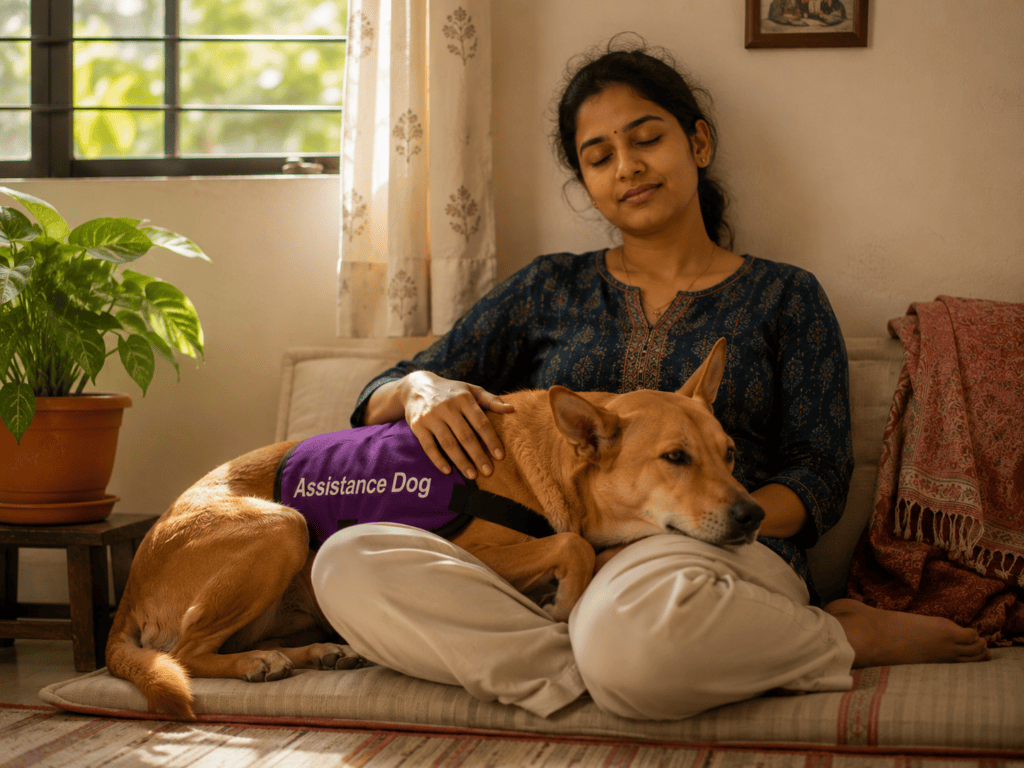
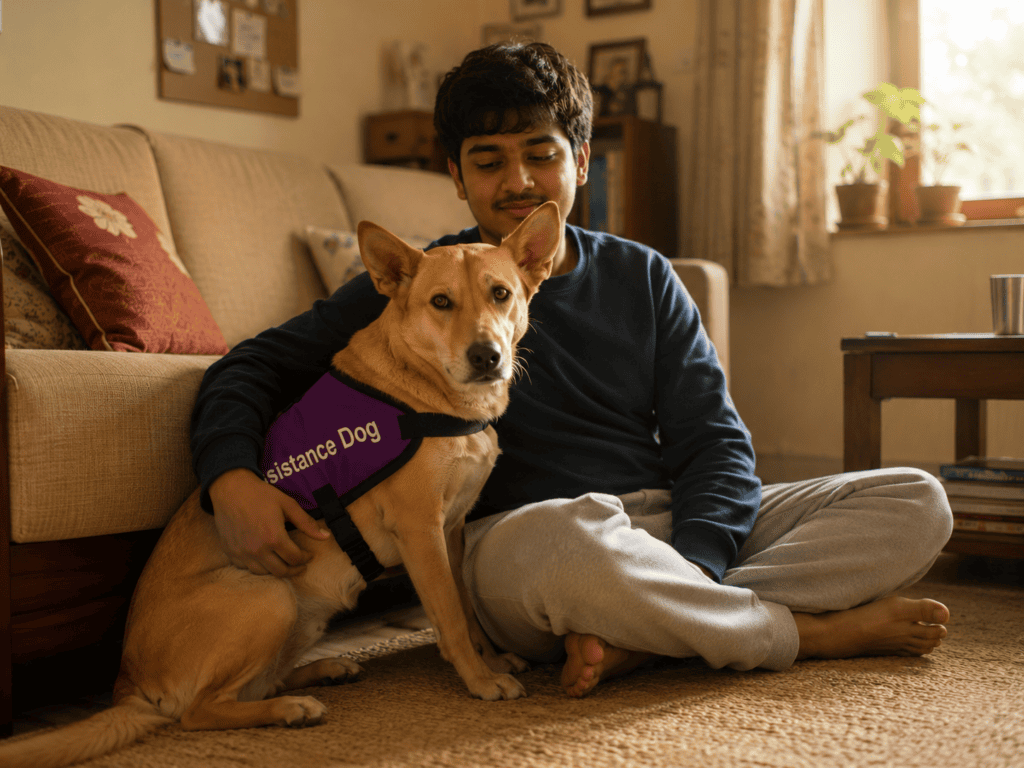
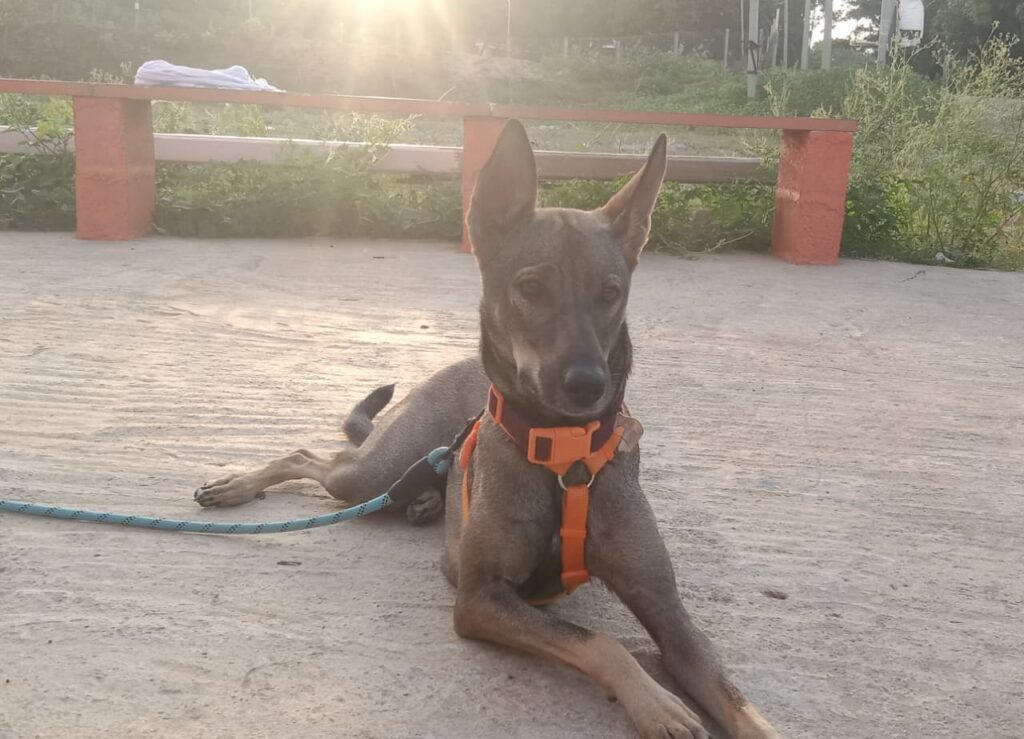
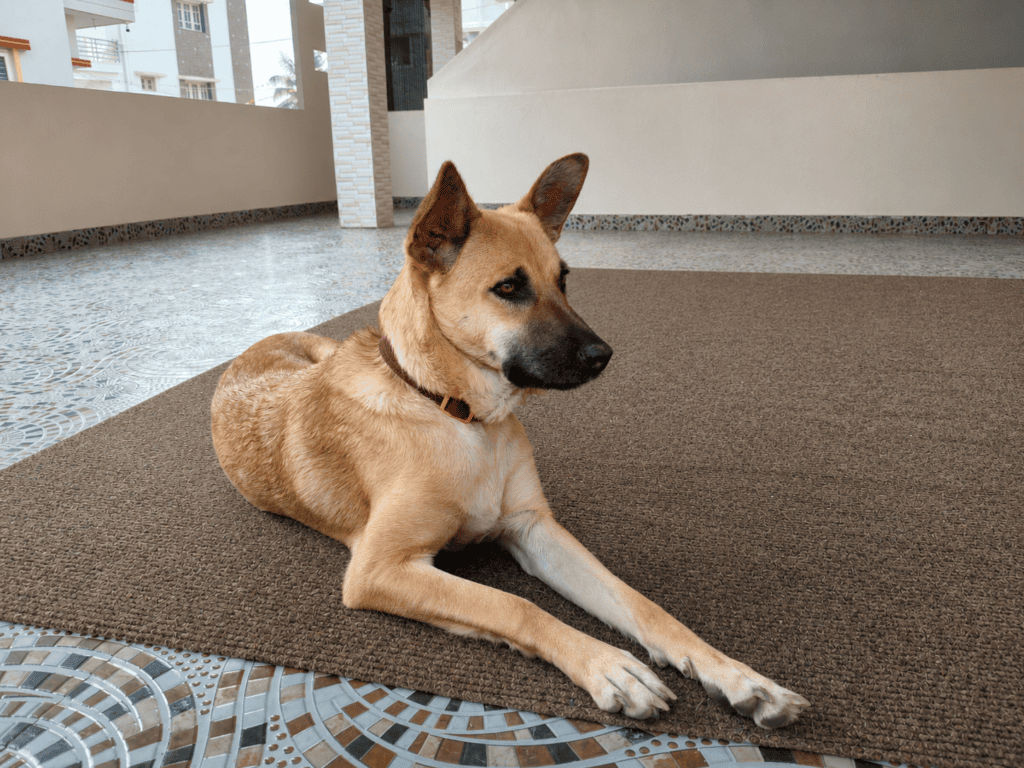
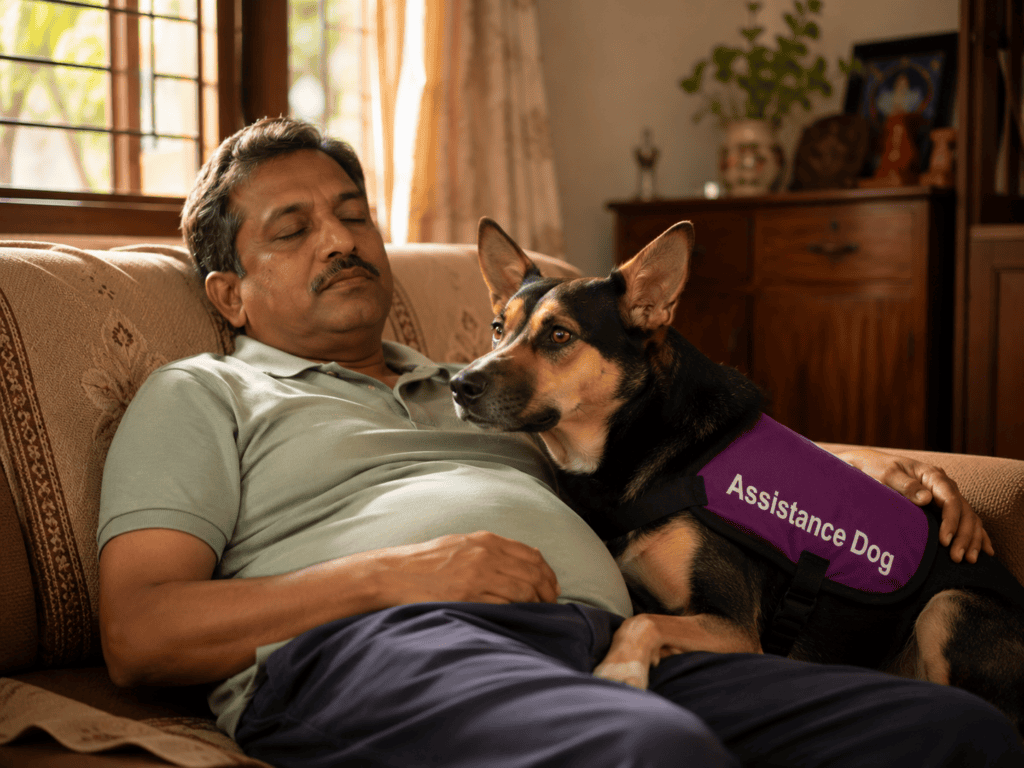
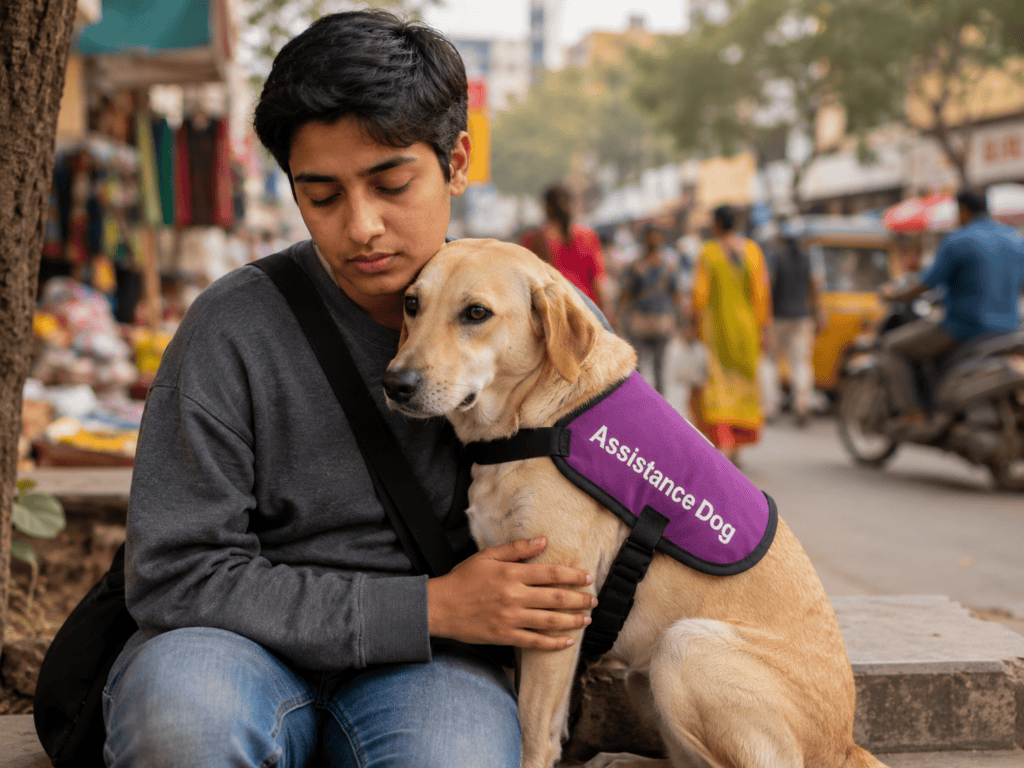
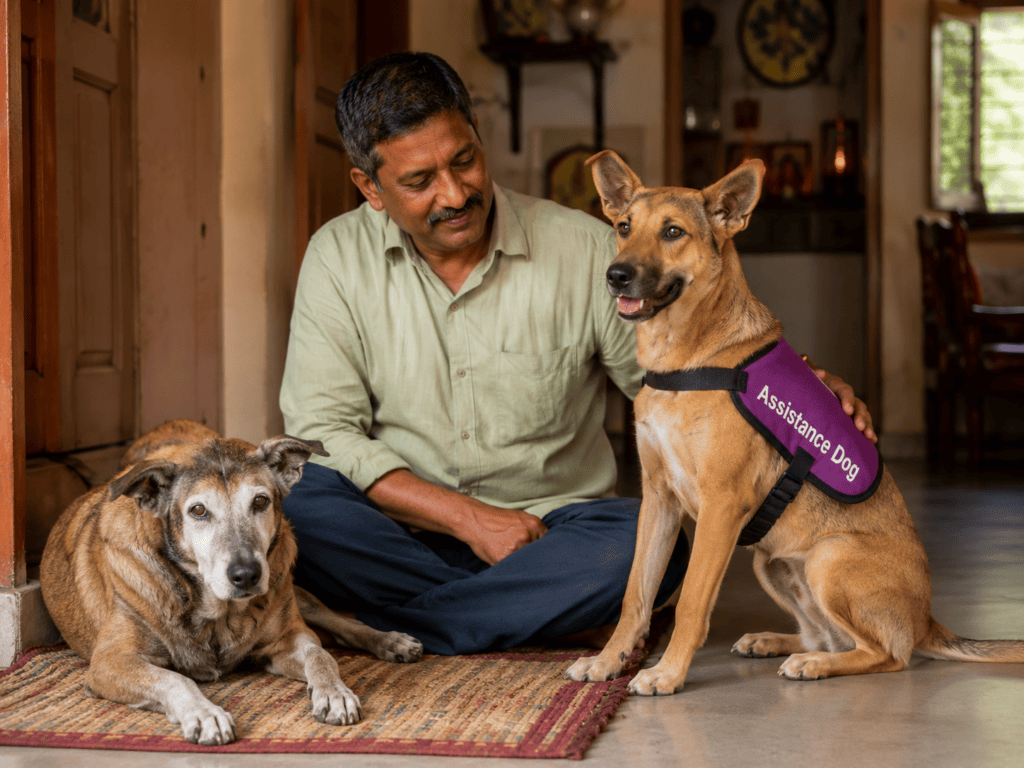
An assistance dog works alongside a person with a disability. It learns specific tasks. It performs them reliably, every day. Some dogs guide people with low vision. Others alert before a seizure or interrupt distressing behaviour in an autistic person. This category covers what assistance dogs do, how trainers prepare them, the types that exist, and why India has almost no working ecosystem for them yet. If you want information on assistance dogs in India, start here.
Deep pressure therapy uses firm, sustained pressure to calm the nervous system. HeartDogs explains the science, who it helps, and why a trained dog does it differently from a weighted blanket.
An autism assistance dog lives with the family, not visits it. HeartDogs explains the specific tasks it performs – and what changes for the whole family, not just the individual.
Indies are known for their resilience. HeartDogs explains the genetic health profile, common issues in rescued dogs, lifespan, diet and what it means for working dogs.
Indies are often overlooked in favour of pedigree breeds. Here’s what the research and real family experience actually shows about India’s native landrace dog.
Intelligent, resilient and alert – the Indie’s temperament was shaped by natural selection, not human breeding. HeartDogs explains what research actually shows.
Epilepsy and seizure disorders affect an estimated 12 million people in India. HeartDogs explains the basics and how trained support dogs can play a real role.
Many autistic people experience the world differently through their senses. HeartDogs explains sensory processing, what it looks like in India, and how assistance dogs can help.
An assistance dog works for around eight to ten years. HeartDogs explains what happens to the person when the dog gets sick, retires or dies – and how good programmes plan for it.