
Independence is not a luxury.
For many, it is simply out of reach.
A trained assistance dog is not a pet. It is a working partner.
The dog lives with the person, works alongside them, and complements the care of family and caregivers - offering constant presence, calm reassurance, and help throughout the day.
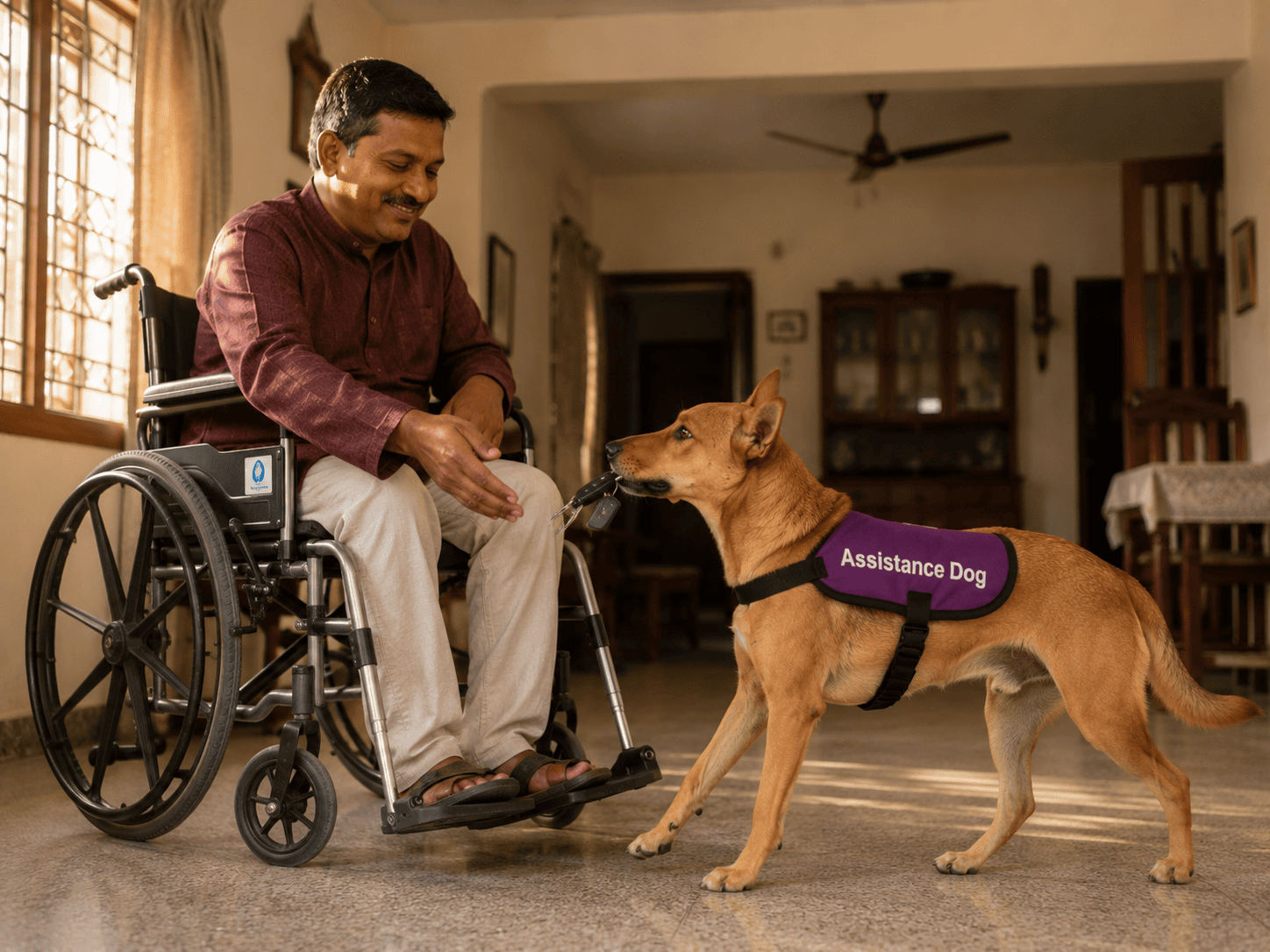
Retrieving objects, supporting movement, opening doors.
Restoring independence in daily tasks that others take for granted. A dog trained for physical assistance becomes an extension of the person - present, reliable, and non-judgmental.
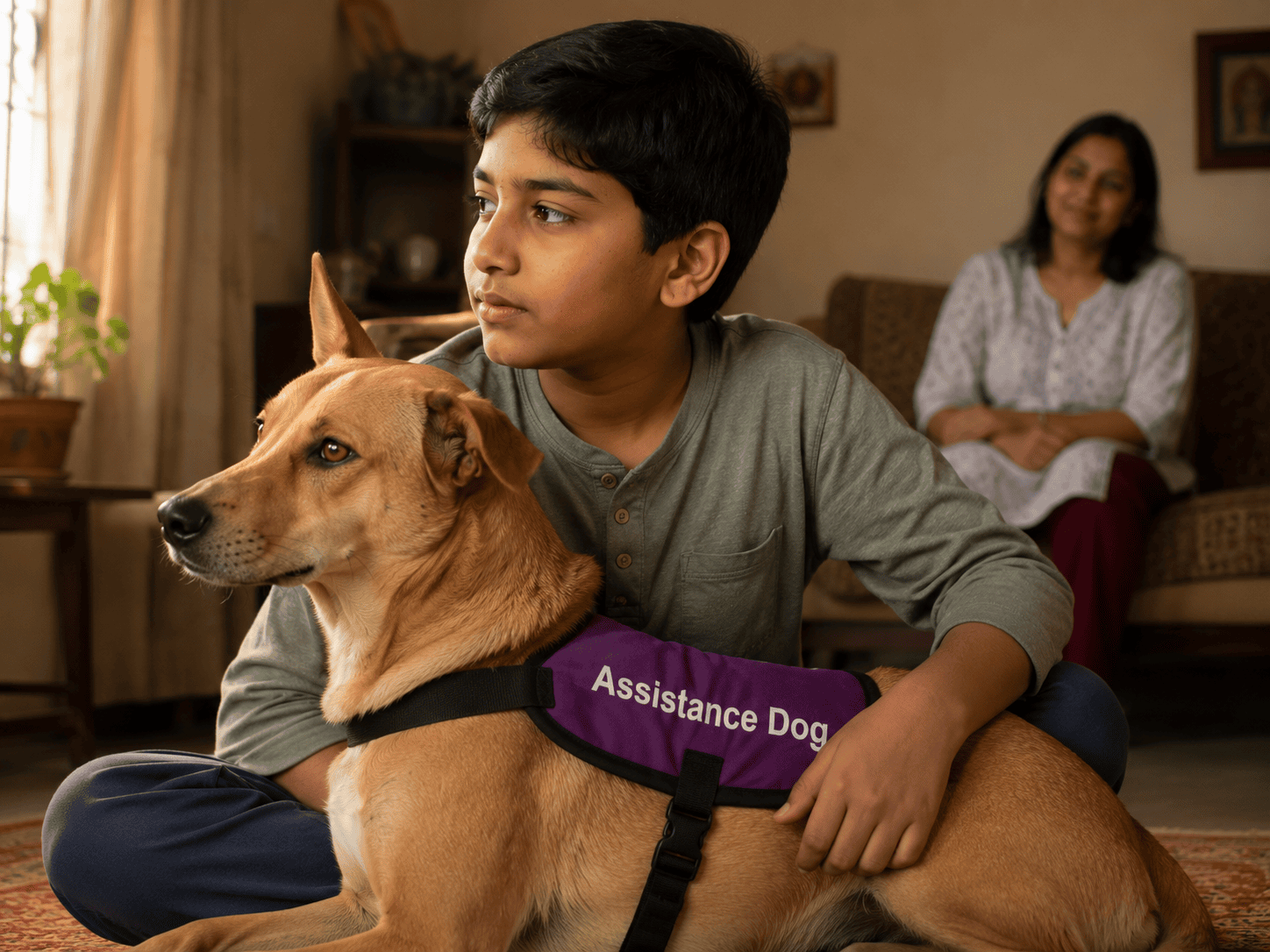
Grounding, routine anchoring, and calm, consistent presence.
For children and adults on the autism spectrum, a trained dog helps manage sensory overwhelm, reduces anxiety in social situations, and provides a stable anchor in an unpredictable world.
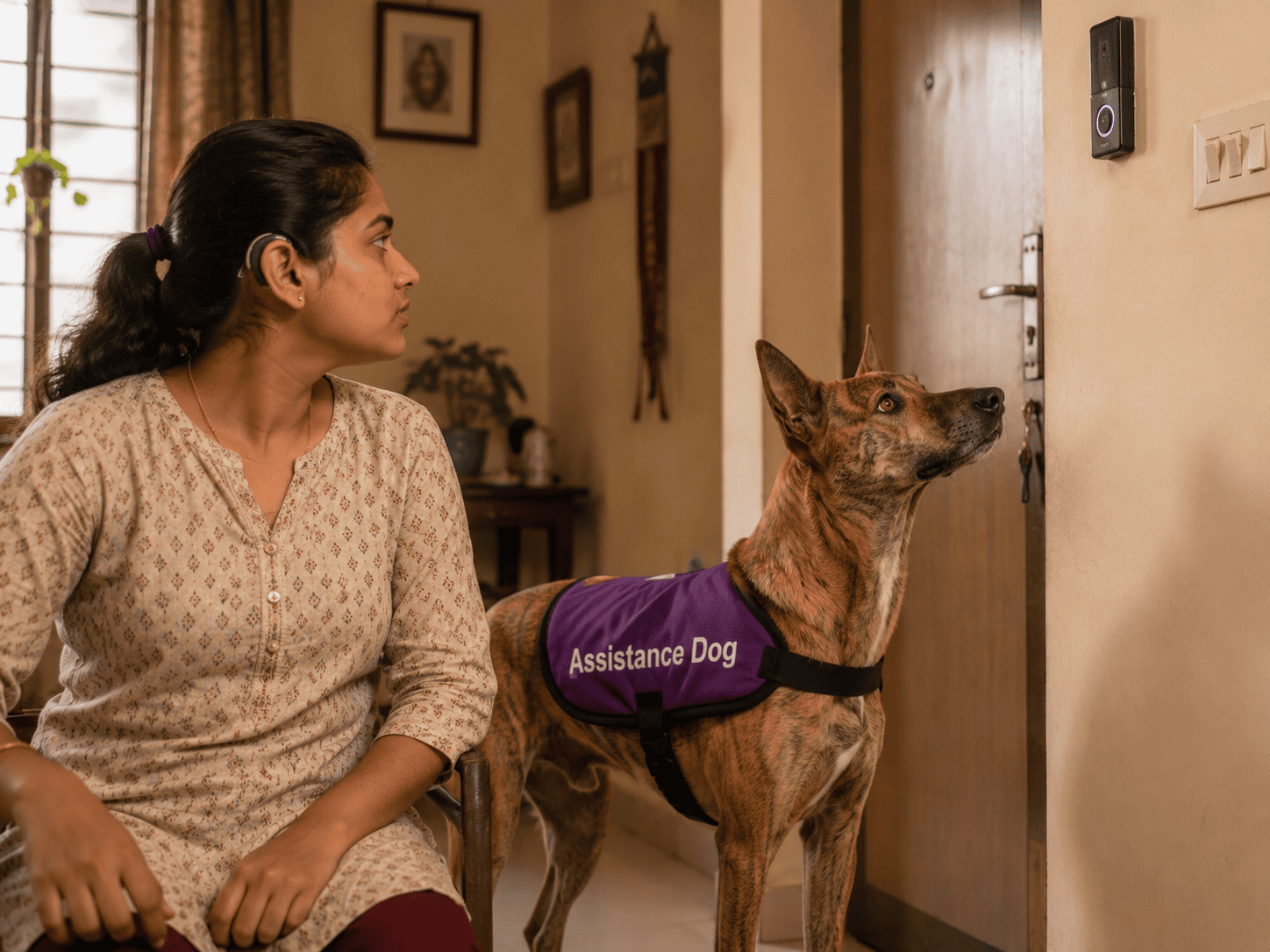
Alerting to sounds that could otherwise go unnoticed.
Doorbells, alarms, a baby crying, someone calling out - a hearing assistance dog alerts its person and leads them to the source. Safety and awareness restored without dependency on others.
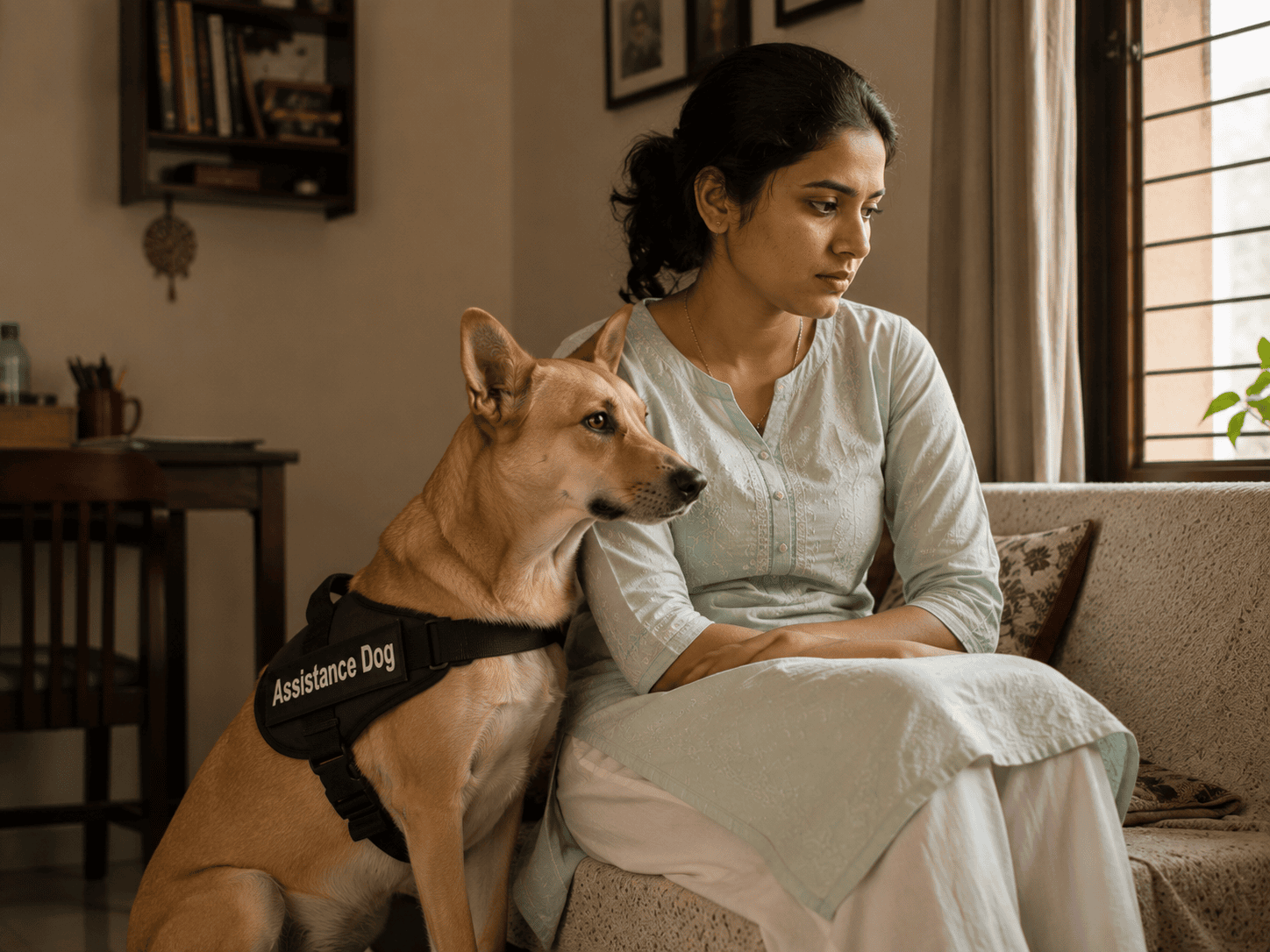
Grounding during anxiety, panic, or dissociation.
For people living with PTSD, severe anxiety, or other psychiatric conditions, a trained dog provides grounding in difficult moments and helps stabilise daily routines. The consistency of the dog's presence is itself therapeutic.
Would an assistance dog make a difference in your life?
We are in our first pilot and our Cohort 1 dogs are approaching placement. We would like to hear from individuals and families now so we can better understand demand and plan future placements.
Get a HeartDog →To convey sensitive topics with care and respect, some images on this page are either AI-generated or AI-edited.