Where the idea comes from
Modern interest in therapeutic deep pressure is often traced to the work of Temple Grandin, the autistic animal scientist and author, who developed a "hug machine" - a device that applied firm, controlled pressure to the body - to manage her own sensory overwhelm. Her work drew wider attention to what many autistic people already knew from experience: that firm, predictable pressure was calming in a way that other sensory inputs were not.
Deep pressure later became incorporated into occupational therapy through sensory integration approaches developed by A. Jean Ayres in the 1970s. Today it is used through weighted blankets, compression vests, firm massage, and - increasingly - trained assistance dogs.
What deep pressure does to the body
Deep pressure works through the proprioceptive system - the body's sensory system for detecting position, movement and force. Proprioceptors are located in muscles, joints and connective tissue. When firm pressure is applied to the body, they send signals to the brain that are thought to contribute to regulation of the nervous system.
One proposed mechanism, described across the clinical and research literature, is thought to involve a shift from sympathetic nervous system activation - the "fight or flight" state - towards parasympathetic activation - the "rest and digest" state. This shift is associated with reductions in heart rate, breathing rate, muscle tension and circulating stress hormones such as cortisol.
Some research on deep pressure tools - primarily weighted blankets - has documented these physiological effects. A 2013 study by Chen and colleagues found physiological evidence of parasympathetic activation following deep pressure application. A 2020 randomised controlled trial by Gee and colleagues reported reduced anxiety in autistic individuals using weighted blankets during dental procedures. A systematic review by Eron and colleagues (2020) found that weighted blanket use was associated with reductions in anxiety across studies, while noting the evidence base remained mixed in quality.
It is worth being explicit here: the majority of this research is on weighted blankets and compression garments, not on dogs specifically. The proposed mechanism is similar - proprioceptive input contributing to calmer nervous system states - though dog-specific research remains more limited than the evidence base for weighted tools. What the dog adds is covered below.
Chen et al., Journal of Medical and Biological Engineering, 2013 · Gee et al., 2020 RCT on weighted blankets and dental anxiety · Eron et al., 2020, systematic review on weighted blankets and anxiety
The conditions where deep pressure therapy is used
Deep pressure is used as a tool - not a cure - across a range of conditions where dysregulation of the nervous system is a feature of daily life.
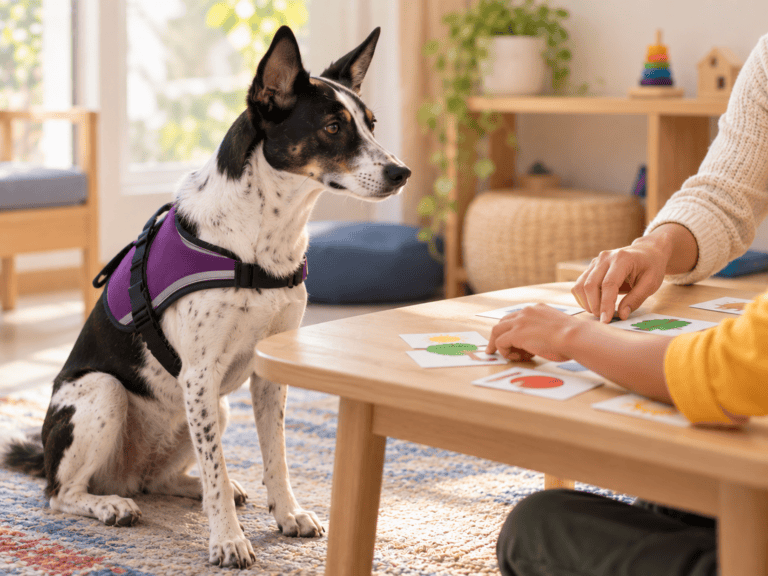
- Autism spectrum disorder. Many autistic people are either hyper-sensitive or hypo-sensitive to sensory input. Deep pressure provides organised, predictable proprioceptive feedback that can regulate an overwhelmed or under-stimulated nervous system. Many autistic people instinctively seek deep pressure - through tight hugs, wrapping tightly in blankets or pressing against furniture - because it meets a genuine sensory need.
- PTSD and severe anxiety. During a flashback, panic attack or dissociative episode, the body is in a state of high physiological arousal. Deep pressure may help reduce physiological arousal and provide a grounding sensory experience that supports a return to the present moment.
- Sensory processing disorder. For people whose nervous systems process sensory input atypically - whether too intensely or not intensely enough - deep pressure can provide the regulatory input the system is seeking.
- ADHD. Some research and occupational therapy practice suggests deep pressure may help improve attention and reduce hyperactivity in people with ADHD who seek proprioceptive input, though the evidence here remains less consistent than for autism and anxiety.
What a trained DPT dog actually does
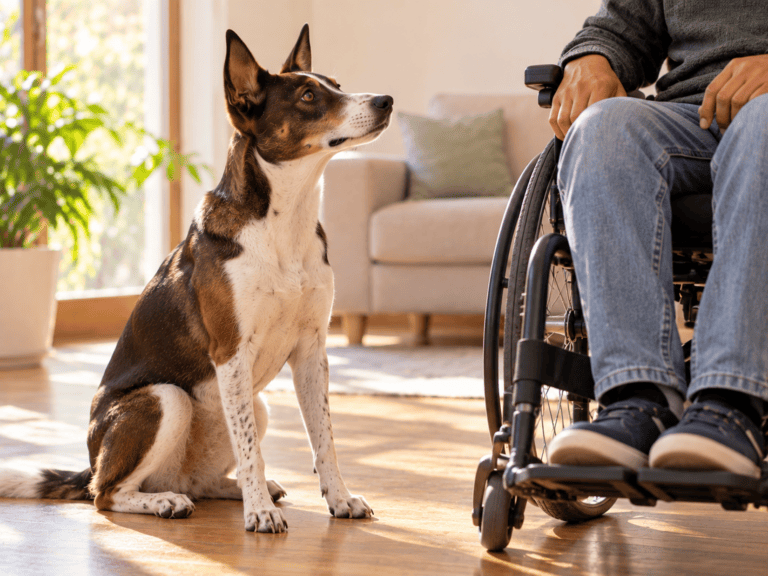
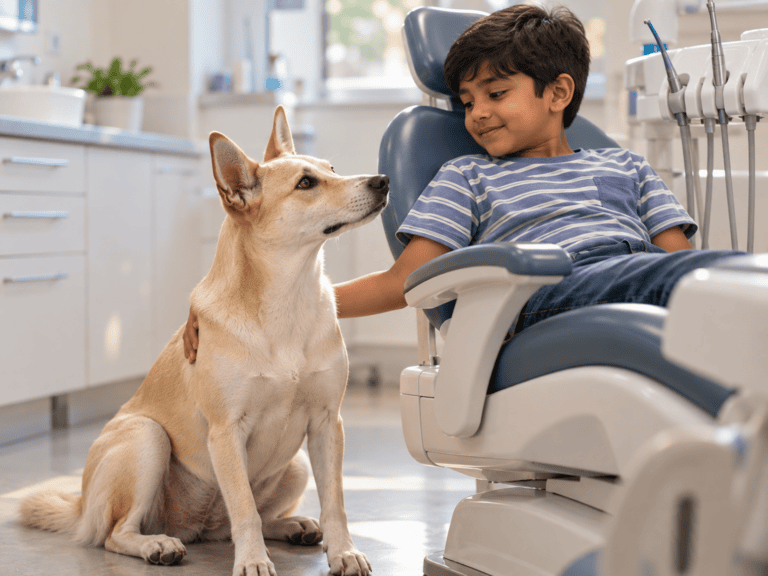
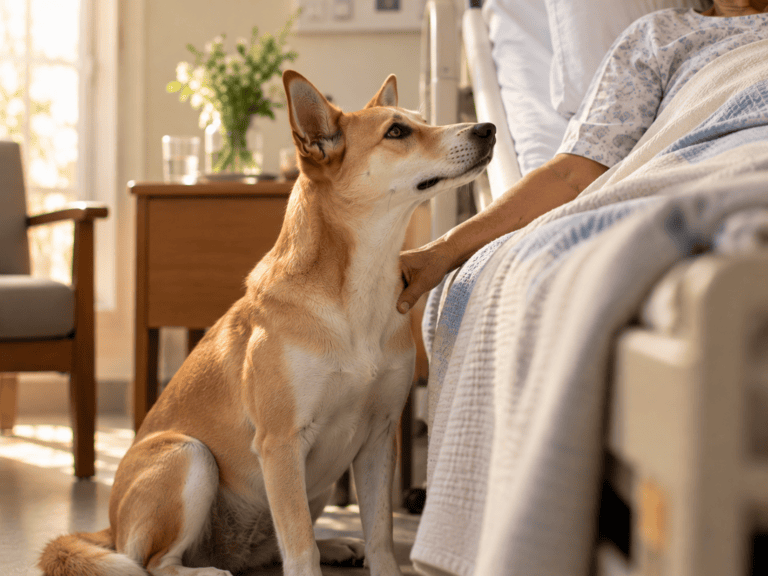
A dog trained for deep pressure therapy (DPT) learns to apply its body weight on cue in specific ways, depending on the size of the dog and the needs of the handler. As described by Freedom Service Dogs, a US-based assistance dog organisation:
"DPT is a calming technique that uses gentle, consistent pressure by a dog on their handler's body - similar to the feeling of being swaddled, hugged, or using a weighted blanket. A service dog performs DPT by leaning against their person or using their weight to lay across the lap or chest on cue."
Common DPT tasks include:
- Lap. The dog rests its head or lies across the handler's lap while the handler is seated. The weight and warmth provide sustained pressure to the thighs and lower body.
- Lean. The dog presses its body against the handler's side or legs while standing or seated. Useful in standing situations where lying across the lap isn't possible.
- Chest. For larger dogs, lying across the handler's chest while the handler is lying down. Used particularly for PTSD nightmares or dissociative episodes.
- Paws up. The dog places its front paws on the handler's lap or thighs while standing, applying weight through the handler's legs.
All of these are taught as deliberate, cue-based tasks - not behaviours the dog performs spontaneously, but trained responses to a specific signal from the handler or caregiver. The dog must learn to initiate the behaviour on cue, maintain it for a sustained period, and release on a second cue.
Why a dog is different from a weighted blanket
A weighted blanket is a useful, practical tool. But a trained dog provides something a blanket cannot.
- Responsiveness in real time. A blanket has to be picked up, placed and arranged. A dog that has read its handler's stress signals - a change in breathing, restlessness, the early signs of a meltdown or panic attack - can initiate DPT before the handler has registered the need themselves, or before they are able to ask for help. As Freedom Service Dogs note, the dog's ability to "respond in real time, adjust pressure, and provide grounding when a person can't regulate themselves" is what distinguishes it from any static tool.
- Portability. A weighted blanket is useful at home. A trained dog is present in a community setting, a school, a clinic or a crowded market - anywhere its handler is.
- The human-animal bond. The warmth and breathing of a living animal may provide benefits beyond pressure alone that a blanket cannot replicate. For many people, the combined effect of the dog's weight, warmth and presence is meaningfully different from a blanket of equivalent weight, though this is difficult to study rigorously.
- Multi-functionality. A dog trained for DPT can also be trained for other tasks - interrupting harmful behaviours, alerting, grounding, tethering - in ways that a blanket obviously cannot.
The difference is that a DPT service dog can respond in real time, adjust pressure, and provide grounding when a person can't regulate themselves. - Freedom Service Dogs
Why this matters in an Indian context
Weighted blankets and compression vests are available in India, though at a cost that puts them out of reach for many families. Occupational therapy with a sensory integration focus is available in major cities but is expensive and often requires regular clinic visits.
A trained assistance dog that can provide DPT on cue is available throughout the day - in the home and in community settings - in a way that clinic-based tools are not. The "dosage" is not determined by appointment availability. For an autistic person experiencing sensory overload during a family gathering at 9pm, or a person with PTSD waking from a nightmare at 3am, the dog's availability is qualitatively different from any clinic-based tool.
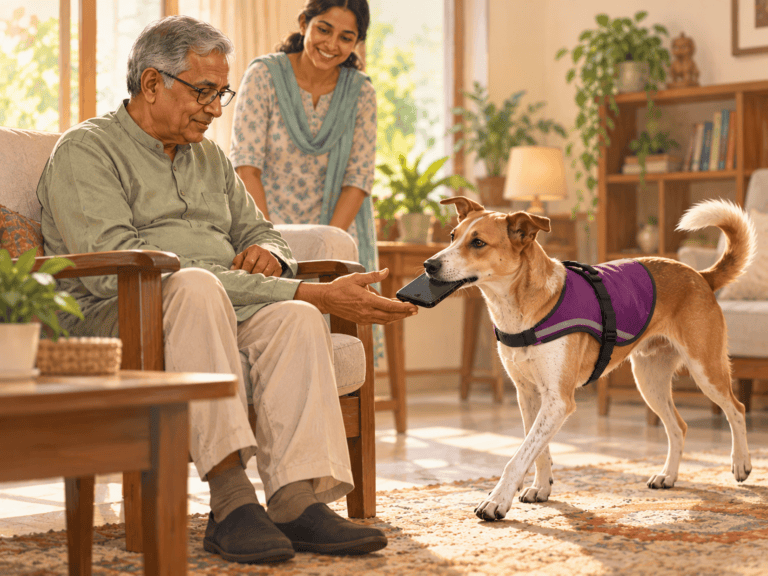
This is particularly relevant in India's family-based care model, where most support for people with disabilities or mental health conditions falls on family members at home, across all hours and all circumstances. A dog trained for DPT becomes part of that daily support structure in a way that no external service can replicate.
What we are working towards
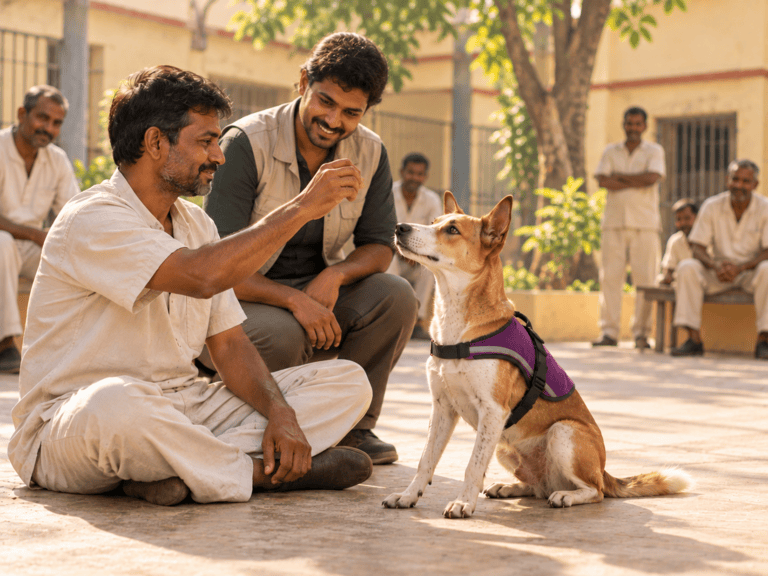
HeartDogs trains Indies - India's native landrace dogs - for assistance roles that include deep pressure therapy. DPT training requires a dog with a calm, confident temperament that is comfortable with close physical contact with its handler and able to maintain sustained pressure without becoming anxious or overstimulated. The confidence, calmness and reliability required for DPT are developed through the home-based training our Heroes provide from the earliest stages of the programme.
DPT is one of several tasks in the toolkit of an Indian assistance dog. It is not a standalone solution - but it is a meaningful, practical intervention that a well-trained dog can provide reliably across a working life of many years.