
Hardy, intelligent, naturally evolved.
The Indie is not a breed. It is a landrace.
India's indigenous dog - and the rescued dog at the heart of our assistance and therapy dog programme.
The Indie is not a breed in the conventional sense. It is a landrace - a population of dogs that evolved naturally over thousands of years, shaped by the Indian subcontinent's climate, terrain, and people rather than by deliberate human breeding.
Genetic research places Indian village dogs among the world's oldest surviving dog populations. A landmark 2015 study published in the Proceedings of the National Academy of Sciences - in which the INDog Project collaborated - traced village dog ancestry to a Central Asian domestication origin that spread to nearby regions including India, Afghanistan, and Vietnam. Urban Indies may carry some admixture from colonial-era European breeds, but dogs in rural areas remain largely indigenous.
They were not bred for a look or a trait. They were shaped by survival - and that has made them something rather remarkable.
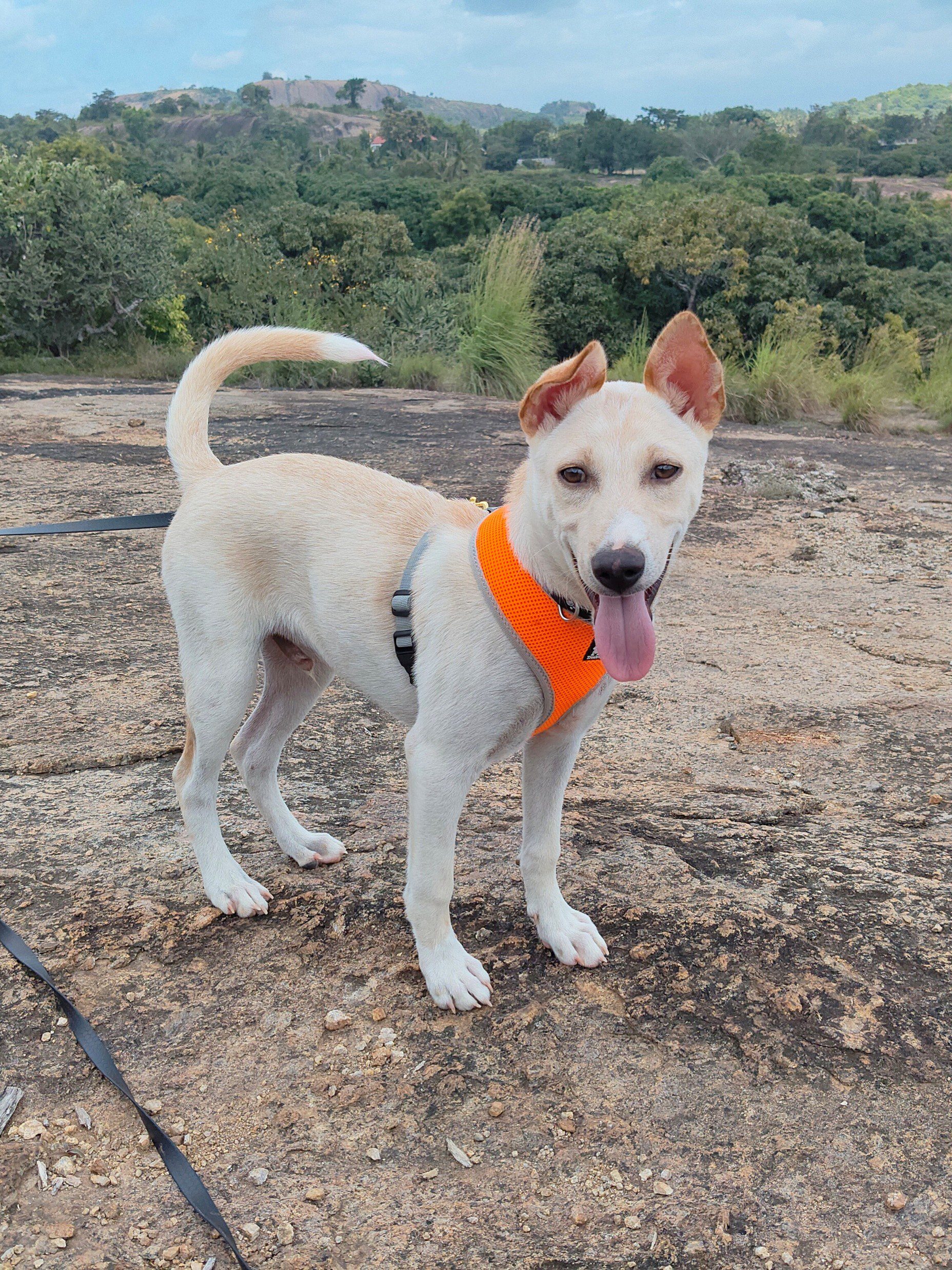
Ádi - curved tail, pointed ears, lean build. A textbook Indie.
No single standard. Shaped by the land they came from.
Most Indies share a recognisable profile: medium build, a lean frame, a slightly curved tail, and a short double coat that handles India's heat well. They typically weigh between 15 and 30 kg and stand between 46 and 64 cm tall.
Coat colours range widely - from fawn and tan to black, white, and pied. Solid blacks are rare in pure populations. The Indie's appearance varies by region, shaped by the local environment over generations.
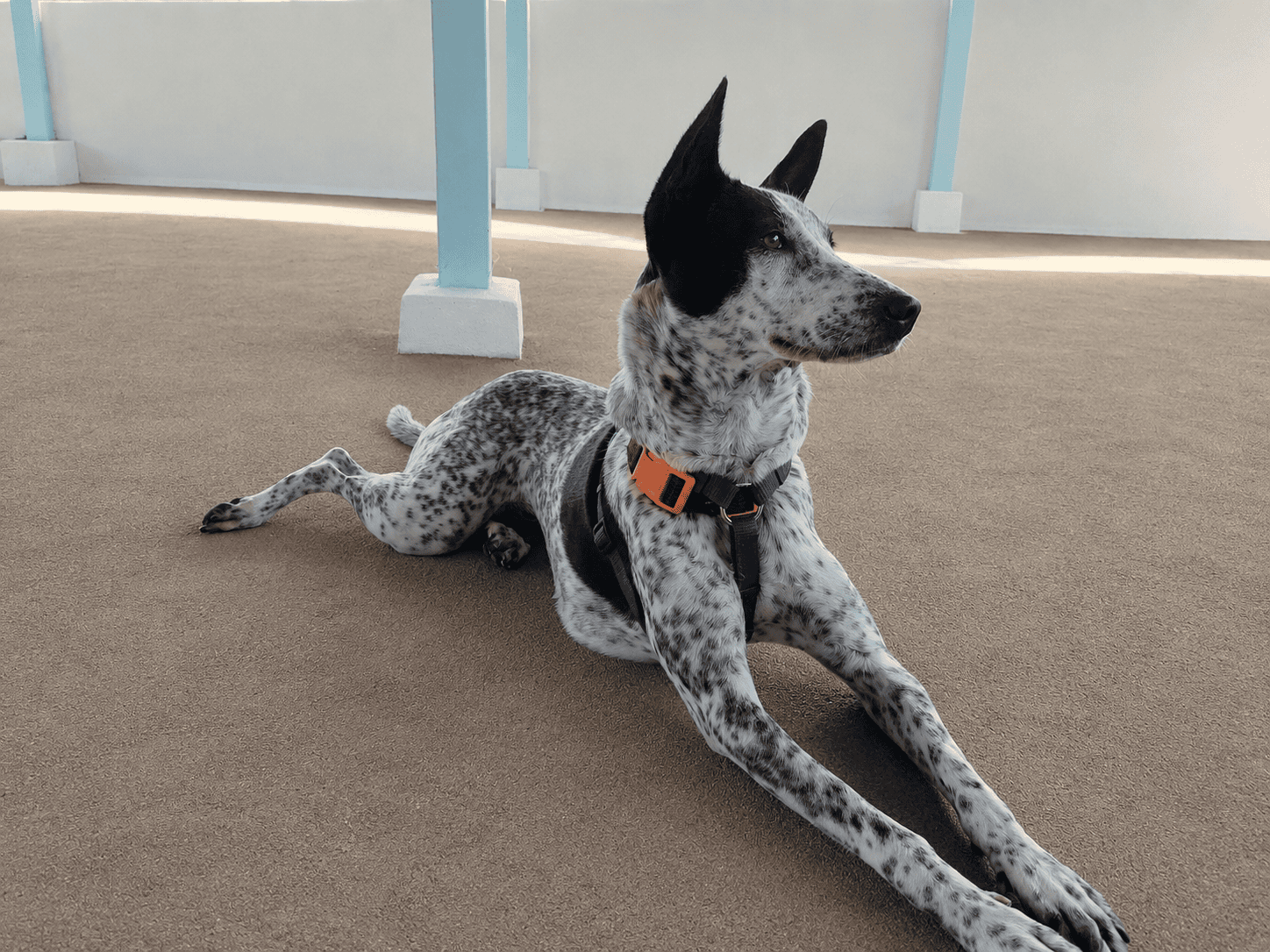
Hana - what a thousand years of natural selection looks like.
Greater genetic diversity. Fewer inherited problems.
Unlike purebred dogs - selectively bred within closed gene pools - Indies carry wide genetic diversity. Research has found that indigenous Indian dogs show higher genetic variety than their exotic counterparts such as Labradors and Pugs. This diversity is protective.
Orthopaedic disorders such as hip dysplasia appear to be less common in Indies than in many heavily selected pedigree breeds, though they can still occur. Natural selection has favoured dogs capable of surviving and reproducing under Indian environmental conditions, which makes a difference.
Indies are naturally adapted to India's climate and environment. Their long history in the region is one reason we believe selected Indies are well suited to this work.
Kaur et al., 2025 - Discover Biotechnology · Wikipedia: Indian pariah dog
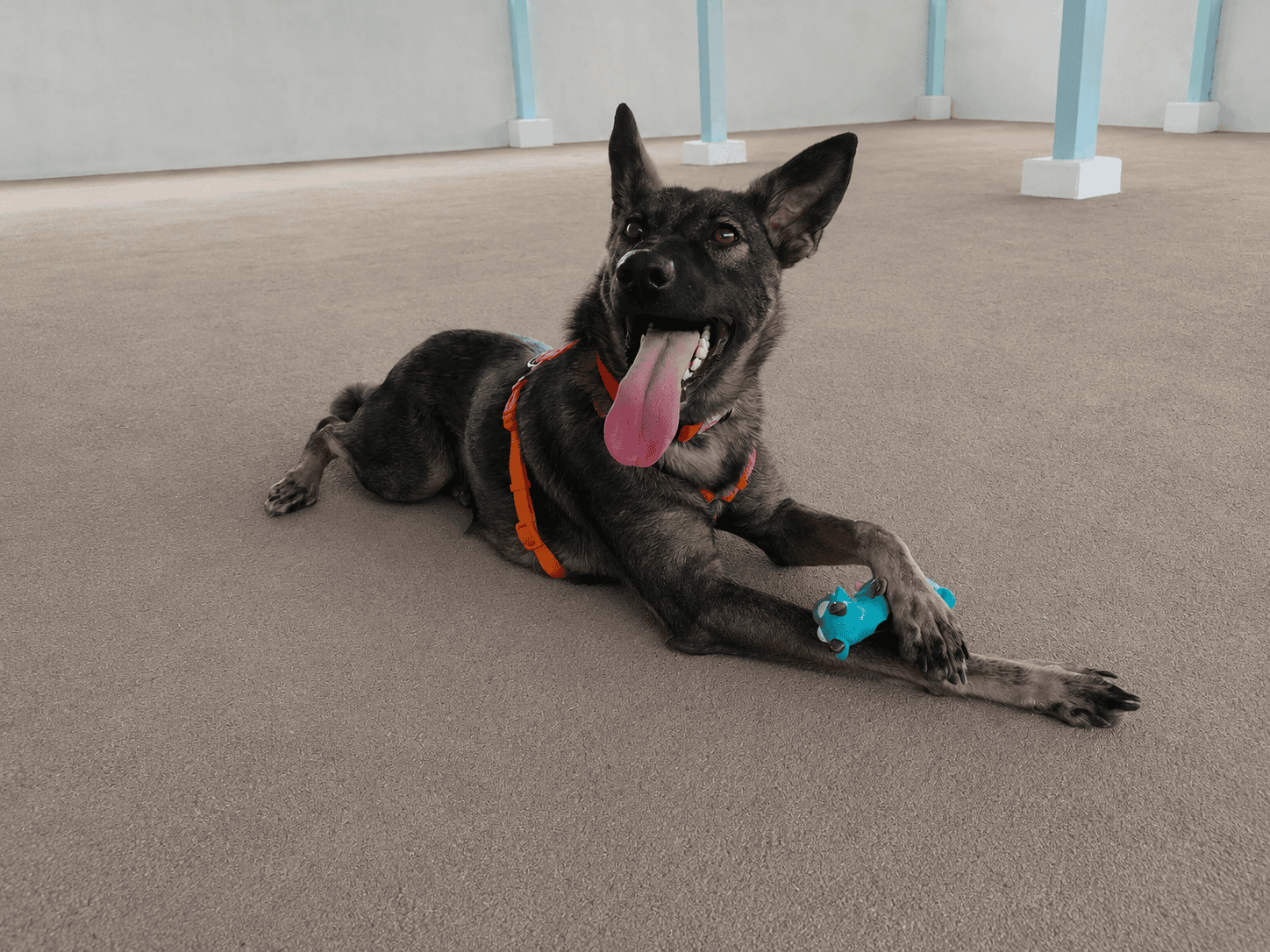
Zuri - playing. Also watching. Always watching.
Alert, perceptive, and highly adaptable.
Generations on India's streets appear to have shaped a dog that reads human behaviour quickly - a skill honed by living alongside people in complex, unpredictable environments.
They are confident, independent, and sometimes cautious with strangers. With early socialisation and careful selection, many Indies are highly trainable and capable of forming exceptionally strong bonds with the people they work with.
Their intelligence is practical. They problem-solve. They notice things. These are exactly the qualities that matter in an assistance or therapy dog.
Indies continued to be overlooked. That is changing. Slowly.
HeartDogs is part of this shift - building India's first systematic programme combining rescued Indies, home-based training, and paid women foster-trainers for assistance and therapy dog work.
Charlie, a three-legged Indie at Bengaluru's Charlie's Animal Rescue Centre, spent nearly a decade as a therapy dog for children with autism and special needs.
Open The Magazine
In 2019, Asha - a rescued Kolkata street puppy - outperformed Labradors and German Shepherds in training and became the first rescued street dog to join an Indian police K9 squad.
The Better India
Bengaluru Police have run an experimental programme training rescued Indies for K9 duty.
National Geographic
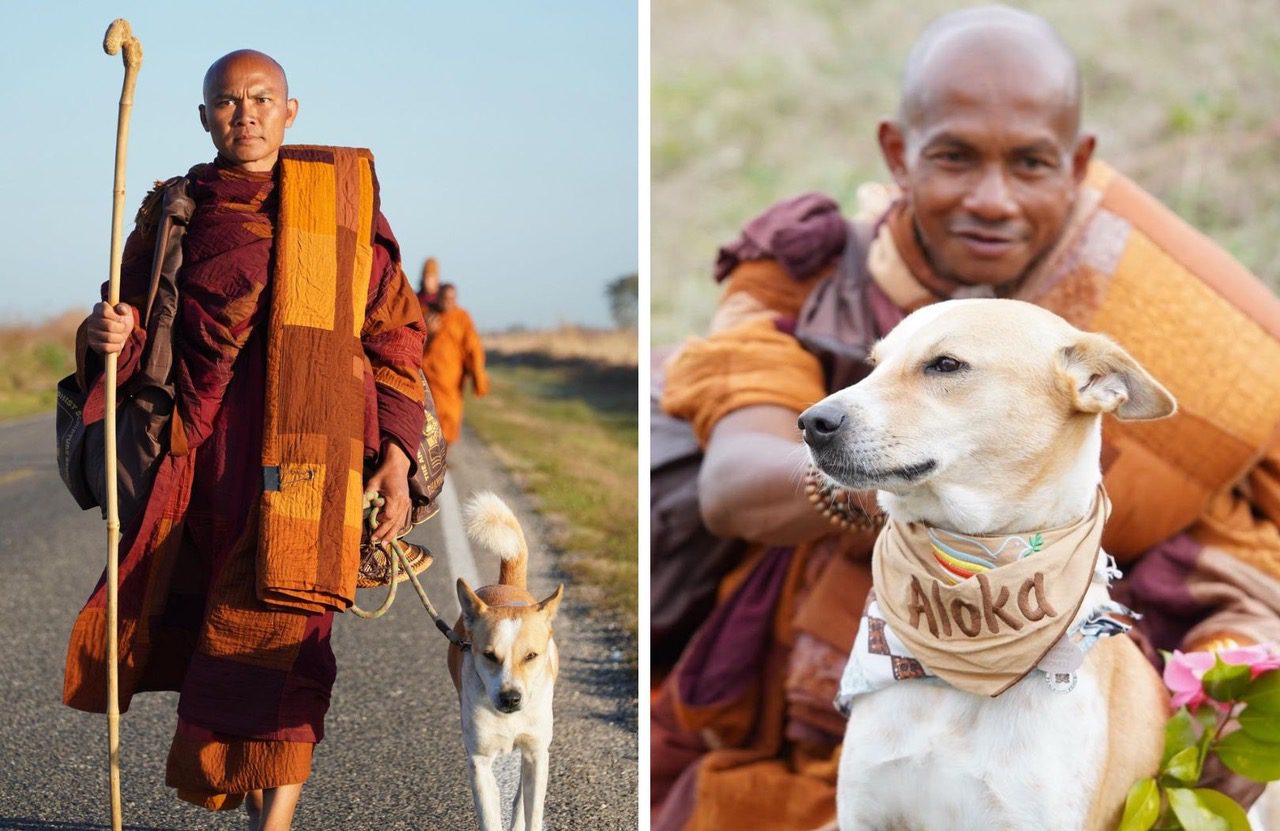
Aloka - the most famous Indian street dog in America
Photo Credit: Aloka the Peace Dog/Instagram
Shaped in India. Thriving everywhere.
The Indie's adaptability does not stop at the Indian border. Indies adopted abroad have consistently shown an extraordinary ability to settle into new environments, climates, and cultures.
Aloka, rescued near Kolkata, followed Buddhist monks across India for 112 days - then completed a 2,300-mile Walk for Peace across America in winter alongside 19 monks. He now has nearly 500,000 Instagram followers. (Good News Network)
A dog shaped by India's streets. At home everywhere it goes.
Mickey and Bella, rescued from Amritsar, are thriving with a family in Calgary - snow and all.
India Today, 2024
Close to 50 Indies brought to Canada and the US between 2018 and 2019 have all continued to thrive.
Yogi Street Dog Rescue
Peedu's People placed 43 Indie dogs from Hyderabad abroad in 2019 alone, and 117 over four years.
Times of India
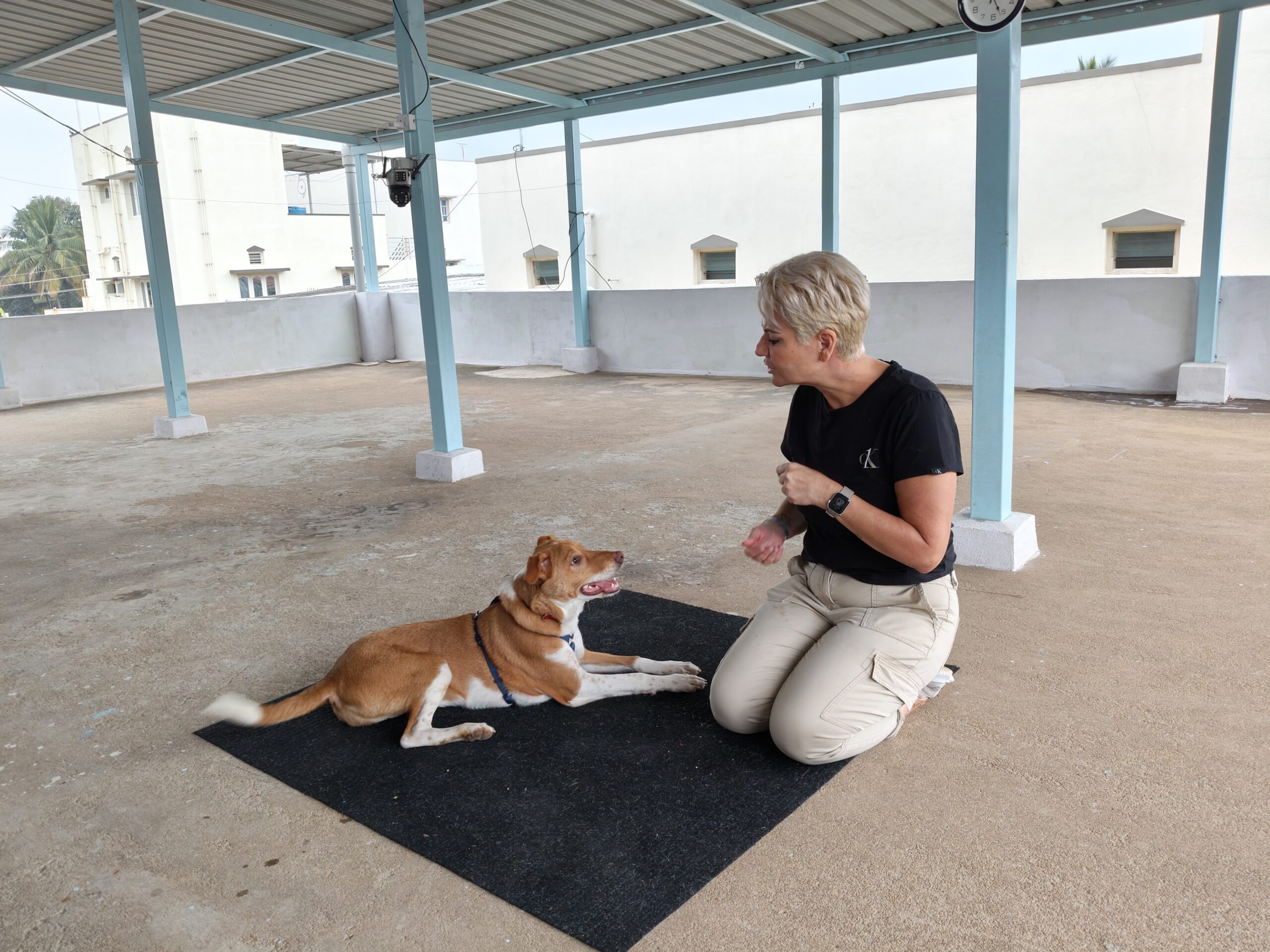
Nia with Kirsten. Doesn't miss a treat, or a cue.
It is a fair question - and one we get often.
Labradors and Golden Retrievers dominate assistance dog programmes in the West because they were bred for biddability and focus. But they also carry a greater burden of inherited genetic disorders than landrace populations, require climate adaptation in India, and often rely on specialised breeding programmes - adding cost and ethical complexity.
The Indie is already here. Already adapted. Already resilient. And millions of them live on India's streets, most without stable homes or futures.
Training them is not a compromise. It is the right choice - practically, ethically, and for India.
Further Reading +
- Indian Pariah Dog - Wikipedia
- INDog Project - Research and advocacy for India's indigenous dog
- Shannon & Boyko, 2015 - Genetic structure in village dogs reveals a Central Asian domestication origin, PNAS
- Kaur et al., 2025 - Phylogeographic and genetic diversity in Indian dog breeds, Discover Biotechnology
- National Geographic - Street dogs, Indies, India
- The Better India - Asha, the street dog who joined Kolkata's K9 squad
- Good News Network - Aloka the Peace Dog, 2300-mile walk across the US
- Times of India - Indie dogs finding homes abroad