Built for India, not for deep cold
Indies vary a lot from one dog to the next, and by region (see our post on Indie temperament and traits). Many have a lean build and a short coat, sometimes with a short undercoat. That can help in warm weather, but it may offer less insulation in the cold than a thick double coat. An individual dog's coat, body condition, age, health and prior exposure to cold all affect how well it copes.
Veterinary guidance says that dogs with a short or thin coat, low body fat, or greater age or health vulnerability need extra care in cold weather. Cornell University's College of Veterinary Medicine notes that "very young animals, older animals and short-haired breeds are the most vulnerable" in cold weather. A veterinary surgeon at Guide Dogs UK adds that lean, finely coated dogs, such as Greyhounds and Vizslas, will appreciate layers in winter.
India also has dogs that are properly cold-adapted. The Changkhi, a livestock-guarding dog native to Ladakh, was registered by ICAR-NBAGR in 2025, and a Krishi Jagran report describes it as having a dense double coat. It is very different from the typical short-coated Indie found in many parts of the plains. Dogs from different regions of India should not be assumed to have the same coat or cold tolerance.
Sources: Cornell University College of Veterinary Medicine (2021) | Guide Dogs UK, vet Q and A (2024) | ICAR-NBAGR breed registration notification (April 2025) | Krishi Jagran on the Changkhi coat (2025)
What we know and what we do not
- There is no Indie-specific research. We have not identified published studies on cold tolerance in Indies. Anything specific to the Indie rests on experience, not data.
- General canine guidance applies. The Guide Dogs vet puts it simply: how winter affects a dog "really comes down to your dog's breed, age and condition". Coat, build, age and health matter more than where the dog was born.
- Adopters report mixed-to-good experiences. One adopter in Canada told Scroll in 2017 that her dog Inde "is particularly fond of the snow" and goes snowshoeing every winter. Reports cited in our guide also mention a pair of dogs from Amritsar living with a family in Calgary. These are individual stories.
- Managed exposure shows what works. Aloka, a dog rescued in India, has joined Buddhist monks on a Walk for Peace from Texas towards Washington DC through winter. In February 2026 he was reported wearing a puffer coat and booties, riding in an escort car when snow fell, and joining the walking in short stints after leg surgery. That is a sensible pattern: protection, rest and limited time outdoors.
A handful of happy stories is not data. They show that it can work for some dogs, not that it will work for every dog.
Sources: Scroll.in (2017) | Good Good Good (February 2026)
"Cold" means different things in different places
- UK and Western Europe. Winters are cold but mostly not extreme. For a short-coated dog, the bigger problems are damp, wind and a wet coat. A Guide Dogs UK veterinary surgeon says she has never seen a case of canine frostbite in her decades of practice, noting that it rarely gets cold enough in the UK. That is her clinical experience, not a guarantee that frostbite cannot occur.
- The US and Canada. This is the harder end. Northern US states and much of Canada have long stretches of freezing temperatures, snow, ice and salted roads. The southern US is far milder.
- Australia. Most regions have milder winters than northern Europe or North America. Alpine areas and parts of Tasmania are the exception.
These are broad generalisations. A coastal city and a mountain town in the same country can be very different places for a dog.
Looking after a short-coated dog in winter
- Warm indoor living. A short-coated dog should have a warm, dry indoor living space and should not be left outside for long periods in cold weather, as Cornell advises. Guide Dogs UK adds that a car does not protect a dog from the cold for long.
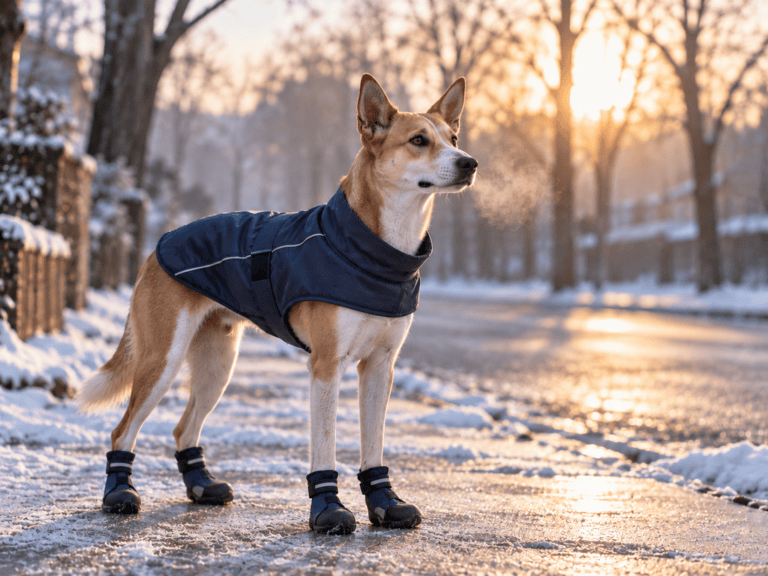
- A well-fitted coat. Use one for walks, particularly in wind or wet. It should fit well and not restrict movement.
- Paw care. Wipe or wash paws after walks to remove grit, salt and de-icing products, which can irritate paws or cause harm if swallowed. Prevent your dog from licking contaminated paws. Antifreeze is a separate, serious hazard if ingested, so keep dogs away from spills and contaminated puddles. Well-fitted booties can help protect paws in snow and ice.
- Watch for signs of being too cold. Cornell lists shivering, anxiety, moving slowly, and reluctance to walk or lifting paws. Guide Dogs UK adds lethargy, stiffness and pale gums, and advises wrapping the dog up and seeking veterinary help.
- Build up gradually. This is our suggestion, not a researched protocol: increase time outdoors slowly instead of going from a warm climate to long winter walks in a week.
- Take extra care with some dogs. Puppies, older dogs, thin dogs and dogs with health problems feel the cold more. Our post on Indie health and lifespan covers general health, and a local vet can advise on the individual dog.
Sources: Cornell University College of Veterinary Medicine (2021) | Guide Dogs UK, vet Q and A (2024)
What about an assistance dog?
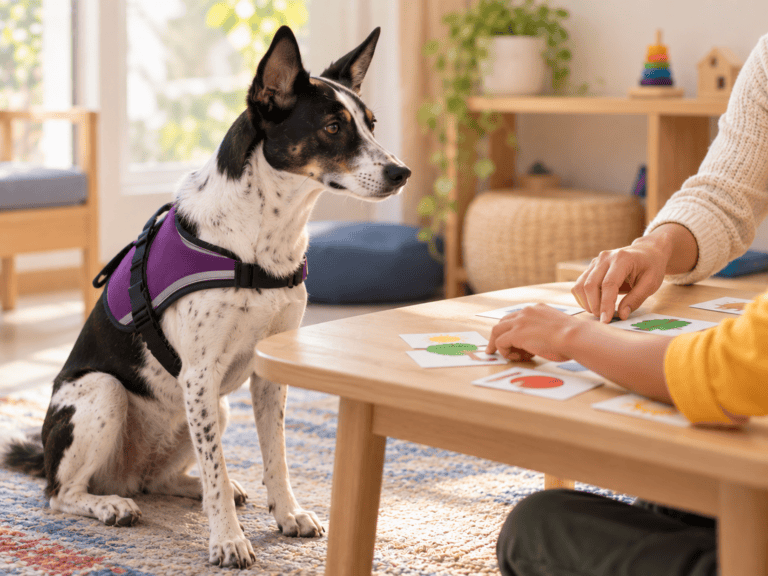
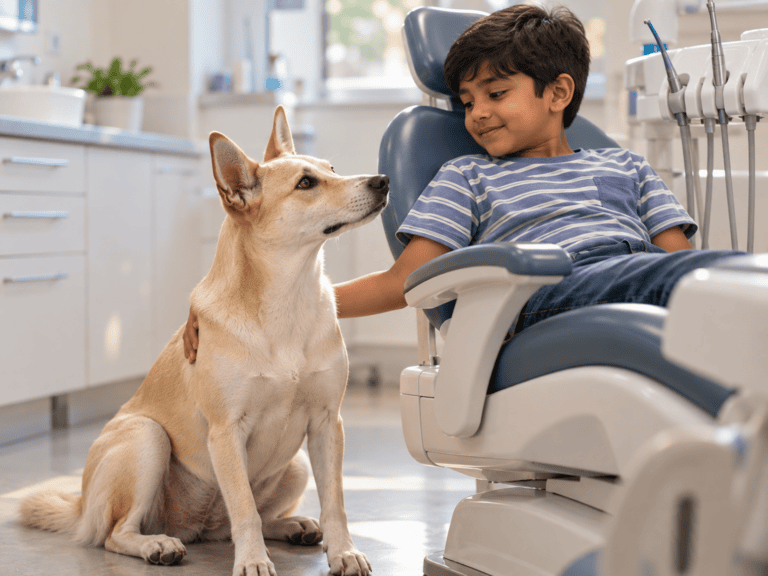
An assistance dog (also known as a service dog in certain countries, including the US) lives with one person and works mostly in homes, shops, offices and transport, which are often heated or sheltered. For many roles, the cold exposure is the walk or commute, and coats and booties can manage that.
Some roles involve longer time outdoors, and those need more thought. If a particular dog cannot manage a climate comfortably, that is a reason it may not suit that setting, just as a thick-coated breed may struggle in heat. Our posts on what makes a dog suitable for assistance work and how dogs are assessed before matching explain how suitability is judged one dog at a time.
What HeartDogs is doing
HeartDogs is working towards climate-specific care guidance, drawing on veterinary advice and the experience of guardians in colder countries, so that questions like this one are answered with evidence and each dog's welfare comes first. For why programmes in India work with Indies in the first place, see why train Indies as assistance dogs.