It is not "is this a good dog"
The question worth asking is never whether a dog is good. Nearly every dog we work with is. The real question is narrower: can this particular dog do this particular kind of work, safely and comfortably, in these environments, for this person? A dog can fail that question completely while still being an excellent, well adjusted dog, just one better suited to a different life.
Five things that matter, beyond friendliness
Research and established programme practice repeatedly highlight a group of factors associated with success, although no single checklist predicts the outcome perfectly across all dogs, roles or programmes. Some of the strongest predictive evidence comes from specific programmes and populations, such as work modelling graduation or behavioural release within one large purpose-bred organisation's own dogs, and those findings should not be treated as a universal test for every assistance dog programme or every rescued dog. For practical purposes, five broad areas are especially relevant to how we think about assessing a dog.
- Temperament. Calm, stable and able to settle, rather than constantly alert or excitable. Comfortable around people and able to remain socially appropriate and responsive to the handler, without becoming excessively attention seeking or difficult to redirect.
- Recovery from unexpected events. Every dog gets startled sometimes, by a dropped tray, a sudden shout, an unexpected touch. What matters in assessment is how the dog responds and whether it can settle and return to the task afterward, not whether it reacts at all.
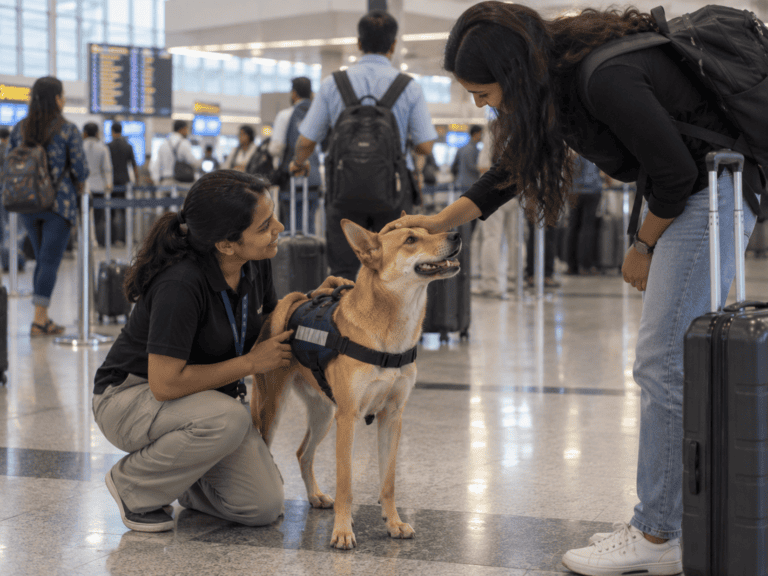
- Environmental tolerance. Able to remain functional and recover appropriately around crowds, traffic, unfamiliar surfaces, wheelchairs, lifts and loud, unpredictable spaces, not merely enduring those settings while distressed.
- Trainability, focus and generalisation. Learning reliably, responding consistently, and carrying that training across different people, places and real distractions, not just a calm training room.
- Physical health. Sound joints, adequate stamina, and a body suited to the specific demands of the role in question, assessed and monitored with proper veterinary input rather than observation alone, since a dog fit for a quiet therapy visit is not automatically fit for physically demanding mobility work.
Notice that intelligence and obedience are not on this list by themselves. A dog can learn every cue perfectly in a calm room and still be unsuitable, because the real test is whether that training holds up in an unpredictable, busy, real-world environment.
Assistance Dog Training Outcomes - Predictive Behavioural Models · Assistance Dog Selection Methods, Review
The honest reasons dogs do not make it through
Being ruled out here means ruled out for a particular role, programme stage or working environment, not necessarily ruled out as a dog, a companion, or another kind of working partner altogether. With that in mind, studies looking at why dogs are withdrawn from established guide and assistance dog programmes, across thousands of dogs, consistently point to a similar shortlist of reasons, and it is worth being upfront about them:
- Environmental anxiety, training difficulty, or fear and aggression. These are recurring behavioural categories behind withdrawal in guide dog and assistance dog programmes. Their relative importance varies between organisations and dog populations, but together they account for a large share of dogs who do not complete training.
- Excitability or distractibility. A dog that cannot stay settled or focused enough to work reliably around real distractions.
- Persistent stress that does not ease. Signs of stress that do not resolve with reasonable changes to the environment, training plan or workload, rather than a one-off bad day.
- Health limitations. Joint problems, low stamina, or a physical condition that would make a specific role painful or unsafe over time. Health and orthopaedic problems account for a meaningful share of withdrawals in their own right, alongside behavioural reasons.
None of these are moral failings on the dog's part, and none of them are about a dog being "bad." A dog with real, persistent environmental anxiety is not a badly behaved dog. It is a dog whose comfort and safety come first, and for whom this particular job is the wrong fit.
Hunt et al., 2020 - Puppy Behaviour and Guide Dog Training Outcomes · Guide Dog Withdrawal Categories, Australian Study
Ruled out for one role is not ruled out for every role
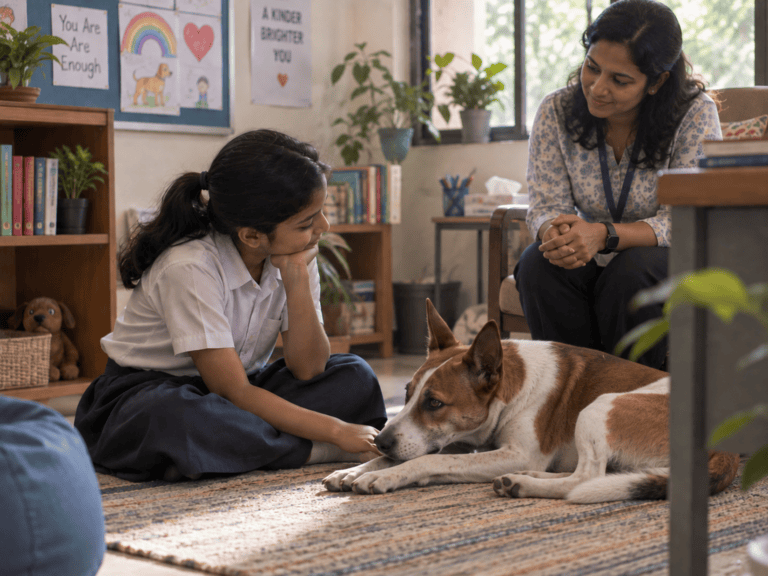
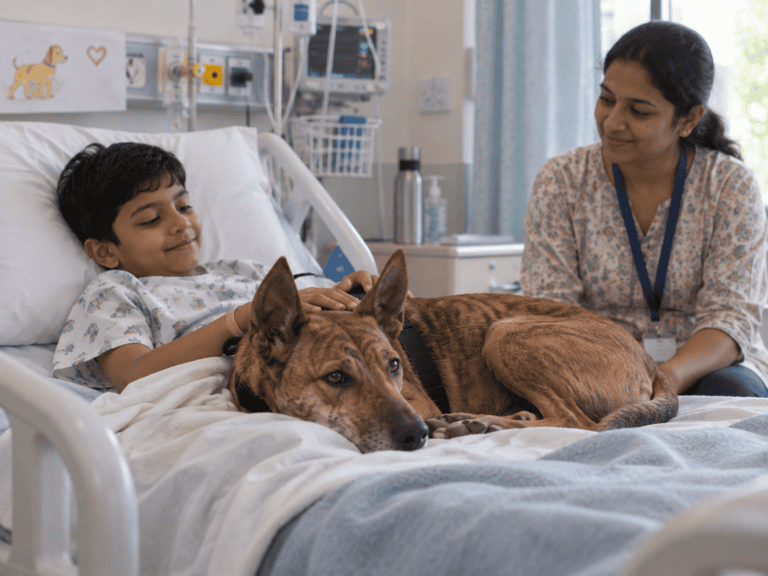
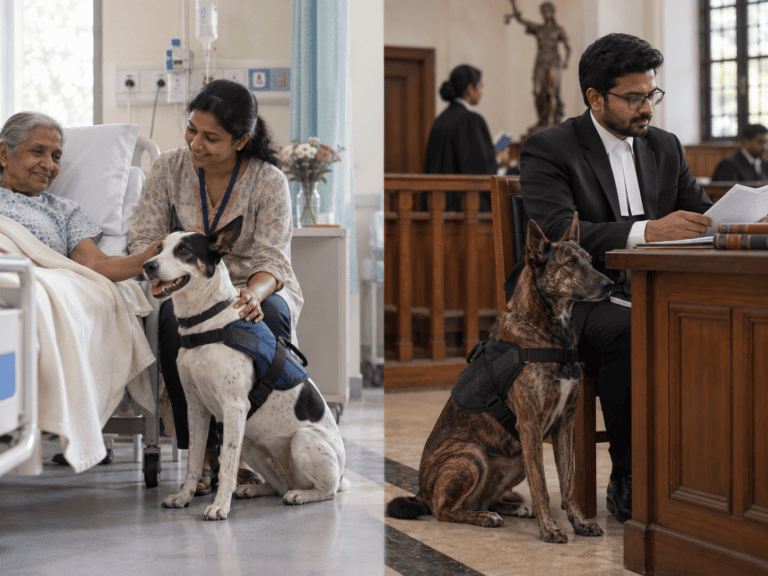
Suitability is not a single pass or fail label attached to a dog forever. A dog might be unsuited to the noise and unpredictability of hospital corridors but genuinely thrive in a quiet school reading corner. A dog ruled out for physically demanding mobility work might be a wonderful fit for a calmer therapy role that asks less of its body. And a dog that does not suit any formal working role at all can still be an outstanding companion, which is its own complete, successful outcome, not a consolation prize.
Why we watch longer before we decide
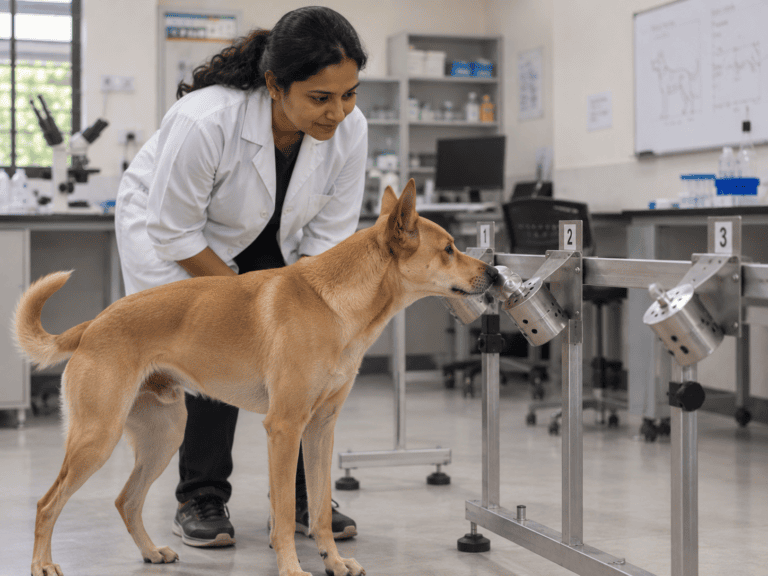
Working with rescued Indies rather than dogs from purpose-bred programmes often means working with less documented early history and developmental experience, and sometimes less complete health information. A rescued dog's early history may be incomplete or uncertain, so confidence we see in one setting does not automatically tell us how that dog will handle a different one, and behaviour can genuinely shift as a dog settles further into training and becomes more familiar with us. This is not a reason to assume rescued dogs are less suitable for this work. It is a reason to base decisions on repeated observation over time, rather than a single early test, which is exactly why our own assessment process runs as long as it does.
Why we would rather stop early than push a dog through
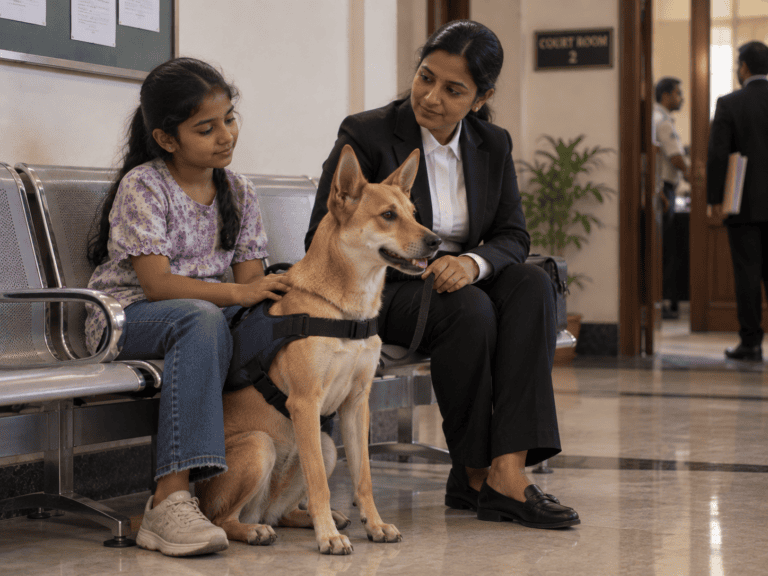
Our assessment process begins with possibility, not a promise. Early observations are not treated as final verdicts, but neither are they ignored; decisions are updated as evidence accumulates across people, settings and months of training. We look for what each dog can do comfortably, what environments it can handle, what kind of work it may genuinely enjoy, and where its limits sit. The outcome might be assistance work, therapy work, or a companion home, and none of those is treated as the disappointing option.
This is also an honest explanation for why serious assistance dog programmes everywhere, not just ours, see a meaningful number of dogs not complete the full training path. We would rather release a dog from a role that does not suit it and help find the right life instead, than keep pushing simply because time and training have already been invested. That is not a loss. It is the whole point of taking suitability seriously in the first place.