Therapy dog visits in a terminal setting
Across many documented airport programmes, the structure is similar. A volunteer - who owns the dog and lives with it - brings their certified therapy dog to the airport on a scheduled shift, typically lasting one to three hours. They walk through terminals, wait in gate areas, and allow passengers to approach, pet, and interact with the dog. Then the shift ends, and the handler and dog go home.
At LAX, each volunteer works one weekly shift of one to two hours at a single assigned terminal. The dogs must be privately owned by the handler, at least two years old, and registered with a recognised therapy dog organisation. Handlers must have at least one year of prior therapy dog experience before applying. At Denver International, volunteer teams average around three visits per month and complete a minimum of ten hours per quarter. Both airports require handlers to pass security screening and airport-specific training before receiving an airport badge.
The publicly documented airport comfort programmes we examined are predominantly volunteer therapy-animal visiting programmes. The dog and handler work scheduled shifts, interact with passengers who choose to participate, and leave at the end. That is different from a facility-dog model built around an ongoing professional role, a defined caseload, continuity, and individualised goals.
Pets Unstressing Passengers (PUP) Programme, Los Angeles World Airports | Canine Airport Therapy Squad (CATS), Denver International Airport
The structure of the work, not the building it's in
In our earlier pieces on facility dogs generally, hospital facility dogs, courthouse facility dogs, and school facility dogs, a consistent pattern emerged: a facility dog works embedded in a professional's ongoing practice, with specific goals for specific individuals, continuity over time, and documentation.
Most airport comfort programmes do not have that structure. In the usual airport comfort model, the dog is not assigned to a continuing caseload of named individuals. A hospital has patients in ongoing care. A courthouse has witnesses returning for proceedings. A school has students who come back every day. A typical airport has a crowd of strangers passing through once, going somewhere else. The passengers are different every hour. There is no treatment plan, no clinical goal, no handler whose professional role is built around the dog's work with specific people over time.
That's not a gap in the airport model - it's a different context. The airport therapy dog's role is usually brief, voluntary comfort for individual passengers who choose to interact. That is exactly what therapy dog visits are designed to do, and the airport is a reasonable place to do it. Calling a conventional volunteer airport comfort programme a facility-dog programme would blur an important distinction in role, staffing, and accountability.
Adelaide Airport's Elmo - and what he tells us
Adelaide Airport in Australia has done something genuinely different. Elmo is a trained facility dog integrated into the airport's Hidden Disabilities programme. Adelaide Airport describes him as the first internationally accredited facility dog at any Australian airport, and its corporate reporting calls him part of the airport's ongoing accessibility work.
Elmo does not roam the terminal offering ambient comfort. Travellers can book up to 45-minute sessions with Elmo and his handler. The programme is designed to support travellers who may feel anxious, overwhelmed, unfamiliar with the airport environment, or in need of support related to a hidden disability. The defined support role, institutional integration, and ongoing responsibility for this service are what make this a facility dog arrangement - not the fact that it happens in an airport.
This is actually the more precise and useful conclusion: a facility dog isn't defined by the kind of building it works in. It's defined by the structure of the work. A therapy dog programme brings a dog into a public space to offer voluntary, general comfort. A facility dog is embedded in an institutional service with a defined role, trained handler, and ongoing responsibility for a particular kind of support. Adelaide has built that second thing inside an airport, by creating a specific accessibility purpose for it to serve.
Short-term interaction, short-term effect - and honest limits
We did not identify peer-reviewed studies directly evaluating the major airport therapy dog programmes described here. What exists is a broader body of research on brief human-animal interactions - and that research is modestly positive, with caveats.
A 2018 randomised study of a university therapy dog programme found that a single brief session produced immediate reductions in students' reported stress and increases in happiness and energy, though effects measured several hours later were much smaller. A separate 2017 Frontiers in Psychology paper examined cortisol and oxytocin responses in dog-owner interactions - a small exploratory study involving owners with their own dogs rather than strangers meeting therapy dogs. Neither study took place in an airport. These findings suggest that brief animal interaction can have short-term effects on stress and mood in some settings; they do not establish the effectiveness of airport therapy dog programmes specifically.
A 2025 Science Norway report quoted researchers and practitioners who described likely short-term calming effects from dog interaction, while also noting that most studies measure outcomes only immediately before and after the interaction and that long-term evidence is still lacking. Air travel and airport processes can be stressful for many passengers - particularly during delays, crowding, or unfamiliar situations - and if brief dog contact produces short-term calming, the application is plausible. But "plausible" and "demonstrated" are different things.
We did not identify peer-reviewed research specifically on airport therapy dog programmes. The broader human-animal interaction literature suggests short-term effects on stress in some settings - but those findings don't transfer automatically to the airport context, and airport-specific evidence remains thin.
Petting Away Pre-Exam Stress: The Effect of Therapy Dog Sessions on Student Well-Being, Stress and Health 2018 | Do Therapy Dogs at Airports Help Calm Anxious Travellers? Science Norway, 2025
Not all dogs in airports are the same
Airports have several categories of dogs, and confusing them is easy.
- Security and detection dogs - trained to detect explosives, narcotics, or other prohibited items. These are working dogs in the full sense: professionally trained, handler-led, goal-directed, and not available to passengers. A vest that says "Do Not Pet" is the clearest signal.
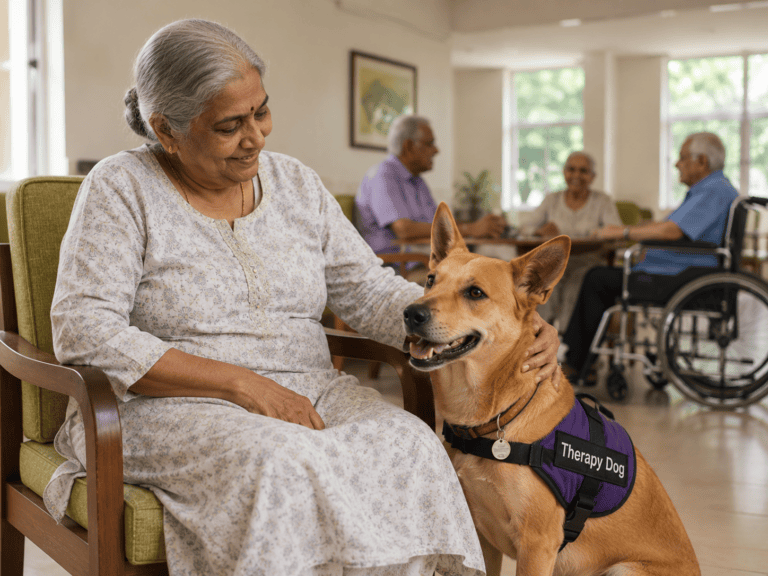
- Therapy dogs - the airport comfort programmes described in this piece. Volunteer-handled, certified by a therapy dog organisation, available for passenger interaction during scheduled shifts. Vests usually say "Pet Me" or carry the programme's name.
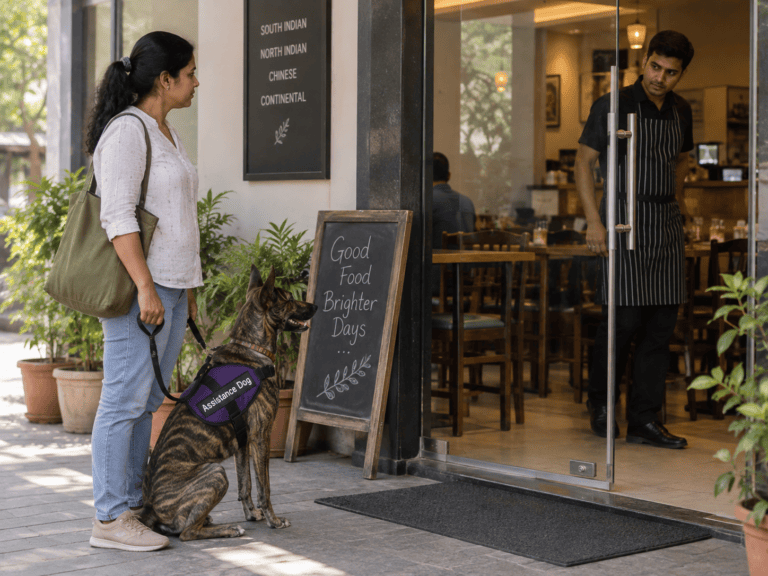
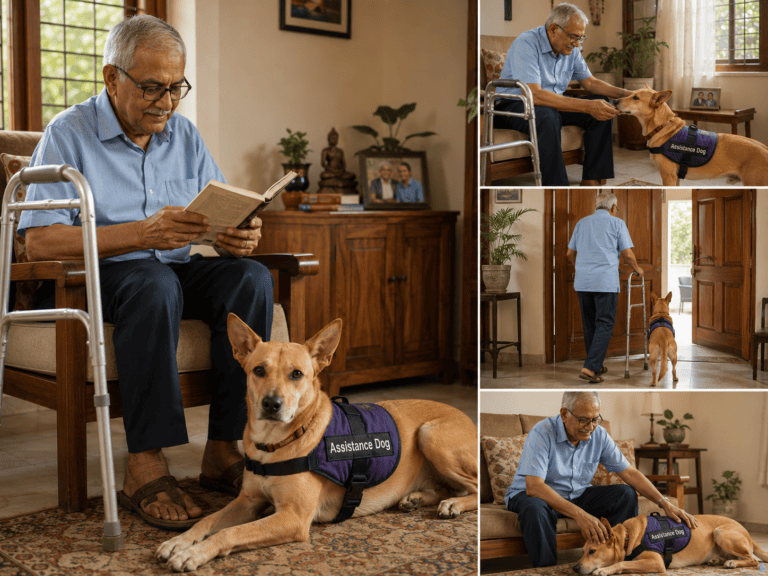
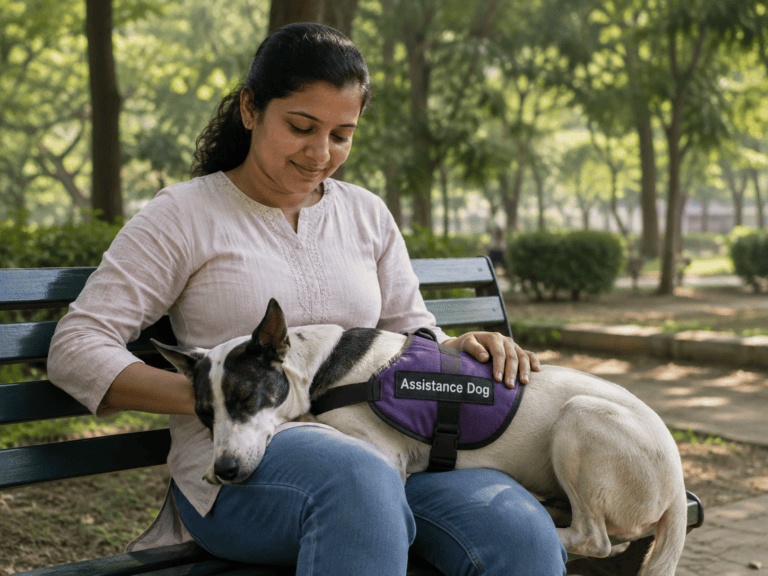
- Assistance dogs - dogs accompanying a specific passenger with a disability, trained to perform tasks that mitigate that person's disability. These dogs are not available for interaction; they are working. Attempting to pet or distract an assistance dog in an airport is both unhelpful and potentially harmful to the passenger who depends on the dog. In the US, this category is covered by the Americans with Disabilities Act under the term "service animal."
- Emotional support animals (ESAs) - a separate category, with no standard training requirement. ESAs are distinct from task-trained assistance dogs and generally do not carry the same public-access recognition. India does not appear to have a general statutory public-access entitlement for ESAs equivalent to the US ADA framework; airline and airport policies therefore need to be checked individually. We covered this in more detail in our earlier piece on ESAs.
The vests help, but only if passengers know what they're looking at. The programme name, the handler's engagement, and what the vest actually says are the signals to read.
Real programmes, worth watching
India has hosted airport therapy dog initiatives for several years. An earlier airport therapy dog project at Mumbai's Terminal 2 ran between 2014 and 2017. The later Pawfect initiative was reported at Terminal 2 in 2024, with nine trained dogs - including a rescued Indie - in the departures area on weekends. The programme is described variously as an emotional-support or therapy dog initiative in different media reports, which itself reflects how interchangeably this language is used.
A 2025 report described a Delhi airport programme as operating in Terminals 1 and 3 from Monday to Saturday. A comfort-dog programme has also been reported at Hyderabad airport. Both are volunteer-based visiting models: dogs come in on a schedule, interact with passengers, and leave.
What is less clear - and what would be worth developing - is any structured public framework around these programmes: welfare protocols for the dogs, guidance on rest breaks and shift limits, allergy and phobia management for passengers who are not comfortable around dogs, and clear public communication distinguishing the comfort dogs from assistance dogs and security dogs. The publicly available descriptions do not make clear how consistently these programmes apply such protocols. These are not things that require a facility dog model to solve. They're things that make a therapy dog programme more robust and more respectful of everyone involved - including the dogs.
At HeartDogs, we're watching the growth of animal-assisted intervention in Indian public spaces with real interest. Our current focus is building Cohort 1 - training rescued Indies as assistance and therapy dogs through what we believe to be India's first systematic programme of this kind. Airport therapy dog work is a space we're actively thinking about for the future. The fact that India already has therapy dogs in multiple major airports, including an Indie in Mumbai's programme, is a signal that the ground is being prepared.
Beat Travel Anxiety With Therapy Dogs at Delhi Airport, Outlook Traveller 2025 | Mumbai Airport Gets Therapy Dogs for Emotional Support, Gulf News 2024
Airports are unusual environments for any animal
Airports are loud, unpredictable, and full of strangers approaching from unexpected directions. PA announcements, trolleys, rushing families, food court smells - it is a high-stimulation environment that a dog must be genuinely comfortable in before it should be working there.
Most airport programmes require dogs to be certified by a recognised therapy dog organisation before joining, which includes temperament screening. Denver's CATS programme requires registration with the Alliance of Therapy Dogs or Pet Partners. LAX's PUP programme requires at least one year of prior therapy dog experience before a handler can apply. These are meaningful filters, not formalities.
But certification is a starting point, not an ongoing guarantee. The handler's responsibility is to monitor the dog continuously for signs of stress - ears pinned back, tail tucked, repeated yawning, trying to move away from interactions - and to end the shift early if the dog is not comfortable. A dog that handles a hospital corridor well may find an airport's particular stimulation profile different. The programme's dogs are reportedly selected and trained for the unusually demanding environment of an airport, including crowds, loud noise, and frequent interactions with strangers. That selection and ongoing monitoring is what makes a programme responsible rather than performative.
It's the structure of the work, not the setting
Throughout this Facility Dog track on FootNotes - covering courthouses, hospitals, schools, and now airports - one lesson keeps sharpening: what makes something a facility dog programme is not the building the dog works in. It's whether the dog is embedded in an institutional role with a defined purpose, a professional handler, continuity, and responsibility for specific kinds of support.
For most airports, the therapy dog model makes sense. The population is transient, the stressor is ambient, and the interaction is brief and voluntary. In the typical airport therapy dog model, no individual treatment goals are required and no clinical professional needs to be involved. A therapy dog roaming a terminal is doing exactly what therapy dogs are designed to do.
But Adelaide's Elmo shows that a facility dog model can also work in an airport - when the airport creates a defined accessibility role for it to serve. The distinction isn't about which setting the dog works in. It's about whether the dog is integrated into an institutional service with a defined purpose, professional oversight, continuity of responsibility, and structured support for a particular population or type of need. When those elements exist, the facility dog model applies. When they don't, the therapy dog model is the right fit.
That's a more useful conclusion than "airports get therapy dogs." It means the question any airport administrator should ask isn't "should we have a dog?" but "what kind of programme are we actually building - and does the model match the purpose?"