A calm, trained presence through the hardest parts of a case
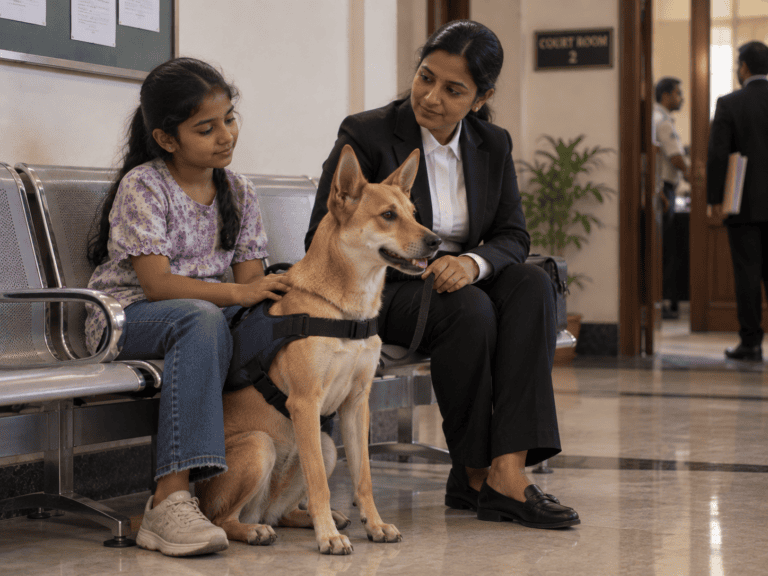
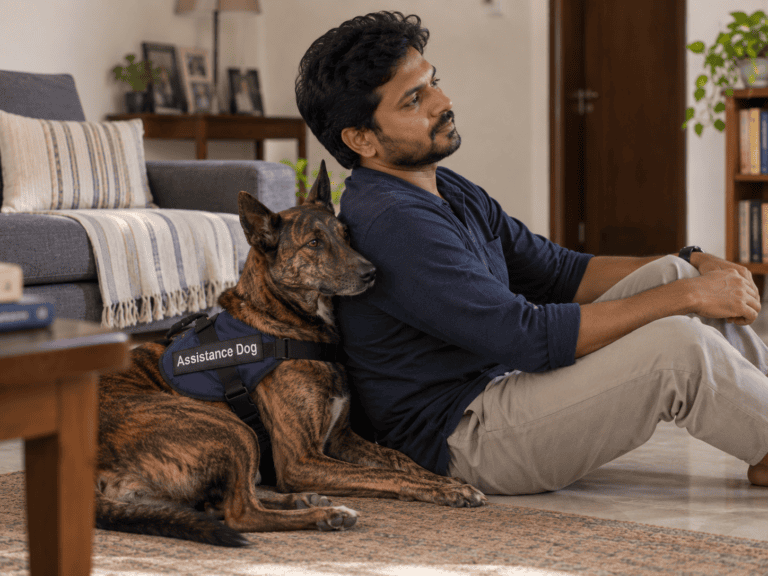
A courthouse facility dog is typically handled by a professional working within the justice system, often a victim advocate or a prosecutor's office employee, and the dog accompanies vulnerable witnesses, most often children, through forensic interviews, depositions, and sometimes courtroom testimony itself. The dog does not perform any legal function. Its role is to provide a calm, familiar physical presence during what is often the most frightening and difficult experience of a young witness's life, sitting or lying near the witness, sometimes within physical reach so the child can touch the dog for comfort during questioning.
Some genuine evidence, and honest limits to it
One frequently cited piece of evidence comes from a 2015 study by Holton, which examined children's disclosures of abuse when a therapy dog was present during an interview. Children disclosed abuse in 81.8 percent of cases where a therapy dog was incorporated, compared with 33.7 percent of cases where one was not. This is relevant background evidence for dog-assisted support of child witnesses, but it is worth being precise that this particular study concerns therapy dogs in an interview setting, not courthouse facility dogs specifically, so it is not direct evidence that courthouse facility dogs themselves increase disclosure. It is also worth noting that this comparison came from real cases rather than a randomised experiment, which means it can show a strong association without proving that the dog caused the difference, since cases where a dog was involved may also have differed in other ways from cases where one was not.
A separate, more controlled line of research has looked specifically at the legal objection courthouse facility dogs face most often: that a dog's presence might unfairly bias a jury in favour of the witness, or against the defendant. A 2019 study by Burd and McQuiston used two mock trial experiments, presenting jurors with a case involving a child witness accompanied by either a facility dog, a teddy bear, or no accommodation. Across these experiments, the study reported that facility dogs did not produce a prejudicial effect against the defendant, and that jurors' perceptions of the child witness were not affected by which accommodation, if any, was present. In one of the two experiments, a teddy bear was associated with greater perceived guilt of the defendant, while the facility dog was not. This is a genuinely useful finding for a legal debate that has real stakes, since it speaks directly to the central objection raised against the practice, though it comes from mock trial conditions rather than real courtrooms, and further research continues in this area.
Courts have allowed some uses, but not without challenge
Defence attorneys have repeatedly challenged the use of courthouse facility dogs, arguing that a dog's calming presence could unfairly increase a witness's perceived credibility or generate sympathy that biases the outcome. Courts in several US jurisdictions have considered these arguments, with many permitting courthouse dogs subject to safeguards intended to protect the fairness of proceedings, such as the ability to remove a disruptive dog. A growing number of US jurisdictions have enacted statutes, court rules or programme policies addressing courthouse facility dogs, but the specific rules and the level of judicial discretion vary considerably by state and case.
The role has expanded into family and dependency courts too
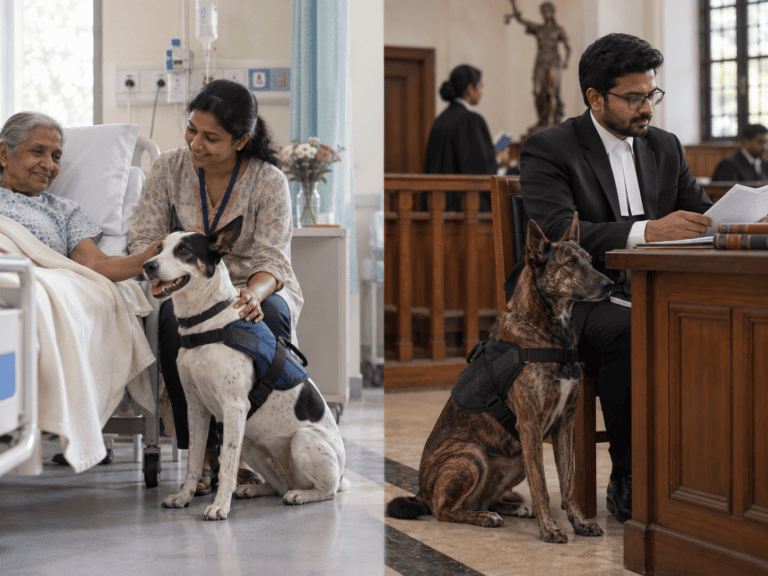
Courthouse facility dogs are not limited to criminal trials involving child sexual abuse, the context where the practice first became well known. The role has also been reported in family and dependency courts in at least some jurisdictions, recognising that vulnerable witnesses and parties, including children in custody or abuse proceedings, face similar stress in those settings. This reflects the broader point we made in our earlier piece on facility dogs generally: the role is defined by the professional and institutional context the dog is embedded in, not by a single narrow application.
The dog's own experience in a stressful environment
Courtrooms and forensic interview settings are emotionally heavy, unpredictable environments, and it is worth acknowledging that a facility dog working in this context is repeatedly exposed to real distress, tension and unfamiliar procedural demands. Responsible courthouse facility dog programmes generally select and train dogs for the calmness, neutrality and environmental stability required in this setting, and build in rest, recovery time and ongoing welfare monitoring for the dog, rather than treating the dog purely as a fixture of the room. Any programme considering this kind of work should weigh the dog's wellbeing as seriously as the benefit to the witness, not as an afterthought to it.
Why this is a meaningful long term direction for us
Courthouse facility dog work is one of the clearer, better evidenced applications within the broader facility dog category we discussed in our earlier piece, and it is a genuinely significant potential direction for us in India, where structured courthouse facility dog programmes do not yet appear to be widely established. This is not a direction we are pursuing yet. It would require partnership with the justice system itself, rigorous dog and handler training specific to legal proceedings, and the kind of institutional trust that takes real time to build.
We think it is worth naming as a long term goal precisely because of how well evidenced and legally tested this particular facility dog role has become elsewhere. When the time is right to explore it seriously, we would rather build on that existing body of research and legal precedent than treat it as an unproven idea.