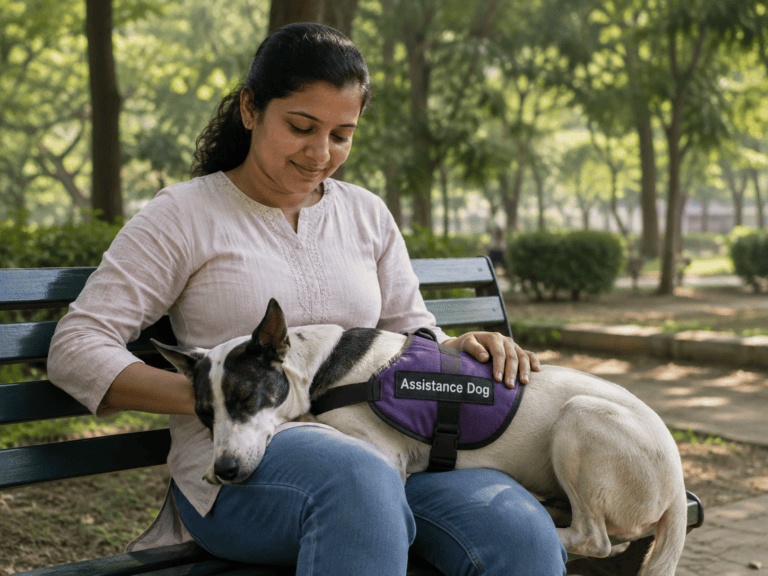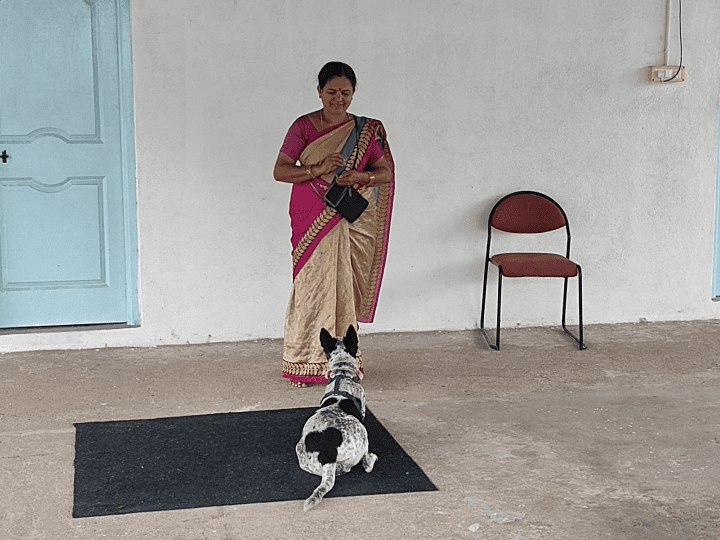
What a foster-trainer actually does
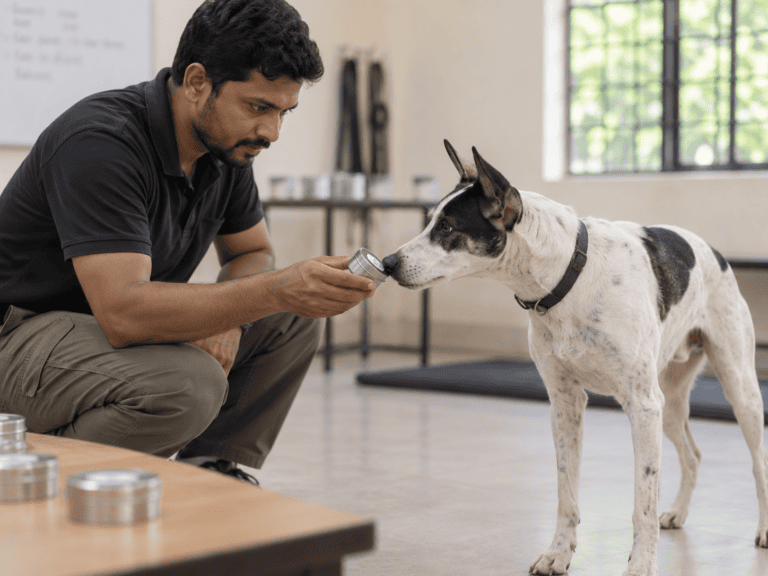
A foster-trainer isn't responsible for designing the training programme. That's the job of the professional trainer. A foster-trainer provides something different - consistent daily care, a real home environment, and a steady human relationship for a dog that is being prepared for a life of purposeful work.
These things don't require a degree. They require patience, reliability, attention and genuine care for the animal. Many women in rural communities have all of this in abundance, shaped by years of managing households, livestock and community relationships with very little formal recognition.
Why home-based training is better for the dog
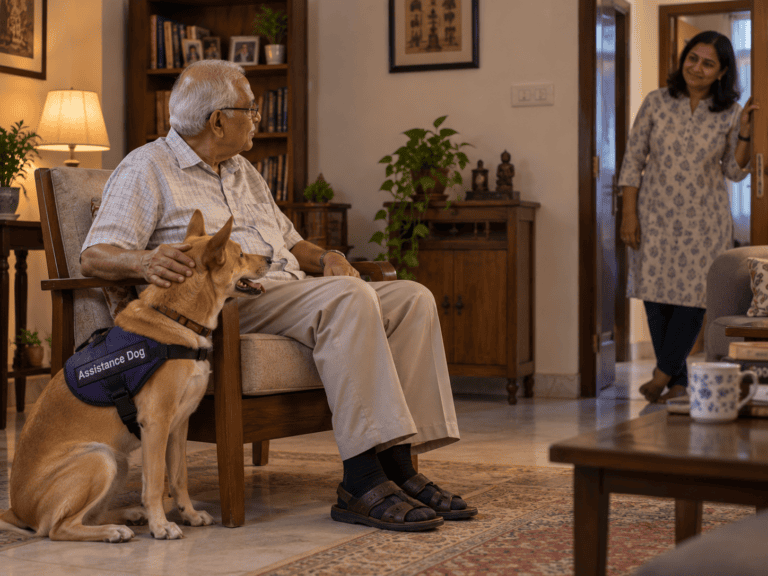
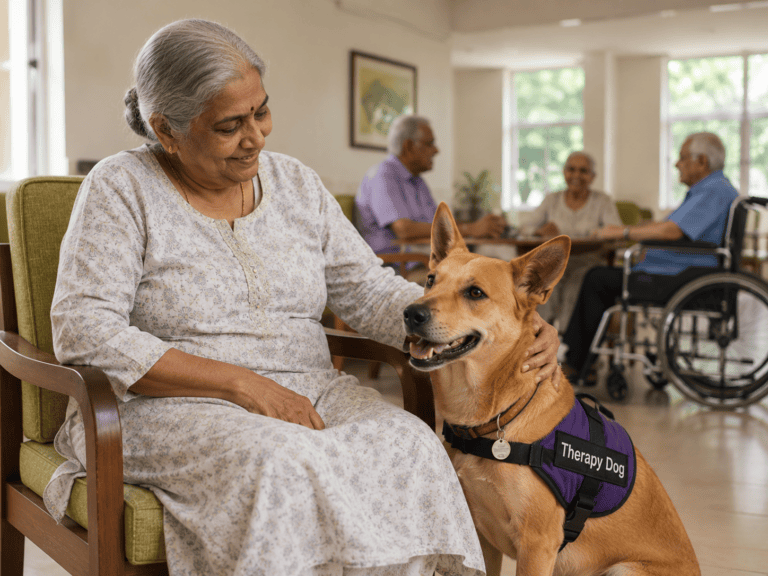
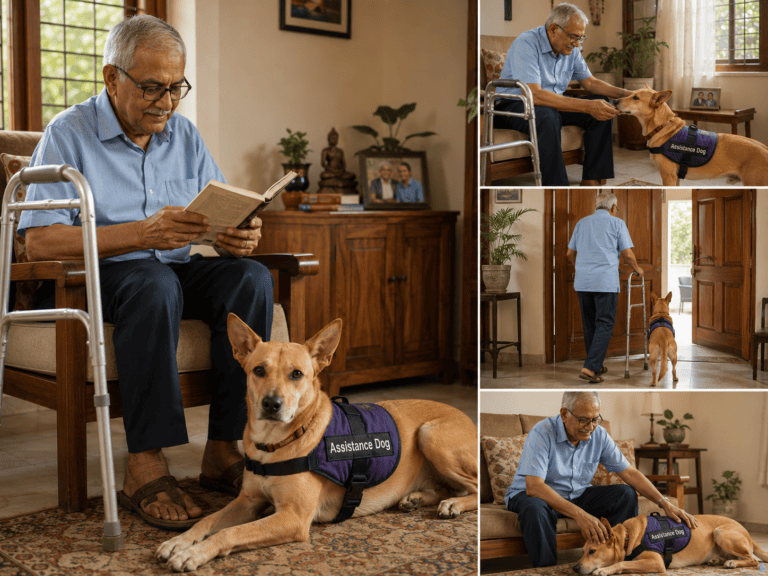
Assistance and therapy dogs ultimately live and work in homes and institutions, not kennels. A dog that learns its early cues and social behaviour inside a real household - around people, cooking smells, visitors, daily routines - is far better prepared for the environment it will eventually work in than a dog raised in a facility.
The foster-trainer's home is the dog's first classroom. That makes the foster-trainer not just a caregiver, but an essential part of what shapes the dog's temperament and confidence.
This isn't a compromise. It's a deliberate choice.
- Availability and commitment. Women in rural communities are often available for the consistent daily presence that raising a dog in training requires. That consistency is exactly what the dog needs at this stage.
- The work creates genuine livelihoods. For women in rural India with limited access to formal employment, this is real, skilled, paid work - not volunteering, not charity. The programme is designed so that the work benefits the woman, the dog and eventually the person who receives it.
- Proximity to Indies. Rural areas are where many of these dogs already live. Working with local women means the dogs are being trained in environments they already know - the sounds, the smells, the rhythms of life they grew up in.
What no formal background actually means - and doesn't
It means no prior professional training in animal behaviour. It doesn't mean unskilled, inexperienced or unsuitable. Every foster-trainer in the HeartDogs programme is trained before they begin, supported throughout, and assessed on an ongoing basis by the professional trainer overseeing the programme.
The formal background gets built through the programme itself. That's how most skilled work in India - and elsewhere - has always started.
What we are building
A model where the people doing the daily work are genuinely valued, genuinely paid and genuinely capable - not despite their background, but because of what they bring to it.