Socialisation is not just "meeting people"
Socialisation is the process of helping a dog develop appropriate, flexible responses to the people, animals, environments, sounds, surfaces and situations it is likely to encounter. It is not simply exposure. A puppy that is thrown into a crowded market and overwhelmed is being exposed but not necessarily socialised. The distinction matters. For a working dog, the goal is a dog that can remain comfortable enough to work, disengage from distractions and recover promptly when something unexpected happens.
Effective socialisation involves systematic, graduated, positive exposure to the full range of things a dog will encounter in its adult role. Each encounter should be noticeable but manageable - not so intense that it frightens or overwhelms the dog. Over repeated successful exposures, the dog may become less reactive and more able to remain regulated around previously novel stimuli.
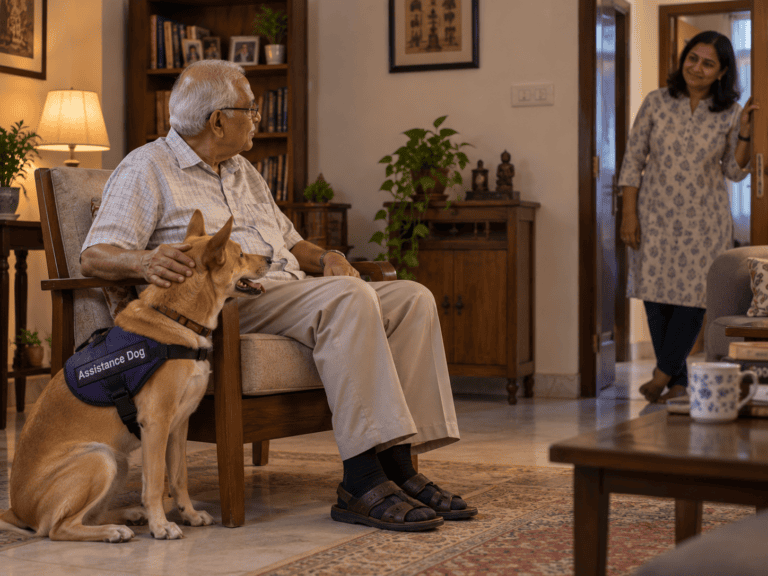
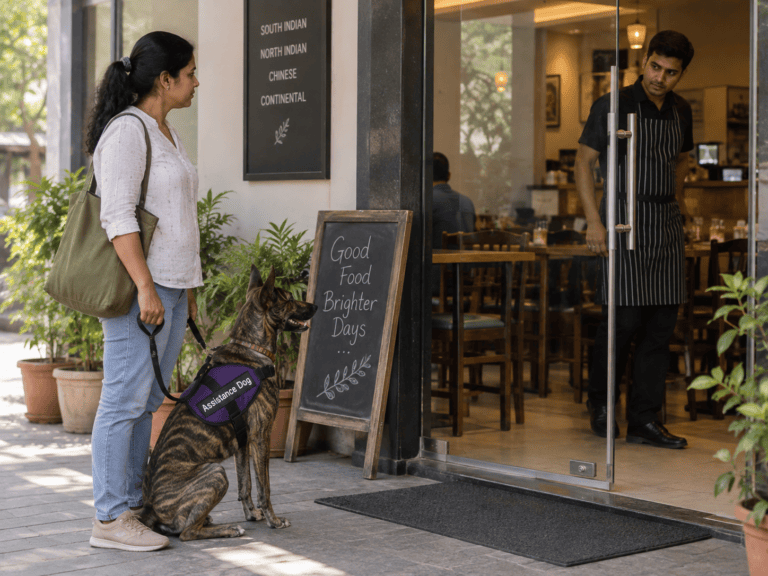
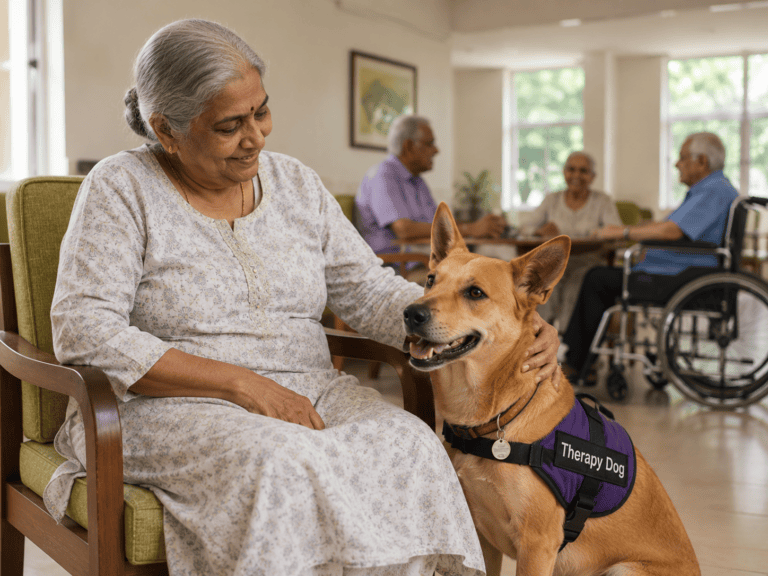
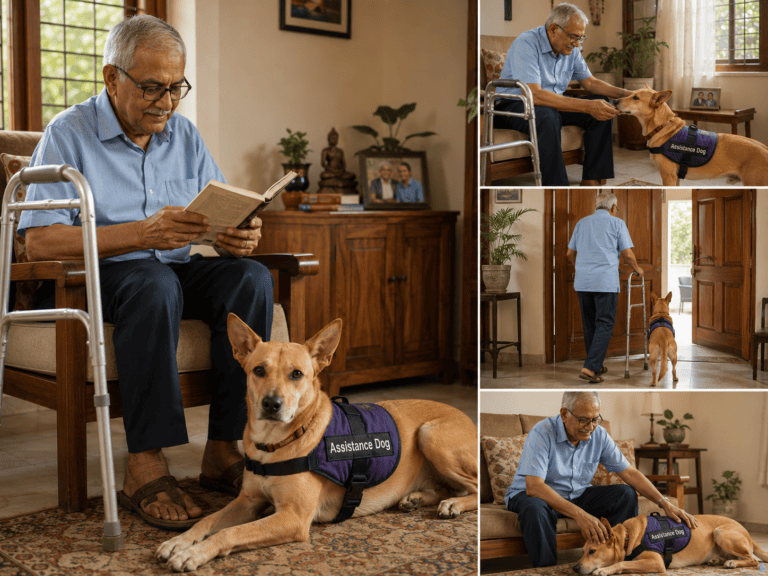
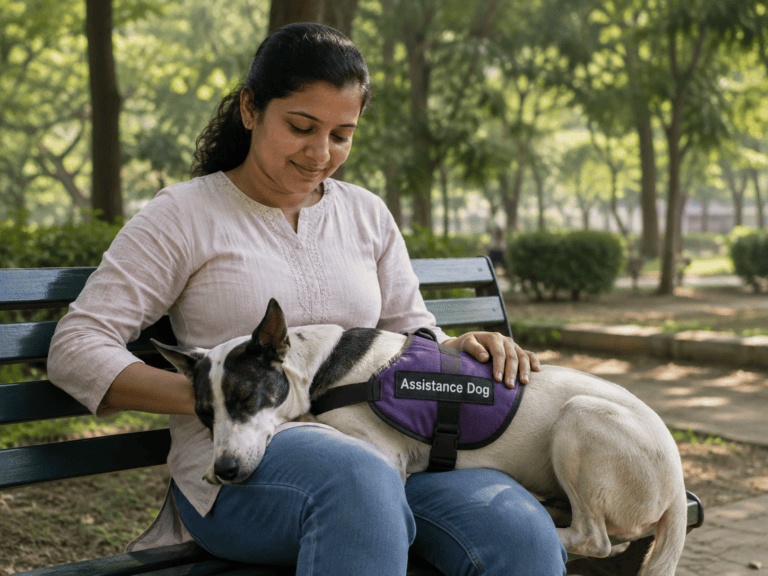
For a pet dog, this means: different types of people, other dogs, household noises, traffic, different environments. For a working dog in assistance or therapy roles, the requirements are far more specific and far more demanding. The working dog must remain stable and focused in settings that most pet dogs never encounter - hospital wards, school classrooms, crowded markets, lifts, institutional waiting rooms, public transport. Each of these is a distinct environment that needs to be deliberately introduced, not assumed.
The sensitive period - and why it matters
The foundational research on dog socialisation was conducted by Scott and Fuller at the Jackson Laboratory in the United States, published in 1965 in their landmark text Genetics and the Social Behavior of the Dog. Their work identified a sensitive period for socialisation in dogs: approximately 3 to 12 weeks of age, during which appropriate experiences can have particularly strong effects on later responses, although learning and behaviour remain changeable well beyond this period.
Within this window, appropriate positive experiences can have particularly strong effects on later responses and may reduce the risk of fear-related behavioural problems. In Scott and Fuller's experimental work, puppies deprived of appropriate human contact until roughly 12-14 weeks showed persistent difficulty forming normal relationships with people. This finding should not be treated as a universal, irreversible biological deadline - the research involved specific controlled rearing conditions, not everyday puppies receiving imperfect socialisation, and the treatment groups were small.
A 2022 narrative systematic review of 29 studies on canine socialisation, published in Animals, confirms that "lack of appropriate socialization during the sensitive period, along with lack of appropriate ongoing socialization during the dog's life, plays a large role in whether or not the dog develops behavioral problems." The key phrase is "ongoing socialization during the dog's life" - the sensitive period is the most important window, not the only one.
Tiira et al., Animals, 2022 (narrative systematic review, 29 studies)
Why the sensitive period is not enough on its own
Here is where most public understanding of socialisation stops short. People learn that the 3-12 week window is critical, and conclude that a well-socialised puppy is a done job. That puppy study illustrates why early exposure should be treated as a foundation rather than a finished product.
A study specifically examining early socialisation programmes during the 3-6 week period found that while treatment puppies showed significantly better responses to novelty and startle at 6-7 weeks compared to controls, no long-term differences were found at six months. The researchers concluded that "to achieve lasting effects, it may be necessary to continue with the training exercises for a longer time period." Early socialisation starts the foundation. The study suggests that continued work may be needed to maintain or extend those effects - something that working dog programmes build explicitly into their training design.
For a working dog, three additional factors extend socialisation well beyond the sensitive period:
- Generalisation takes time. A dog that is calm in one environment is not automatically calm in an adjacent one. A dog comfortable in a quiet clinic is not guaranteed to be comfortable in a busy emergency corridor in the same building. A dog's comfort in one setting does not automatically generalise to every similar setting - generalisation must be assessed and strengthened across relevant variations. For a dog that will work across hospitals, schools and homes, this generalisation process is extensive.
- The working dog's exposure list is very long. A pet dog needs to be comfortable with household noise, visitors and walks. A working dog may need to be comfortable with medical equipment, wheelchairs, uniforms, school bells, assembly halls, lift mechanisms, public transport, crowded markets, autorickshaws, different flooring textures, strong clinical smells - and every variation of these it will encounter across its working life. Building this level of comfort systematically, positively and to a reliable working standard is a process measured in months, not days.
- The standard for a working dog is higher than for a pet. A pet dog can have an off day. It can be startled, recover, and move on. Because an assistance dog's performance can affect safety and independence, it must be trained and assessed to remain reliable across a range of realistic conditions. Responsible programmes also account for fatigue, illness and days when a dog should not work. The socialisation programme builds the foundation that makes that reliability achievable.
How socialisation is structured in practice
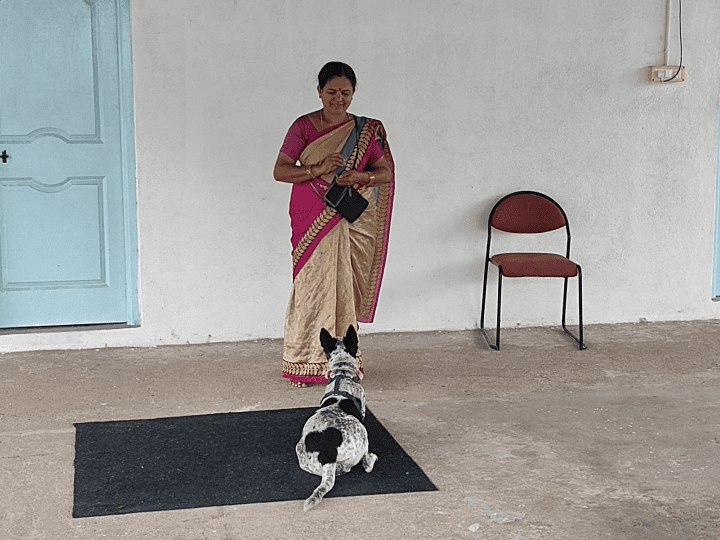
Effective socialisation for a working dog is not random exposure. It is a planned, progressive curriculum that introduces stimuli at a level the dog can handle, builds positive association through reward, and gradually increases intensity and complexity as confidence grows.
- Start where the dog is. A dog that is already uncertain around crowds is not taken straight to a market. The programme starts at its current threshold - the point where the dog notices the stimulus but is not overwhelmed - and builds from there.
- Make it positive. New or challenging environments are paired with high-value rewards. The dog learns that unfamiliar things predict good outcomes. Over many exposures, the novelty itself stops triggering arousal.
- Build duration before complexity. A dog that can sit calmly in a quiet clinic for ten minutes is introduced to a busier corridor only once that baseline is solid. Complexity and duration are increased separately to avoid overloading the dog.
- Watch the dog, not the programme. The pace of socialisation is determined by the individual dog's responses, not by a fixed timeline. A dog showing a pattern of stress-related signals - such as repeated lip-licking, turning away, lowered body posture, tucked tail, freezing or attempts to withdraw - needs the intensity reduced, not pushed through. Single signals in isolation are not definitive, but a pattern of them is a clear cue to back off. Pushing a dog beyond what it can comfortably handle can create negative associations and may make future exposure more difficult.
- Revisit regularly. Environments that the dog has previously been comfortable in benefit from being revisited throughout the training period. Previously learned responses may need to be maintained and consolidated, particularly where the dog will later work in those environments regularly. Maintaining it requires ongoing contact with the relevant environments.
Socialisation is not a phase that ends. It is the ongoing process of maintaining and expanding a dog's confidence in the world it works in.
What socialisation looks like for a rescued Indie
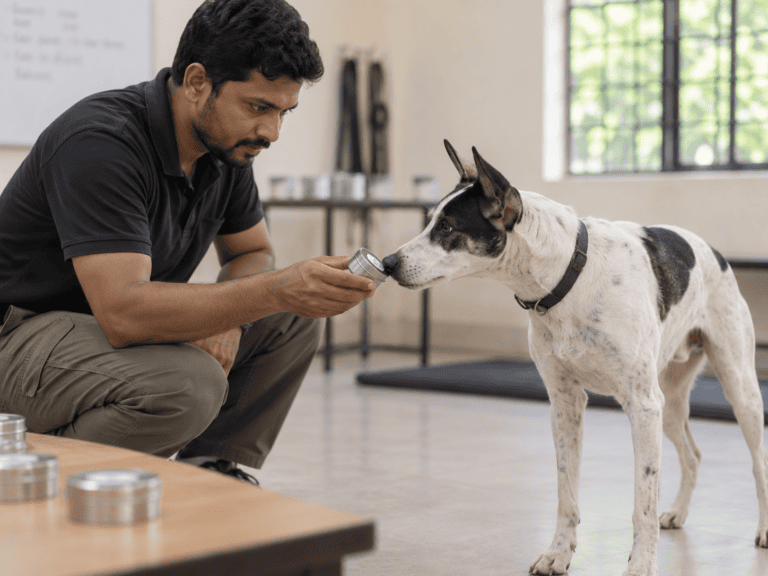
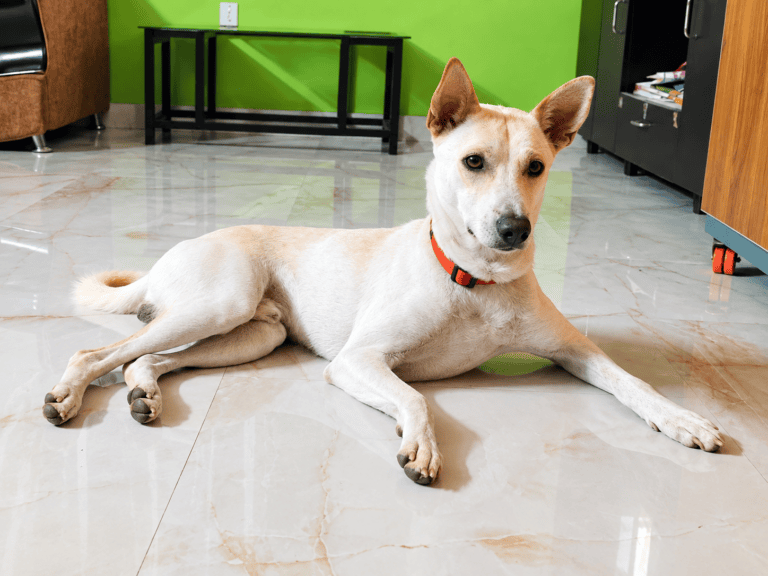
Indies - India's native landrace dogs - come to training with varied and individual socialisation histories. Some rescued Indies may have prior experience with traffic, crowds, noise and outdoor surfaces from their street lives. But prior exposure does not necessarily equal habituation - repeated encounters with those stimuli can produce habituation, fear, vigilance or inconsistent responses depending on the individual dog and the circumstances of that exposure. Each dog's history needs to be assessed rather than assumed.
Street exposure was uncontrolled and could also have been associated with negative or threatening experiences - a dog that survived on the street may have encountered humans in contexts ranging from friendly to hostile. The result may be a dog that is relatively unbothered by ambient noise but reactive in specific close-contact situations, unfamiliar indoor environments, or institutional settings with no equivalent in its prior experience.
Systematic socialisation for a rescued Indie working dog therefore has a specific shape: building on what the dog's background has already provided, identifying the skills and contexts that the dog's previous life may not have prepared it for, and filling them methodically. The home environment that HeartDogs' Heroes provide is an important early layer of this - a stable, safe, consistent domestic setting where the dog builds the foundational confidence that institutional socialisation requires before it can begin.
Why HeartDogs treats socialisation as the foundation of everything
In the HeartDogs programme, socialisation begins from the moment a dog enters its foster-trainer's home and continues throughout training and beyond placement. It is not a preliminary phase that precedes the "real" training. It is the training that everything else depends on.
A dog that cannot remain calm in a hospital corridor cannot perform a mobility task there, regardless of how well the task itself is trained. A dog that becomes overwhelmed in a school will not provide grounding for an anxious student, regardless of how reliably it delivers deep pressure at home. The tasks are built on the socialisation foundation - and that foundation is why the programme takes the time it takes.