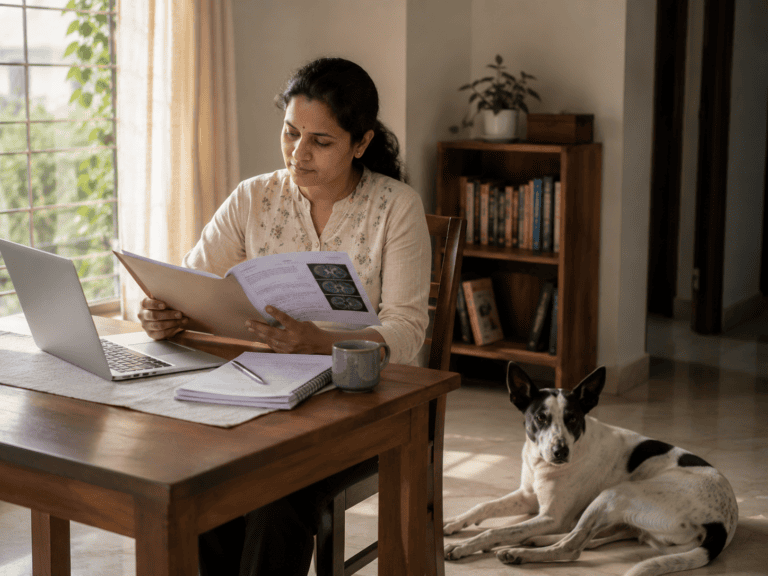
Illness - planned for, not left to the family
Illness can interrupt a dog's ability to work, temporarily or permanently. For the person depending on the dog, this can mean a sudden gap in support - sometimes at very short notice.
Responsible programmes handle this in a few ways:
- Veterinary cover is part of the placement agreement. The dog's health doesn't become the family's financial problem alone. Programmes that take post-placement support seriously maintain involvement in the dog's ongoing care.
- The family is supported during gaps. If a dog is unwell and temporarily unable to work, the programme stays in contact with the family and helps bridge the gap where possible - whether through interim support, a loaned dog, or a faster successor placement.
- The handler is trained to notice early signs. Part of good handler training is knowing what to look for - changes in behaviour, energy, appetite - so health issues are caught early rather than becoming emergencies.
Loss - the emotional and the practical, together
This is the hardest part of working dog life to talk about, but it's real. An assistance dog isn't just a tool - it's a companion that a person has lived alongside, often for years. The grief when a working dog dies is genuine, and it's compounded by the loss of daily support at the same time.
Good programmes acknowledge both of these losses - the emotional and the practical - and don't rush families into a new placement before they're ready. At the same time, they keep the process of finding a successor dog moving, so the gap in support doesn't become indefinite.
Retirement - the most planned transition
Retirement is the most planned of the three situations. A dog that is ageing well gives the programme time to prepare a successor, introduce the new dog gradually, and support the family through the changeover. Most families choose to keep the retired dog as a pet, which brings its own adjustment - the dog is still there, but the working relationship has changed.
This transition is something HeartDogs will plan for as placements happen - successor dogs, handover periods, and continued support for the family and the retiring dog.
A placement is the beginning, not the end
An assistance dog placement isn't a one-time transaction. It's the beginning of a long relationship between the dog, the family and the programme. What happens when things get difficult - illness, retirement, loss - is a measure of how seriously a programme takes that relationship.
HeartDogs is building post-placement support into the programme from the start, not as an afterthought.