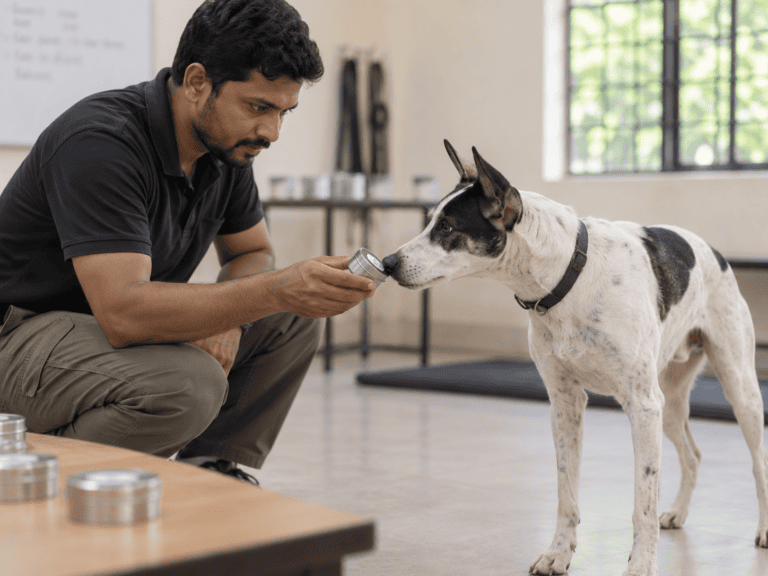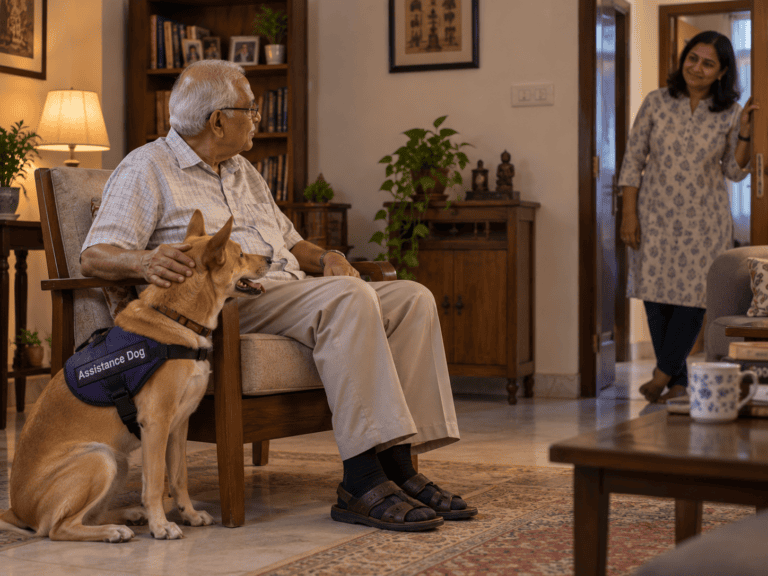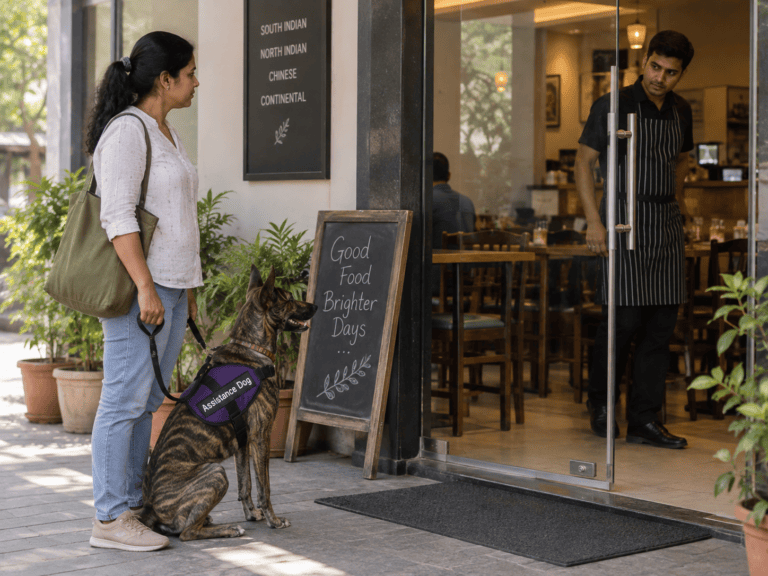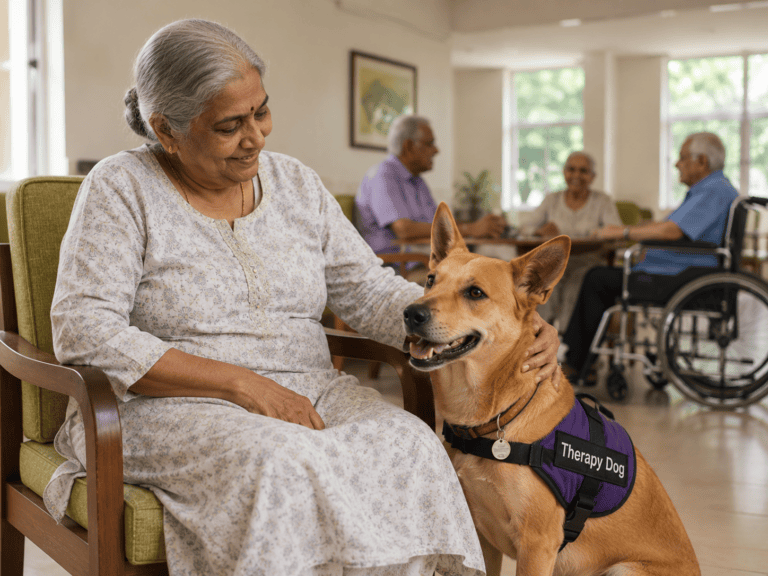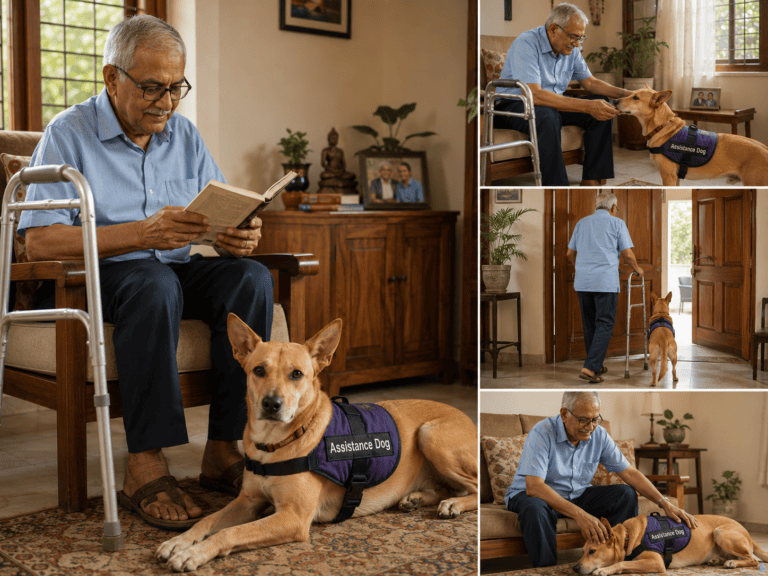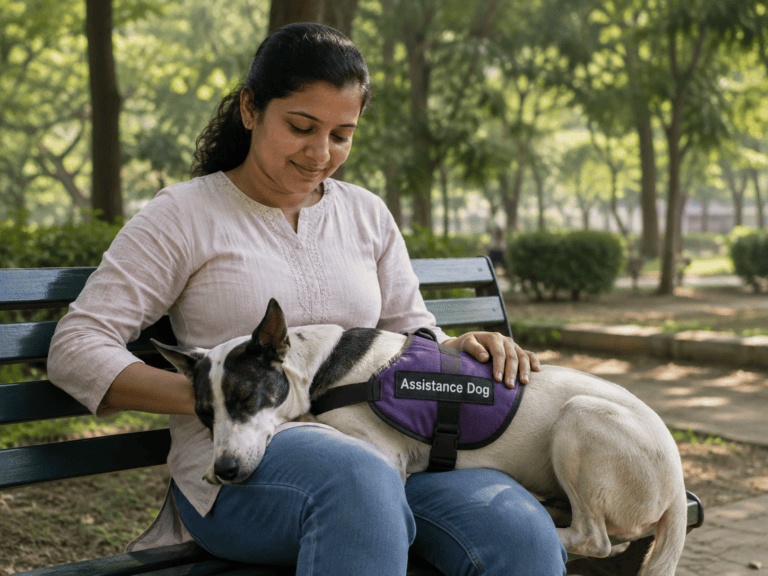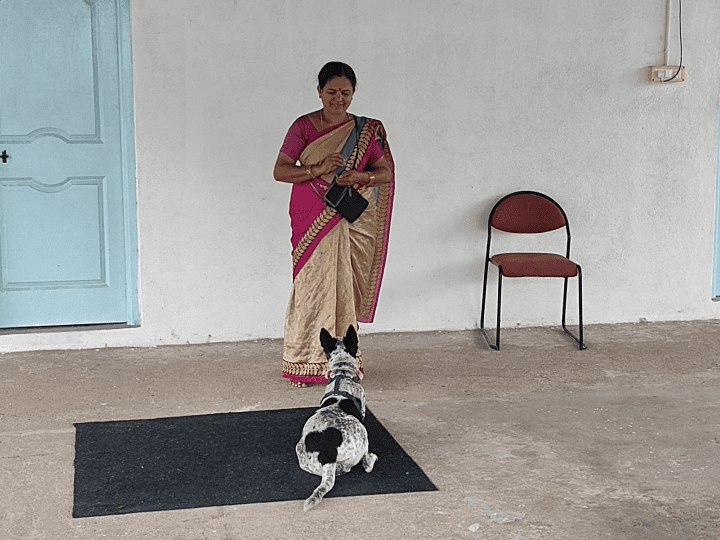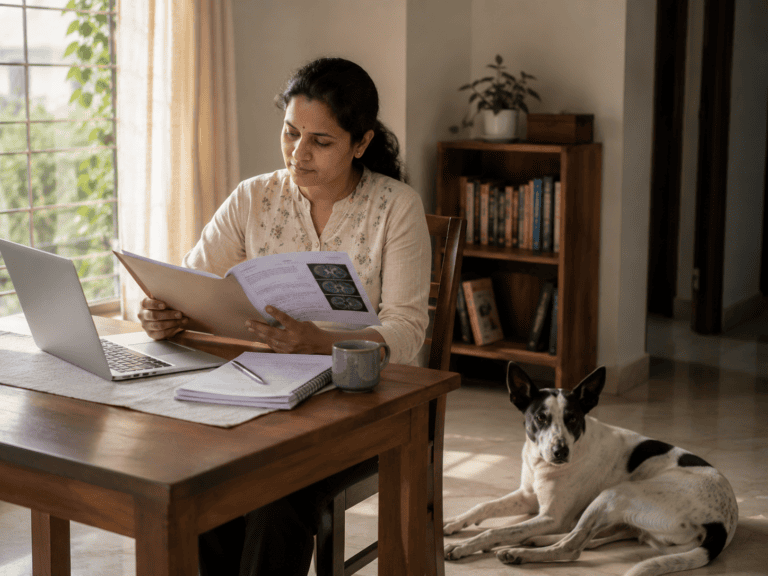
A dog in the room may change how people engage with therapy
One of the largest recent studies is a 2026 Mayo Clinic Proceedings study of 50 adults in inpatient stroke rehabilitation. Twenty-five patients received their usual physiotherapy, occupational therapy and speech therapy, while the other 25 had trained therapy dog and handler teams woven into some of those same sessions, helping with things like walking practice or simple games of fetch. The group that worked with a dog showed greater engagement, more physical activity and longer periods of mobility during their sessions than the group that did not. Therapists noted patients responding with visible affection toward the dog and a better mood through the session. This is a genuinely useful finding about participation in therapy. It is not evidence that the dog improved anyone's overall recovery or how they were doing by the time they left hospital, since that was not what the study was designed to show.
A small assessor-blinded randomised study published in 2021 in South Korea points in a similar direction, though it needs a cautious reading too. It involved just 30 people with chronic stroke, working with a single trained dog, an American Cocker Spaniel, over eight weeks of gait practice, with the patient connected to the dog through an adjustable waist belt and lead. The group that trained alongside the dog showed greater improvements in walking speed, step rate, stride length and a symmetry measure of how evenly they stepped on each side, compared with the group that did the same gait training without a dog. The researchers were upfront that a study this size, using one dog and one setting, cannot be assumed to apply to stroke patients generally.
A separate hospital study, this one involving patients with heart failure rather than stroke, found that offering the chance to walk with a therapy dog was associated with fewer refusals to attempt walking practice - 7.2% compared with 28% in an earlier comparison group. This was a historical comparison rather than a randomised trial, so the difference cannot be attributed to the dog with certainty, and it is not a stroke study. But it points to the possibility that, for some patients, having a dog involved may make a hard, tiring exercise easier to attempt. A separate, very small pilot study of 15 people after stroke found something worth being upfront about too: it did not detect a measurable change in heart rate or blood pressure, but patients did report feeling noticeably better after sessions with a dog. That is a useful reminder that the benefit here is mainly about motivation and mood, not necessarily about changing the body's stress response in a measurable way.
A 2024 scoping review mapping the wider research on animal-assisted interventions in adult hospital rehabilitation, covering 22 studies, found reported improvements in social and emotional wellbeing across the board, with improvements in ambulation, motor skills and verbal communication reported specifically in the more structured therapeutic interventions. It also flagged an important limitation worth passing on honestly: it is often hard to tell how much of the benefit comes from the dog itself, versus simply having a friendly handler giving extra attention and encouragement during the session.
Mayo Clinic Proceedings, 2026 · Gait Training Study, South Korea, 2021 · Canine-Assisted Ambulation, Heart Failure Patients · Scoping Review, Adult Rehabilitation, 2024
India has very few rehab professionals for a very large need
India faces substantial gaps in access to rehabilitation, and services are spread unevenly, concentrated in cities and larger towns while much of the country has far less nearby. A recent analysis of India's 2018 National Sample Survey found that only 20.8% of people with disabilities had received any government aid, just 4.1% had received aid from a non-government organisation, and 28% were recorded as consulting a doctor and undergoing treatment. The same survey found major, everyday barriers too, with 54.4% of people with disabilities reporting no access to public buildings. These numbers do not measure rehabilitation access directly, but they document substantial gaps in access to disability support and treatment, and separate research on stroke care in India describes rehabilitation services as concentrated in urban centres, leaving rural and semi-urban families with far fewer trained therapists nearby.
This is the part that makes therapy dogs genuinely interesting for India, not just heartwarming. The research above is not about replacing physiotherapists. In a system where access to rehabilitation is this uneven, an approach that may increase how much a patient participates in the sessions they do get deserves serious attention and further research, not as a replacement for professionals, but as a possible way to support engagement where professional time itself is the scarcest resource in the room.
Karnataka Brain Health Initiative, 2026 · National Sample Survey Analysis, 2018
A dog is a motivator, not a substitute for a therapist
It is worth being precise about what the evidence actually claims. No study here suggests a dog can replace a trained physiotherapist or occupational therapist, or that a dog on its own restores movement, speech or independence. What the research shows is narrower and still useful: patients tend to try harder, move more and stick with exercises better when a trained dog is part of a session, alongside the professional actually running it. Some of the gait-training methods used in these studies involve a patient holding onto or being connected to the dog with a harness or leash while walking, which raises its own safety questions. A sudden pull or unexpected movement could affect a patient's balance, and a dog working this closely with a person's body needs to be exceptionally well trained and closely supervised. Any such setup needs a rehabilitation professional deciding whether it is safe for that particular patient, and needs to be handled in a way that does not put unnecessary physical or emotional strain on the dog either. A therapy dog is a motivator in the room, not an unvalidated walking aid.
Where this fits into our roadmap
Rehabilitation centres are one of the settings we see real long-term potential in, particularly given how thin professional rehabilitation resources are stretched across Karnataka and much of the country. A dog trained to stay calm around walking aids, wheelchairs, unsteady gait and physical contact during exercises is a different and more specific kind of training than general therapy dog work, and it is something we would build carefully, in partnership with rehabilitation professionals, rather than assume our dogs are ready for it simply because they are calm and friendly.
As our Cohort 1 dogs mature and some lean toward therapy roles, this is one of the directions we are watching closely. It fits our broader belief that the most useful role for our dogs in India is not to replace clinical expertise, but to make the clinical expertise that does exist go further for the people who need it.