The real value of a pet - and its honest limits
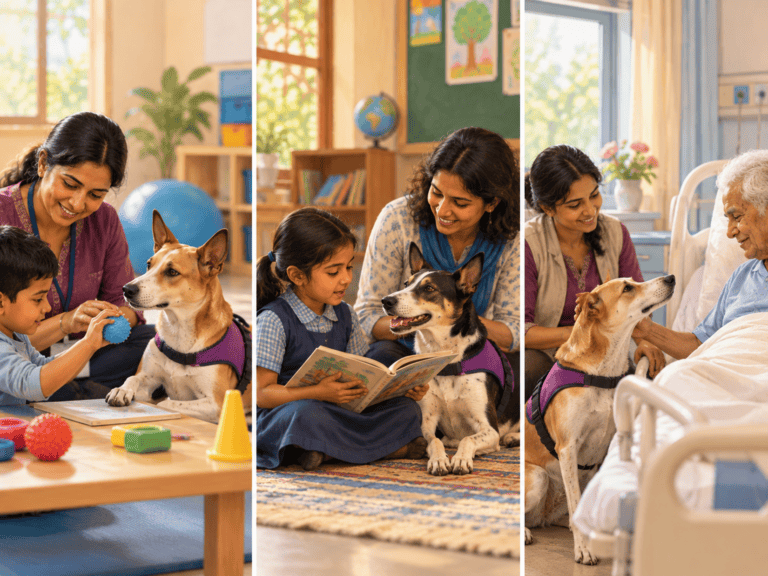
A companion dog is a dog kept primarily for friendship, affection, and emotional wellbeing. That covers most of the dogs people live with. The benefits are genuine and well documented. Research often finds associations between living with a dog and lower stress, reduced loneliness, more physical activity, better routine, and improved mood - particularly for people who live alone or are going through difficult periods.
None of that is trivial. For many people, a companion dog makes a real, measurable difference to daily life. The key point, however, is that these benefits come primarily from the relationship - from the presence of a calm, attached animal - rather than from anything the dog has been specifically trained to do. A companion dog does not need to learn tasks. It needs to be a good companion.
That is also its honest limit. A companion dog responds to you in the way that a dog naturally responds to someone it is bonded to. It may notice when you are distressed. It may come and sit near you. It may follow you around. But it has not been trained to perform a specific, reliable, repeatable behaviour in response to a specific situation - and that is the distinction that separates companionship from trained assistance work.
Tasks, not traits - that is the core difference
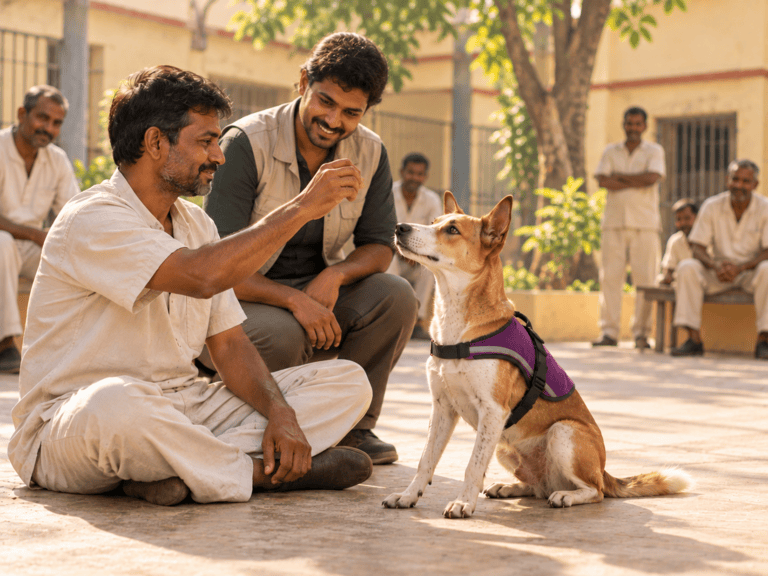
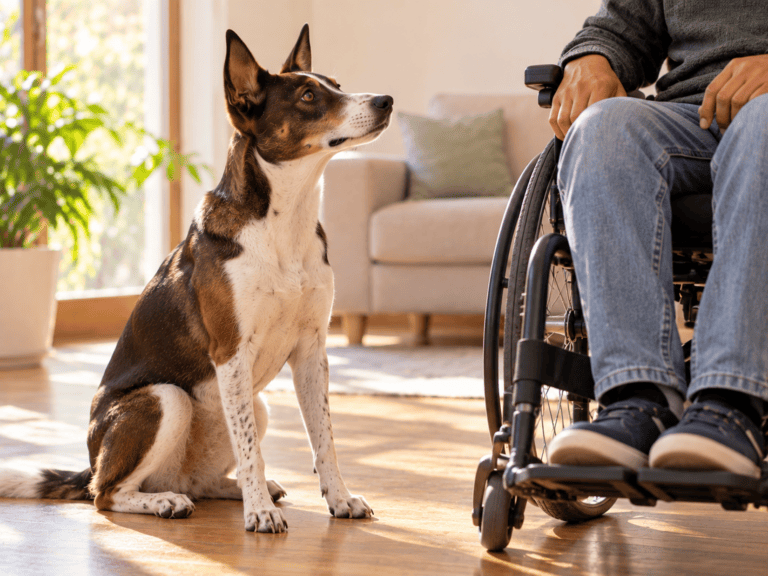
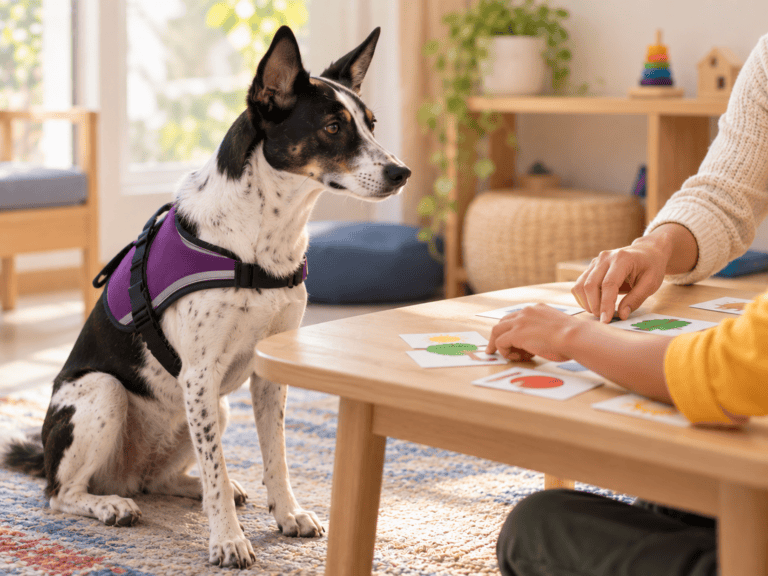
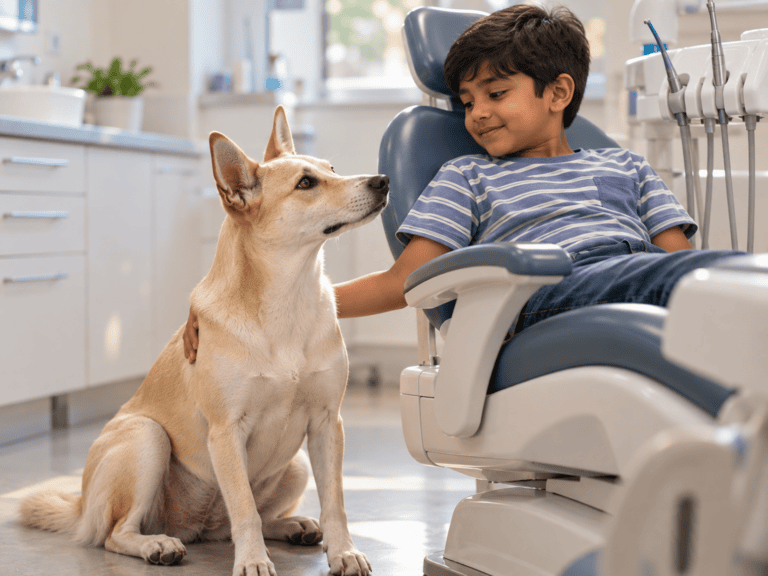
A service dog - more commonly called an assistance dog outside the United States - is individually trained to perform specific tasks that directly address a person's disability. The dog's job is not to be a good companion, though many assistance dogs also are. Its job is to do particular things, reliably, in the situations where its handler needs them done.
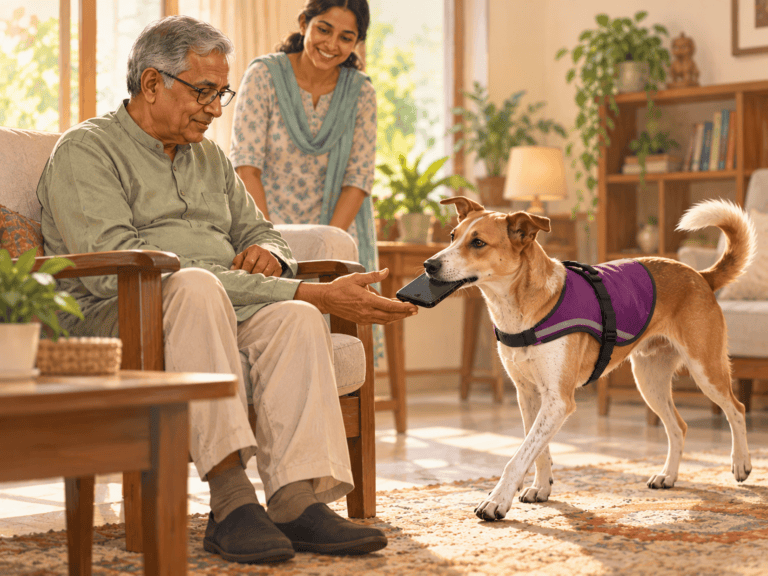
Those tasks vary widely depending on the handler's disability. A guide dog navigates pedestrian environments for a person with low vision. A hearing dog alerts its handler to specific sounds - a doorbell, a fire alarm, a baby crying. A mobility assistance dog retrieves dropped items, opens doors, or provides counterbalance during transfers. A psychiatric assistance dog may interrupt self-harm behaviours, perform trained grounding tasks during a flashback or panic episode, or remind the handler to take medication.
What all of these have in common is that they are trained behaviours - not natural dog behaviours, not things the dog works out for itself, but specific responses that have been built through months of deliberate training to happen reliably in the right circumstances. That reliability is what makes the dog genuinely useful for someone whose safety or independence depends on it.
A companion dog responds to you the way a bonded dog naturally does. An assistance dog responds the way it has been specifically trained to respond. Both relationships are real. Only one of them is task-based working assistance.
The key differences at a glance
| Factor | Assistance Dog | Companion Dog |
|---|---|---|
| Primary purpose | Specific trained tasks tied to a disability | Friendship, companionship, emotional wellbeing |
| How benefits are delivered | Through reliable performance of trained behaviours | Through presence, relationship, and natural bonding |
| Training required | Extensive - individualised, task-specific; commonly many months to two years | Basic obedience for family life |
| Matched to one person | Yes - tasks designed around one individual's needs | Not necessarily - chosen as a family or personal pet |
| Public access rights | Broad in countries with service dog legislation | No service-dog access rights; access depends on ordinary pet rules and venue policies |
| Can it be self-trained? | Yes in some countries including the US; the dog must still be individually trained to perform disability-related tasks | Not applicable |
Sometimes - but the bar is higher than most people expect
This is one of the most common questions people ask, and the honest answer is: sometimes, but not often, and the decision requires a proper assessment rather than optimism about a dog you love.
An assistance dog needs specific qualities that go well beyond being friendly and well-behaved. Temperament is the starting point - a working dog needs to be calm in environments that would unsettle most pets, focused on its handler even when distracted, and neither anxious nor overly excitable in unpredictable situations. Health matters too, since an assistance dog is expected to work reliably for years. Some tasks also require specific physical characteristics - a dog that is too small to provide counterbalance, or too easily startled for psychiatric work, may simply not be suitable regardless of how much training is applied.
Responsible assistance dog organisations - including HeartDogs - assess every dog carefully before beginning task training. Many dogs leave the programme during assessment - not because they are bad dogs, but because the role requires qualities that not every dog has. That is a normal and honest part of the process. A dog that fails assistance assessment can still be a wonderful companion; the two things are not in competition.
For a pet dog already living with a family, the assessment question is: does this dog have the temperament, health, focus, and physical capacity to do the specific tasks that would actually help with this person's disability? That is a question for a professional trainer to answer, not one to decide based on affection for the dog or hope that training will resolve underlying temperament issues.
Calling a pet a service dog has real consequences
In countries such as the US with public access laws for assistance dogs, misrepresenting a pet as a service animal can have legal consequences and is ethically problematic. It creates friction for handlers of genuinely trained dogs, who then face increased scepticism from businesses and institutions that have been misled before. Each time someone takes an untrained pet into a space reserved for working dogs - and the pet barks, jumps on people, or causes a problem - it makes the next legitimate handler's access harder to secure.
In India, where no specific assistance dog access framework exists and the concept of trained working dogs is still largely unfamiliar, the consequences are different but still real. If families begin describing their pets as service dogs to gain access to spaces, it muddies the water for the time when India does build a proper framework. It also sets incorrect expectations for what a trained dog can do - which can lead to genuine disappointment when a pet does not perform tasks it was never trained for.
The better approach is to be clear about what you have. A companion dog that genuinely improves your daily life is worth celebrating on its own terms. An assistance dog is something different - a working partner trained to perform specific jobs - and pursuing one properly, through a programme or with a qualified trainer, is how you actually get one.
Where things stand in India right now
India does not currently have a single national framework that consistently defines service dogs and companion dogs as distinct categories with standardised training, certification, and public-access rights. The Rights of Persons with Disabilities Act, 2016 establishes important disability rights and reasonable accommodation principles, but it does not specifically address working dogs. Some sector-specific rules exist - India's 2022 civil aviation accessibility guidelines, for instance, define a service animal and include provisions for trained dogs travelling by air - but these are pockets of recognition rather than a coherent national framework. There is no single national certification and accreditation framework covering assistance-dog programmes.
This means the distinction between a companion dog and an assistance dog is not yet clearly established or consistently enforced in Indian law. It also means that when India does build a framework - and the momentum toward one is growing - the concepts being embedded in that framework will matter. Getting the terms right now, before regulation arrives, is how the field builds credibility rather than inheriting confusion from years of loose language.
For families currently living with someone who has a disability and wondering whether a trained dog would help, the most useful first step is understanding what kind of help they actually need. We covered the types of assistance dogs and what each one does in our piece on the different types of assistance dogs, and the broader question of who can benefit from one in our piece on who can benefit from an assistance dog in India.
Both matter - for genuinely different reasons
A companion dog and an assistance dog are both valuable. They are valuable for different reasons, to different people, in different ways. A companion dog provides something real - consistent, non-judgemental companionship that research shows improves wellbeing in measurable ways. An assistance dog provides something different - trained, reliable task performance that directly addresses what a disability takes away from a person's independence.
Knowing which one you have, or which one you need, is the starting point for everything else. If you have a companion dog and it is helping you, that is worth recognising for what it is. If you need an assistance dog, the path to one starts with understanding what tasks you actually need, whether a dog can be trained to perform them reliably, and whether a particular dog has the qualities to do that work.
Those are separate questions, and both deserve honest answers.