A visiting team versus an embedded professional partnership
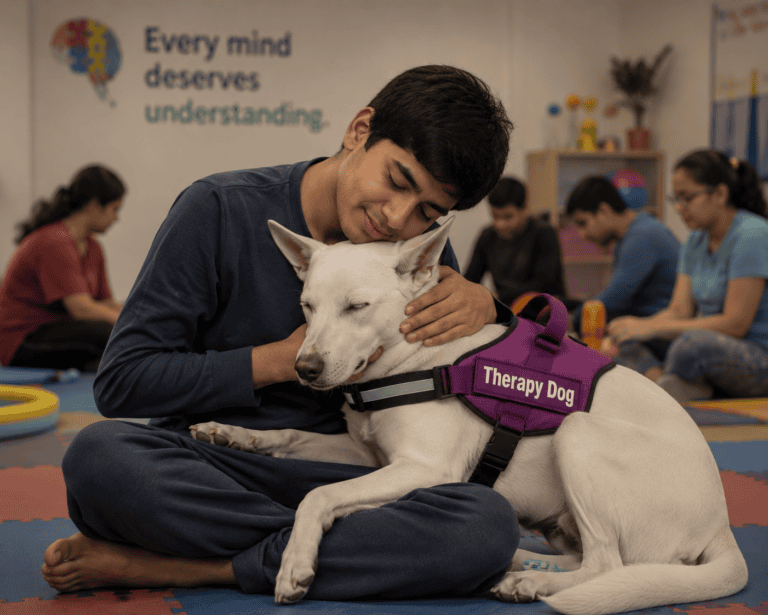
A therapy dog and its handler are, fundamentally, visitors. The team travels to different institutions on a schedule, spends time with different people at each stop, and goes home together afterward. The dog usually belongs to the handler, who is often a volunteer, and the relationship between dog and handler stays constant while the settings and people change from visit to visit.
A facility dog works differently. It is placed with a trained handler, who may be a professional or a volunteer working within a particular institutional setting, such as a hospital social worker, a courthouse victim advocate, or a school counsellor, and the dog becomes part of that person's work with multiple clients. According to ADI, the dog's work can take place across one or more locations tied to that handler's role, not necessarily a single fixed building, but the defining feature is that the dog is trained to work with the multiple different clients or cases that handler already serves, as an extension of their existing work, rather than as a separate visiting activity layered on top of it.
Courthouse facility dogs, the clearest case study
One of the clearest and best documented examples of facility dog work is the courthouse facility dog, now used in legal systems in several countries. ADI's own definition describes the role precisely: a dog trained to do specific, skilled tasks with a variety of people in places like a courthouse or child advocacy centre, handled by a professional who is knowledgeable about the justice system, providing a calming influence on vulnerable people, often children, during the investigation and prosecution of crimes and other stressful legal proceedings. Programmes typically assess whether the dog-handler team can work calmly in courtrooms, police stations and other justice settings without disrupting proceedings, although the exact requirements vary by programme and jurisdiction. Unlike a personal assistance dog, a courthouse facility dog generally does not have an automatic, general public access right. Its access usually depends on institutional permission, programme arrangements and, in some jurisdictions, specific legal provisions or court orders, with a small number of jurisdictions, such as Washington State in the US, granting broader recognition.
This is a genuinely different kind of preparation from therapy dog training. A therapy dog needs to be comfortable being petted by strangers in a hospital corridor. A courthouse facility dog needs to remain composed through repeated, high stakes legal proceedings involving the same vulnerable person over time, in an environment where its behaviour is being watched closely by lawyers, judges and law enforcement, not just by the person it is comforting.
Facility dog work demands different, often more specialised preparation
Because facility dogs work in professional environments and may support vulnerable people repeatedly, their preparation often includes additional role specific testing, handler training and assessment across demanding, sometimes unpredictable situations. ADI standards, for example, require facility dog programmes to ensure dogs are suited to a variety of environments and accustomed to interacting with many different types of people. Therapy dog certification, meanwhile, is run by many different organisations with their own assessment and certification standards, and these vary considerably in how rigorous they are. The important difference is therefore not simply that one type of dog is better trained than the other, but that the training in each case is designed around a genuinely different working role.
Neither role is inherently better than the other. They are built for different jobs. A therapy dog's strength is its ability to comfort a wide, changing range of people across many settings. A facility dog's strength is its ability to work reliably, again and again, within one professional's specific and often demanding practice.
Neither has the same public access rights as an assistance dog
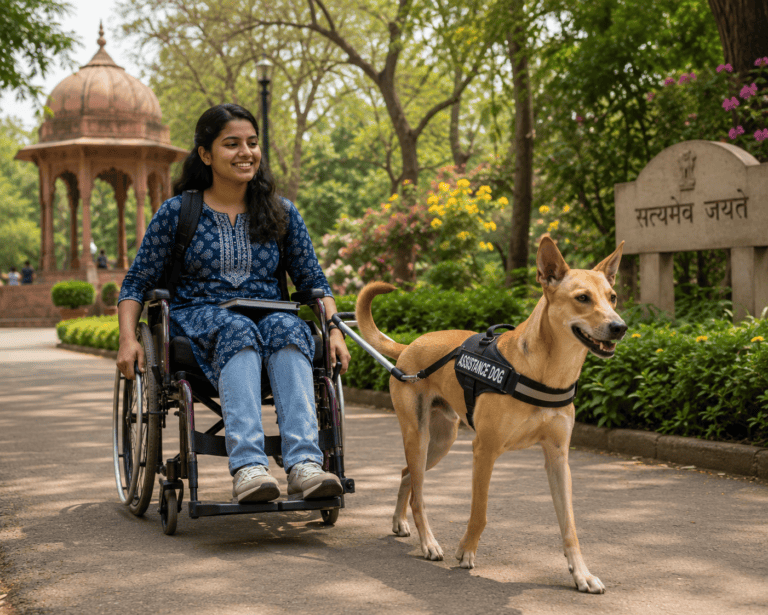
It is worth being clear that neither therapy dogs nor facility dogs generally carry the same legal public access rights as an assistance dog placed with a person with a disability. In the United States, therapy dogs are not covered by the ADA's service animal access provisions. In India and other jurisdictions, the legal position may differ, but facility dog access will generally depend on the institution, programme arrangements and any applicable local law, rather than a general right to be present in public. Their access depends on local law and the permission of the institution or setting in which they work, and in some countries, additional access may be permitted when the trained dog-handler team is directly working with a client with a disability. That is a meaningfully different legal footing from an assistance dog and its handler.
Why we are building toward all three tracks deliberately
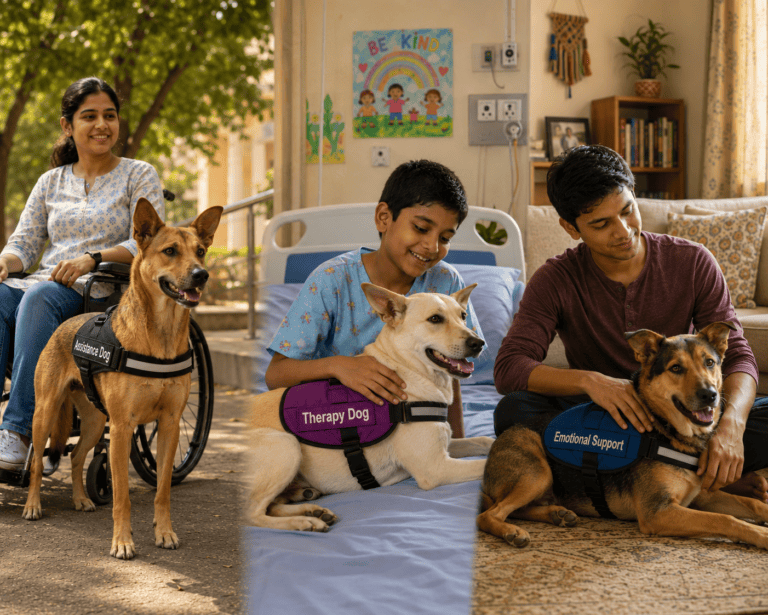
We think of our own work in three related but genuinely distinct tracks. Assistance dogs are placed permanently with one person with a disability. Therapy dogs work with a handler, visiting institutions like hospitals and schools on a scheduled basis, then returning home with that handler. Facility dogs, the newest and least developed track for us, would be placed with a trained professional or volunteer embedded in an institution or professional service, potentially working across one or more locations connected to that role, whether that is a hospital department, a school, or eventually a setting like a courthouse or an airport.
We are building toward facility dog work carefully and honestly, because an embedded working role places different demands on a dog and handler from a visiting therapy dog role, and we would rather take the time to build that properly than rush a dog into a setting it is not actually ready for.