Why it is so hard to explain to people who don't have it
The thing that makes PMDD particularly hard to live with - and to explain - is the pattern. Symptoms arrive after ovulation, peak in the days before menstruation, and then lift once the period starts. For many women with PMDD, the rest of the month is largely fine. The contrast between the two versions of yourself - the one who functions normally and the one who arrives every month like a tenant you didn't invite - is one of the most distressing parts of the condition.
During the symptomatic phase, the experience can include deep depression, rage that the person knows is disproportionate but cannot control, severe anxiety, difficulty concentrating, physical symptoms like bloating and exhaustion, and a feeling of being trapped in a state that will pass but feels endless while it is happening. Research has found significantly higher rates of suicidal ideation and suicide attempts among women with PMDD compared with those without it - which is one reason the condition is taken seriously as a psychiatric rather than purely hormonal issue.
How common is it in India? A review that pooled data from multiple Indian studies estimated that roughly 8 to 14% of menstruating women in India may have PMDD - with the wide range reflecting how differently studies have measured it. Even at the lower end, that is a substantial number of women. Many of them are likely undiagnosed, because awareness of PMDD as a distinct medical condition remains low in India among clinicians and the public alike, and because menstruation itself is not something many families discuss openly.
Not every case - the ones where it substantially gets in the way
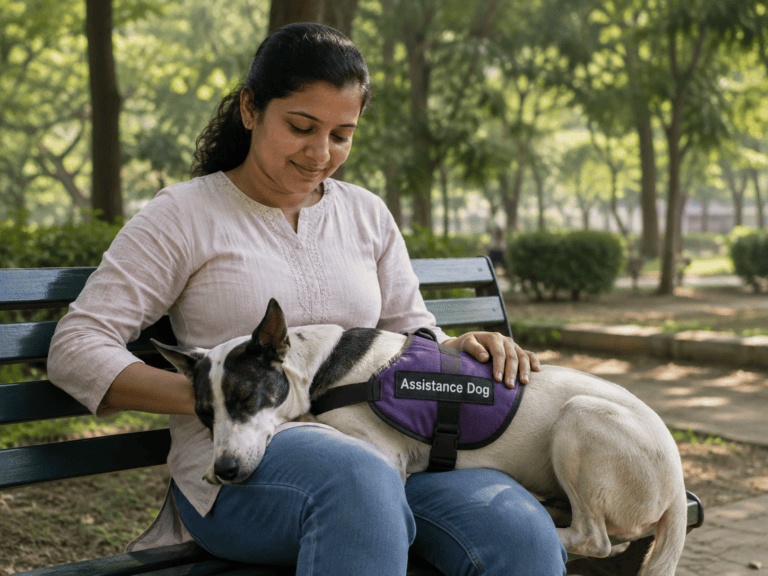
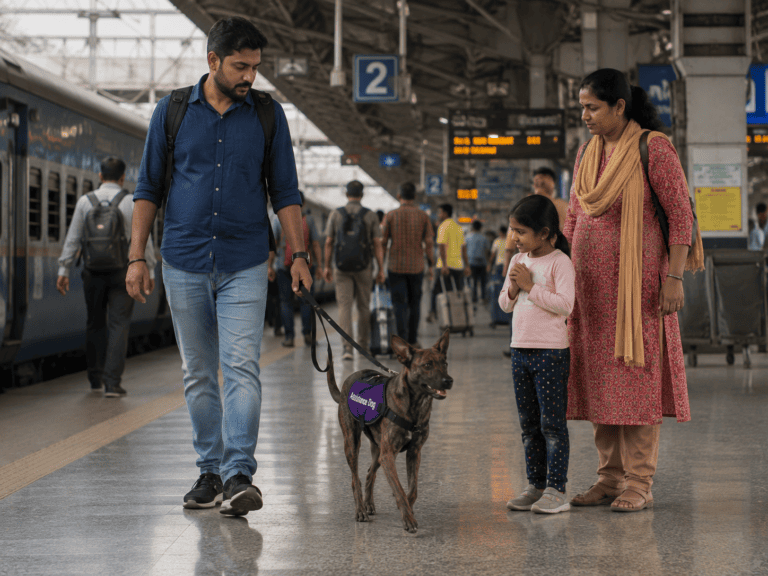
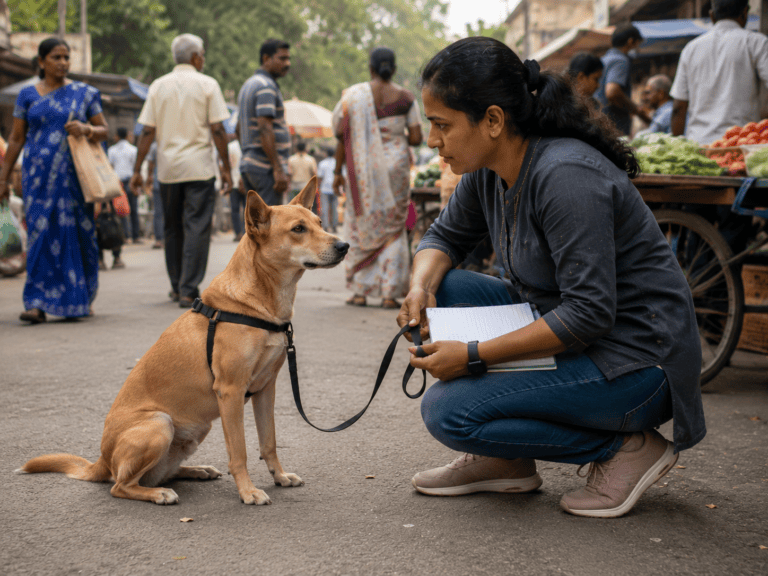
An assistance dog for PMDD is a dog trained to perform specific tasks that directly address what PMDD does to someone's daily functioning. Not a pet. Not emotional support. A dog with a job - trained tasks that address specific, real problems.
Under frameworks like the US disability law, PMDD can qualify as a disability when it substantially limits a person's ability to work, care for themselves, concentrate, interact with others, or manage daily life. The relevant question is always about function: how much does this condition actually get in the way? For PMDD that is well managed and does not significantly disrupt daily life, an assistance dog probably isn't necessary. For PMDD that substantially limits daily functioning, safety, work, education, or self-care - a trained assistance dog may be worth considering as part of a broader management plan.
India does not currently have a dedicated national framework that defines assistance dogs or establishes their rights in public spaces - something we have covered in detail in our piece on assistance dog law in India. What matters practically is whether the dog is trained to perform specific tasks that genuinely address the person's limitations.
Specific tasks for specific problems
There is no research specifically on assistance dogs and PMDD. The tasks below come from the broader research on psychiatric assistance dogs - used for depression, PTSD, anxiety, and related conditions - along with practitioner experience and handler reports. The tasks make sense for PMDD. Whether they work specifically for PMDD has not been tested in controlled studies. That is an important distinction and we are not going to paper over it.
- Deep pressure during the worst moments. During acute episodes - the crushing low, the emotional flooding, the feeling of being completely out of control - a dog trained to apply sustained body weight or pressure can help. There is limited but real evidence for this kind of physical input across psychiatric conditions. We covered it in our earlier piece on deep pressure. Whether it helps specifically during PMDD episodes has not been studied.
- Grounding when thoughts go dark. Some women with PMDD experience suicidal thoughts during the symptomatic phase - thoughts that typically lift once the period begins, but are genuinely distressing and potentially dangerous while they are happening. A dog trained to nudge, make physical contact, or perform a grounding behaviour may help bring the person back to the present moment. This is reported in psychiatric assistance dog work generally. It has not been established specifically for PMDD. Critically: a dog cannot be a person's only safety plan. If thoughts are serious, crisis support and clinical care are not optional.
- Interrupting shutdown or withdrawal. Some women with PMDD shut down - dissociate, go numb, or withdraw completely from the world. A dog trained to make contact and bring the handler back may provide a form of real-time support that is available during the episode itself.
- Medication reminders. Some PMDD treatment plans involve medication taken on a specific schedule - for instance, antidepressants taken only during the symptomatic phase of the cycle. A dog trained to provide scheduled prompts or retrieve a pre-identified medication container addresses a real functional gap, especially during phases when concentration and memory are already impaired.
- Staying calm during rage episodes. PMDD-related rage is one of the most distressing features of the condition - not just for the person experiencing it but for everyone around them. A dog that is trained to remain calm, make non-demanding contact, and stay present during these episodes may help interrupt the escalation. Whether it actually does so, for PMDD specifically, is not established in research.
- Possible early warning. Some handlers and trainers say their dogs appear to pick up on changes - in scent, behaviour, or routine - before the person has consciously noticed that symptoms are starting. There is no research confirming this for PMDD. It remains anecdotal and should not be relied on as an early warning system.
An assistance dog does not treat PMDD or change what is happening in the body. What it can do is be there - trained, calm, and ready - during the moments that arrive unpredictably within the symptomatic phase and that medication and therapy cannot always reach in real time.
Psychiatric Assistance Dog Use for People Living With Mental Health Disorders, PMC 2019
The dog gets downtime too
Most psychiatric assistance dogs work alongside someone whose condition is present every single day - PTSD, schizophrenia, severe depression. PMDD is different. For many women with PMDD, the symptomatic phase takes up roughly one to two weeks of every month. The rest of the month, symptoms substantially remit.
This means a dog supporting someone with PMDD has meaningful rest built into the working cycle. The intensive work - the grounding, the pressure, the interruptions - is concentrated in a portion of the month. During the symptom-free period, the relationship is lighter. This likely benefits the dog's welfare, though it has not been specifically studied, and a dog's wellbeing always depends on training quality, handler management, and the individual dog's temperament - not just the calendar.
The cycle also gives the handler and dog regular time each month to practise tasks, maintain the bond, and ensure everything stays sharp. Assistance dog tasks can erode without practice. The PMDD pattern provides a natural rhythm for keeping them current.
A condition that is common here and almost invisible
PMDD sits at the crossroads of two things India does not talk about easily: menstruation and mental health. Both carry stigma. The idea that what happens in the weeks before a period could constitute a serious psychiatric condition requiring medical management - let alone a trained assistance dog - is far beyond where the public conversation currently sits in most parts of this country.
The Indian research suggests a substantial number of women may experience PMDD. The same research notes that awareness and help-seeking remain low, partly because of the taboo around menstruation in many communities. Women are told they are being dramatic, that it is just their time of the month, that this is normal. For women with PMDD, it is not normal - and the dismissal compounds the condition.
We have not found any documented PMDD assistance dog programme in India. That is not surprising given where the broader assistance dog infrastructure and PMDD awareness both currently stand. At HeartDogs, psychiatric disability is one of the directions we are actively thinking about as we build out what kinds of assistance dogs the programme will eventually support. PMDD is part of that thinking.
If you are in India and think you might have PMDD, the first step is speaking to a psychiatrist or gynaecologist who is familiar with premenstrual disorders. Tele-MANAS is available at 14416 for mental health support. If you are having thoughts of harming yourself, have a plan, or cannot stay safe, please contact emergency services or go to the nearest emergency department - do not rely on a helpline or a dog alone.
Worth knowing about, not a magic answer
Assistance dogs for PMDD are a plausible and real extension of psychiatric service dog work. The tasks make sense for the condition. Some handlers and practitioners say the dog makes a genuine difference during episodes. No clinical trials exist specifically for PMDD assistance dogs, and we are not going to pretend otherwise.
A dog does not treat PMDD, change what is happening in the body, or replace clinical care. The things that actually treat PMDD - medication, therapy, and crisis planning, managed by a clinician - remain essential. A well-trained assistance dog is an addition to those things, not a substitute.
For women with severe PMDD who already have clinical support and whose condition substantially limits how they live - a personal assistance dog is worth knowing about as an option. Not for everyone. But for those whose PMDD takes them to places a dog could help them return from, it is worth taking seriously.
This article is for information only and is not a diagnosis or treatment plan. Anyone who thinks they might have PMDD should seek assessment from a qualified clinician. Assistance dog tasks for psychiatric conditions should be designed with qualified clinicians and professional trainers.