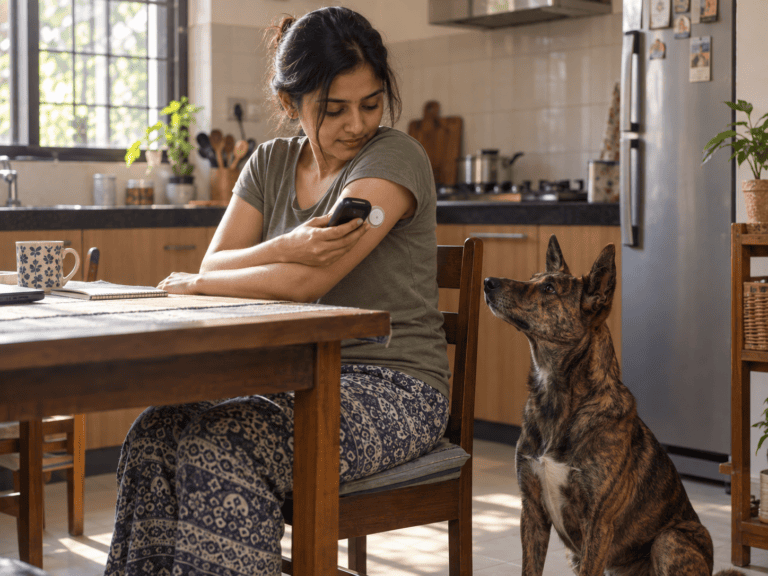
A moment of distraction is not a small thing
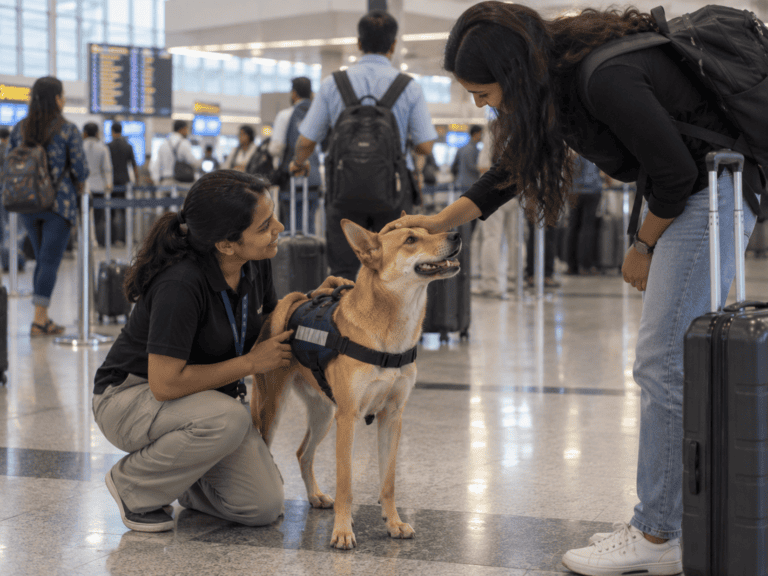
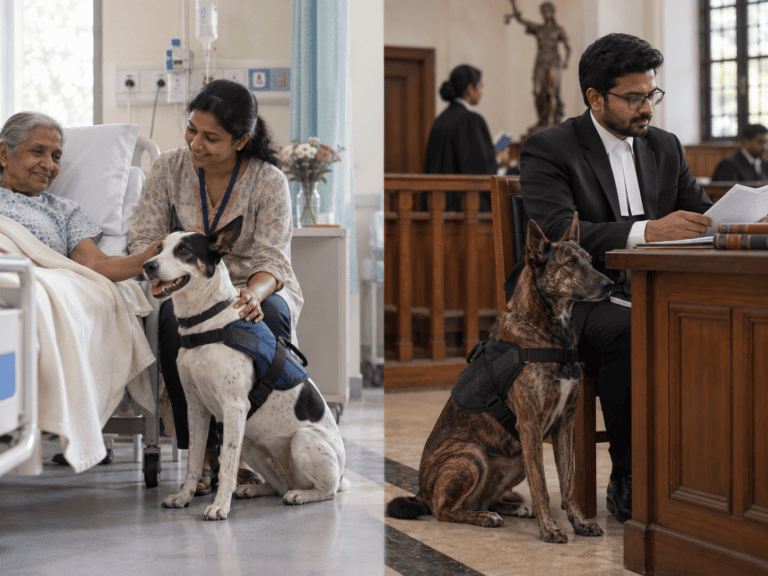
An assistance dog's job is to stay tuned in to its handler and perform trained tasks reliably, sometimes in response to subtle changes in the person's behaviour or environment. A pat on the head or a sudden noise can pull the dog's attention away at an important moment, and for a dog trained to catch a subtle, fast moving signal, even a brief lapse can mean missing it. This is not about the dog being fragile or overly sensitive. It is simply that sustained, careful attention is the actual task, and anything that interrupts it works against the reason the dog is there in the first place.
A few simple rules that cover most situations
- Speak to the handler, not the dog. Calling out to the dog, trying to get its attention, or greeting it directly can be a distraction, even without touching it.
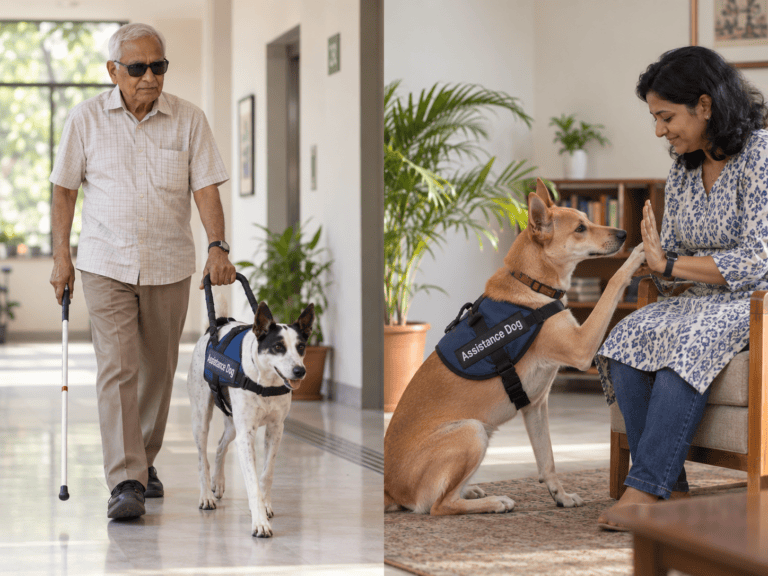
- Ask before touching, and accept the answer, whatever it is. Some handlers may allow interaction in particular circumstances, and some will not. Never assume, based on how the dog looks or seems, that it is available. Think of it the way you would a wheelchair or a cane: you would not expect to touch someone's mobility aid just because you found it interesting.
- Do not offer food. Food can be a powerful distraction, and the handler needs to control what the dog eats.
- Keep your own dog at a distance. Ask the handler before letting your dog approach at all. Another animal is a major distraction, and in the worst case, an unplanned interaction between two dogs can turn into a real safety problem for the handler.
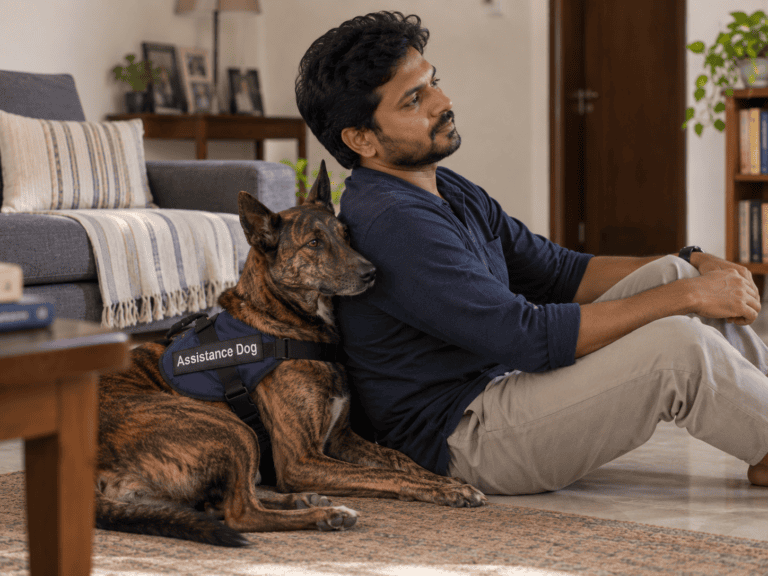
- Do not assume a resting dog is off duty. An assistance dog lying quietly beside its handler at a restaurant table or a cinema seat is still working. Rest during a long day is normal and expected, but it is not the same as being free to interact with.
None of this is really complicated once it clicks. The simplest version of the whole list is this: treat the encounter the way you would treat passing two people having an ordinary conversation, not an invitation to interact with an interesting animal.
Guide Dogs for the Blind, Assistance Dog Etiquette · Paws of War, Service Dog Etiquette
If a dog is alone and seeking attention, the response is different
A working dog approaching you in a harness with no handler in sight is unusual. Do not automatically assume it wants to play or be petted. It may be trying to get someone's attention because its handler needs help, though it is also possible the dog is simply lost, startled or separated from its handler by accident, and there is no way to know for certain in the moment. If the dog persistently seeks your attention or clearly seems to be leading somewhere, following it may be the appropriate response, depending on what the dog is doing and the circumstances. Staying alert to the situation and alerting nearby staff or emergency services if needed is a sensible way to respond to this specific, unusual case, which is one of the only times actively engaging with a working dog is worth considering rather than avoiding.
Guide Dogs of America, Best Practices When Around a Service Dog
Kids are usually the most curious, and the easiest to guide
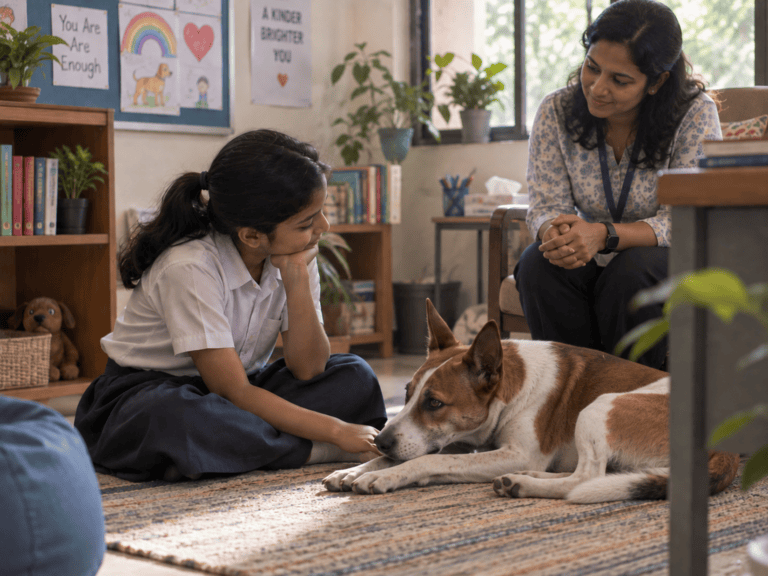
Children are often the ones most drawn to a working dog, and that curiosity is a good thing to work with rather than shut down. A simple, honest explanation, that dog is working right now, so we say hello with our eyes and not our hands, tends to land well and gives a child something concrete to understand rather than just a rule to follow. It is also a genuinely good opportunity to talk about why some people need a dog's help every day, which tends to build real respect rather than just compliance.
Why we think this matters in an Indian context specifically
Assistance dogs are still a genuinely unfamiliar sight in many parts of India, which means most people encountering one in public have never been told any of this. That is not anyone's fault, it is simply a gap, and closing it is part of what makes daily life easier for the handlers we hope to support. A shopkeeper, a fellow train passenger, or a child in a school corridor who already understands why a dog should not be approached mid task makes a real, practical difference to how smoothly an assistance dog team can move through an ordinary day.
This is a small thing to ask of the public, and it costs nothing beyond a moment of restraint. But for someone whose independence genuinely depends on their dog staying focused, that small courtesy is not a minor politeness. It is part of what makes the whole partnership actually work in public.