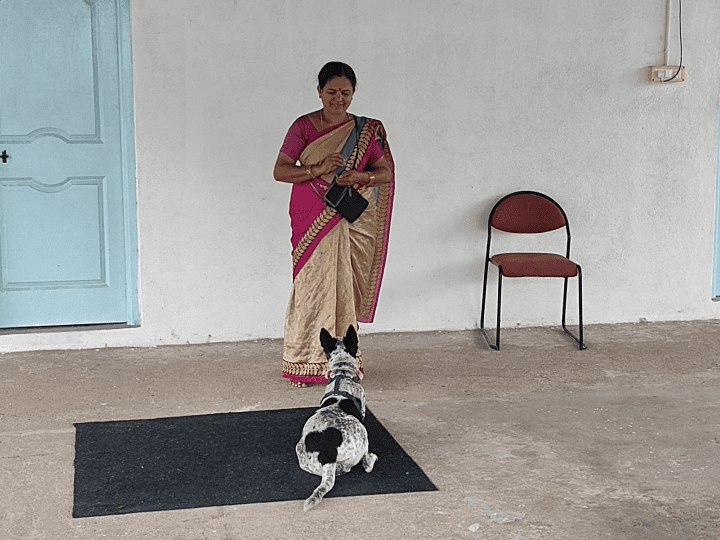
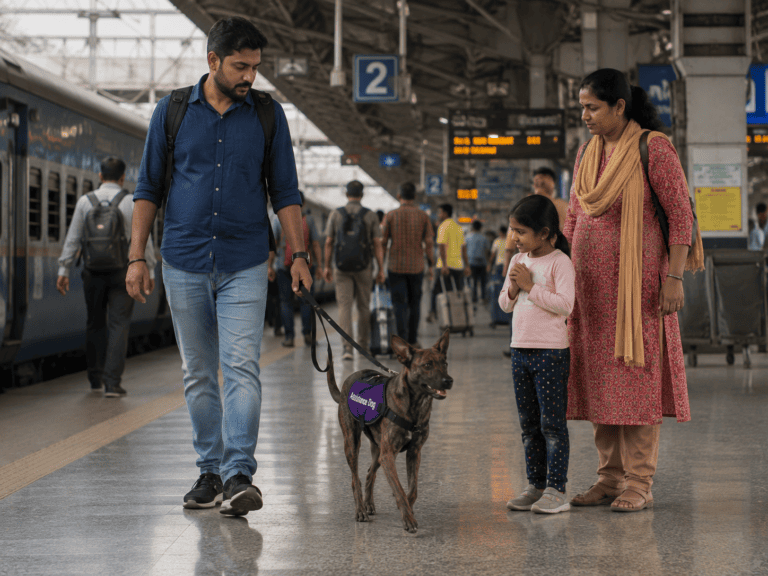
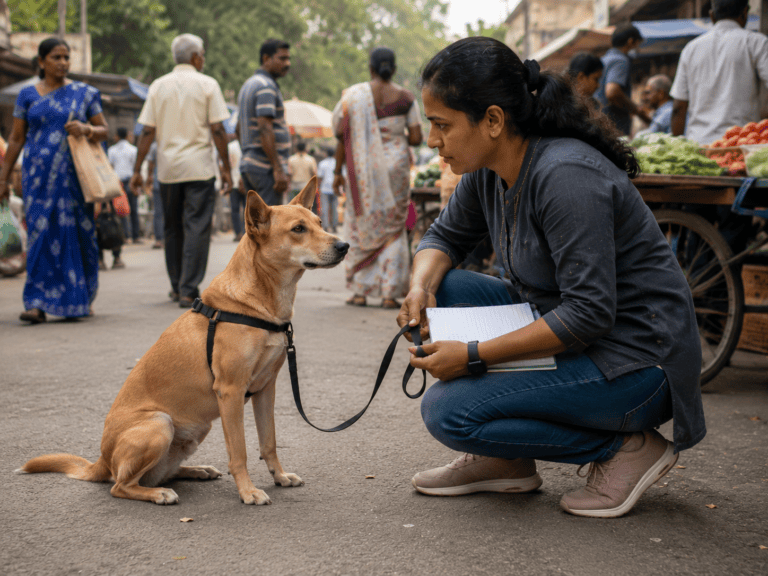
What a trained assistance or service dog may help with
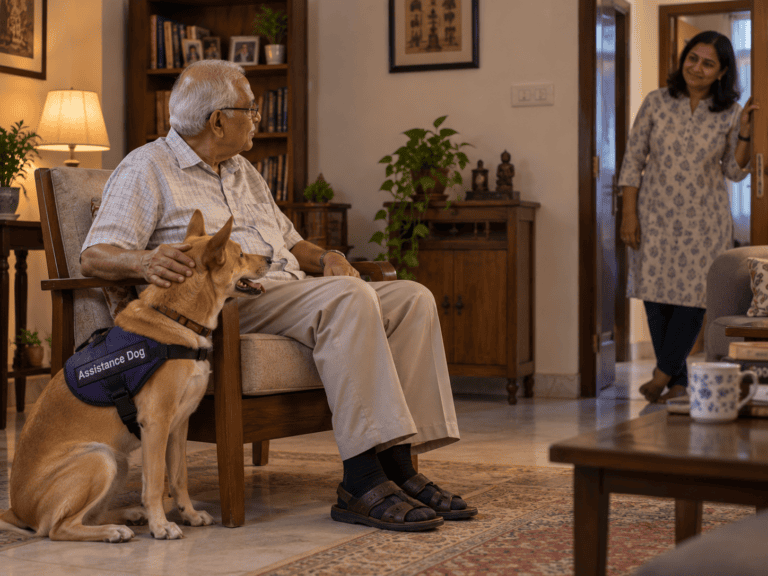
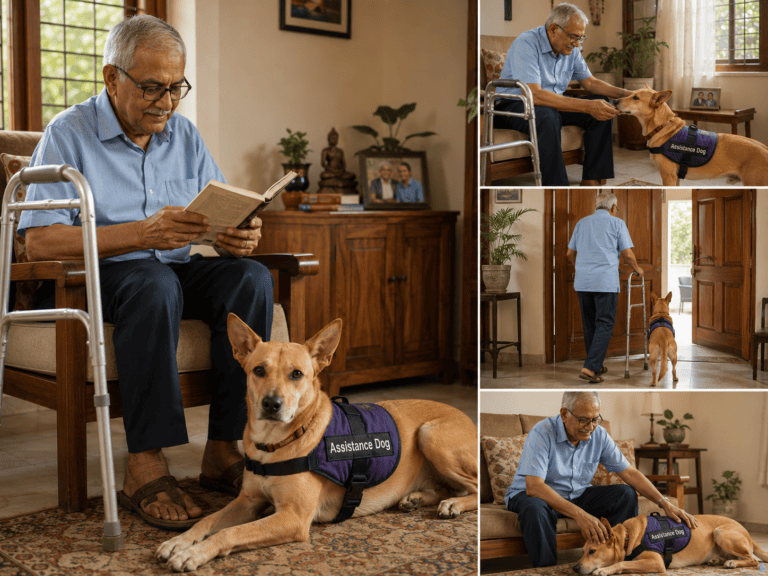
Stroke affects people very differently, so there is no standard list. For someone with weakness on one side, tasks that are commonly trained for people with limited reach or grip may be useful, matched to what the person can and cannot do.
- Retrieving and carrying. Picking up dropped keys, a phone or a walking aid, which can be hard with one weak hand or limited balance.
- Doors, lights and drawers. Opening and closing doors and cupboards, or pressing a switch, using cues the person can give.
- Getting help. Bringing a phone or fetching another person, for example after a fall. As with any assistance dog, this is not the same as detecting a medical emergency.
- Cues that suit the person. Where speech is affected, a trainer may teach the dog to respond to hand signals or other cues as well as words. This needs to be planned with a trainer and the person's therapist, since stroke affects communication in different ways.
For a fuller list, see our post on what tasks a mobility assistance dog can perform.
Sources: NHS, stroke symptoms | NHS, stroke recovery
What the research shows, and what it does not
- Mobility assistance dogs in general. A 2020 systematic review in PLoS One (Rodriguez and colleagues) covered 27 studies of assistance dogs and psychosocial health, 18 of them on mobility assistance dogs. Of 147 comparisons, 68 per cent showed no difference, 30 per cent were positive and 2 per cent were negative. We did not find a stroke-specific analysis in it.
- A small occupational therapy study. A 2023 mixed-methods study in the British Journal of Occupational Therapy followed six people with mobility challenges who already had assistance dogs. Researchers assessed everyday performance and satisfaction at around three months after partnership and again 12 to 18 months later. Participants reported improvements over time, but the study had no comparison group and a very small sample. None of the six had a stroke, and all the dogs came from one organisation.
- Our own search. We looked for studies measuring the outcomes of task-trained assistance dogs for stroke survivors and did not identify any that evaluated this group separately.
Research on assistance dogs for people with mobility impairments is limited, and we have not identified studies focused specifically on task-trained assistance dogs for stroke survivors. Any benefit for an individual should be treated as possible, not promised.
Sources: Rodriguez et al., PLoS One (2020) | Isaacson and Hellman, British Journal of Occupational Therapy (2023)
Dogs in stroke rehabilitation are not the same as an assistance dog
Searching on this topic brings up work that is easy to confuse with assistance dogs. Two examples show the difference.
- Therapy dogs in rehabilitation. A 2026 study in Mayo Clinic Proceedings randomly assigned 50 hospitalised patients recovering from a recent stroke to standard rehabilitation or standard rehabilitation supplemented with animal-assisted treatment. The animal-assisted group was reported to show greater engagement in rehabilitation, higher physical activity and more time spent mobile. This looked at therapy animals used during inpatient rehabilitation, not assistance dogs living with stroke survivors and doing daily tasks at home.
- Training a dog as therapy. A registered US feasibility study (NCT04610346) examined whether adults with aphasia after stroke could learn positive-reinforcement dog-training skills through weekly sessions. The study is listed as completed, and results were posted on ClinicalTrials.gov in October 2025. This investigated dog training as an animal-assisted intervention, not assistance dogs performing daily tasks for stroke survivors. The registry results should be read in the context of the study's design and small sample.
Both are interesting, and neither tells us whether a stroke survivor will gain from having a task-trained assistance dog at home. For the difference between facility, therapy and assistance dogs, see our post on facility dog vs therapy dog.
Sources: The Impact of Animal-Assisted Treatment on Inpatient Stroke Rehabilitation, PubMed | HealthDay news summary (August 2026) | ClinicalTrials.gov, Persons With Aphasia Training Dogs Program (NCT04610346)
Questions for the person and the family
These are our own suggestions, not a clinical checklist. They are worth discussing with the stroke rehabilitation team.
- Can the dog be handled with the abilities the person has now? Leads, feeding, grooming and cleaning up all take hands. In the 2023 study above, cleaning up after the dog was one of the challenges participants named. With weakness on one side, some of this may need a family member.
- How might recovery change things? Many people keep recovering for months or longer, while others do not. A dog matched to today's abilities may need different tasks later, so the plan should allow for change.
- What about fatigue and mood? A dog adds routine, and also adds responsibility on days when energy is low. Think about who covers those days.
- How will the dog be cued? If speech or understanding is affected, ask the trainer how commands will work in practice.
- Is the home ready? Steps, narrow doorways and shared spaces affect both the person and the dog.
- What does the dog's welfare need? Veterinary care, exercise and rest should be covered even when the person is unwell.
What a dog cannot, or should not, be asked to do
- Bearing a person's weight. After a stroke, balance and falls are a real concern, but a dog should not be expected to carry or steady a person's body weight. Whether any support is suitable should be assessed by a rehabilitation professional and a qualified mobility-dog trainer. HeartDogs does not train dogs for weight-bearing support.
- Medical monitoring. A dog is not a substitute for medical care, medication or an emergency plan. We have not identified research showing that trained dogs can detect or prevent a second stroke.
- Rehabilitation. A dog does not replace physiotherapy, occupational therapy or speech therapy. It may complement rehabilitation, but it does not replace it.
Stroke and daily support in India
With a burden of this size, family members often provide much of the day-to-day support after a stroke, although the extent varies by household and we have not seen national figures. Our post on why assistance dogs and not just human caregivers looks at how a dog and a caregiver can work together.
We have not identified a nationally standardised route for obtaining or funding an assistance dog (service dog) for stroke survivors in India, and such dogs may not yet be widely available. Our posts on how to get an assistance dog in India and what one costs explain the current picture.
Source: Down To Earth (September 2024), reporting the Lancet Neurology stroke burden analysis
What HeartDogs is doing
HeartDogs is working towards training assistance dogs (known as service dogs in some countries) for mobility-related tasks that do not involve bearing a person's weight, matched to the needs of an individual person. We are not making claims about outcomes for stroke survivors, and we would plan any placement with the person's rehabilitation team.