The irreplaceable role of human caregivers
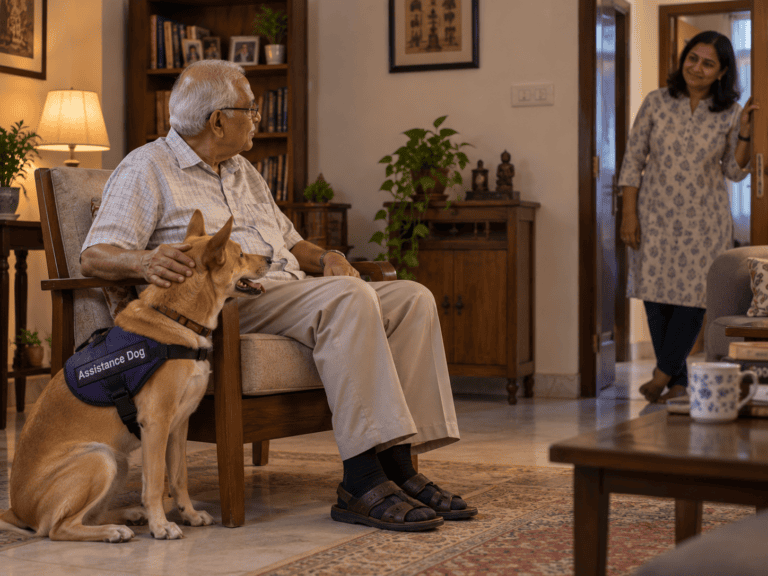
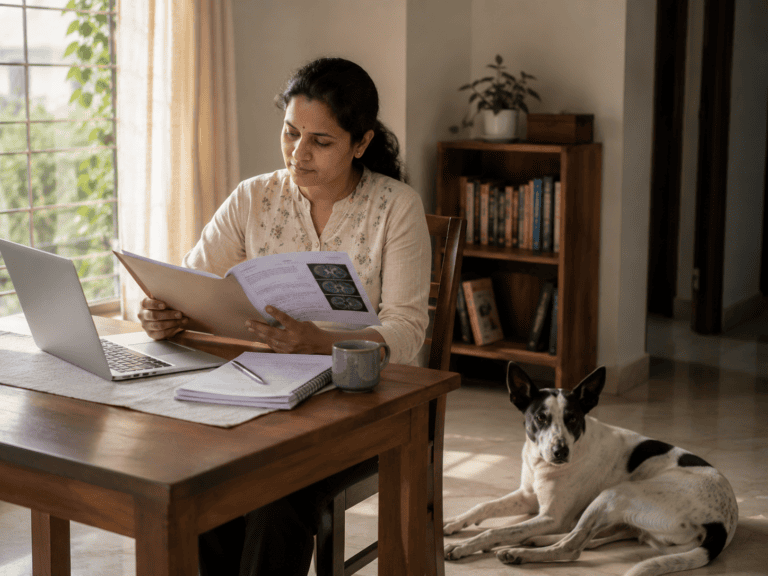
Human caregivers provide medical care, emotional understanding, decision-making support and complex daily assistance that no dog can replicate. A nurse, a family member or a professional caregiver brings judgment, language and relationship to their role. That is irreplaceable.
Nobody is suggesting otherwise.
Where assistance dogs fill a different gap
A trained assistance dog is available 24 hours a day, every day, without a salary, without sick leave and without the caregiver fatigue that quietly breaks families across India. It doesn't need to commute across the city or be managed around its own obligations.
More specifically:
- A dog can detect what humans can't. A seizure alert dog notices physiological changes before a seizure happens, often 10 to 20 minutes in advance. No human caregiver, however attentive, can reliably do this. The same applies to diabetic alert dogs that detect blood sugar changes through scent.
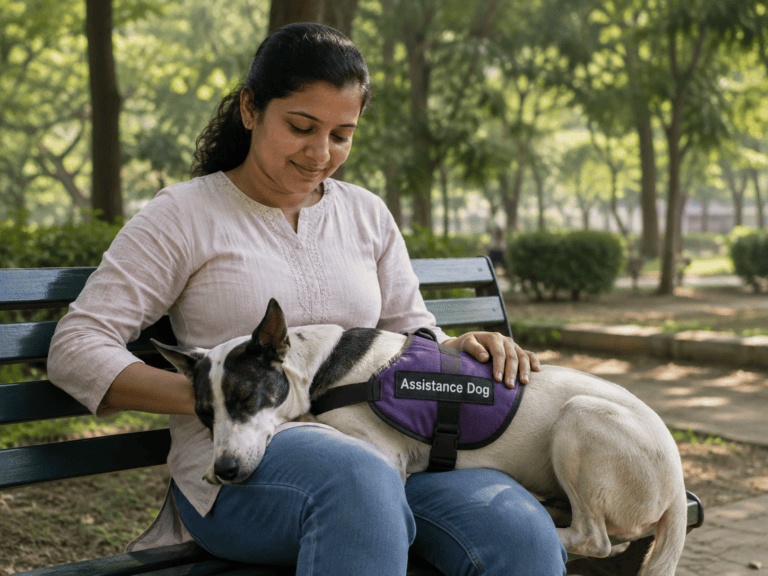
- A dog is non-judgemental. For people living with psychiatric conditions, autism or invisible disabilities, the presence of another human being, even a kind one, can itself be a source of stress. A dog offers calm, consistent companionship without social pressure or expectation.
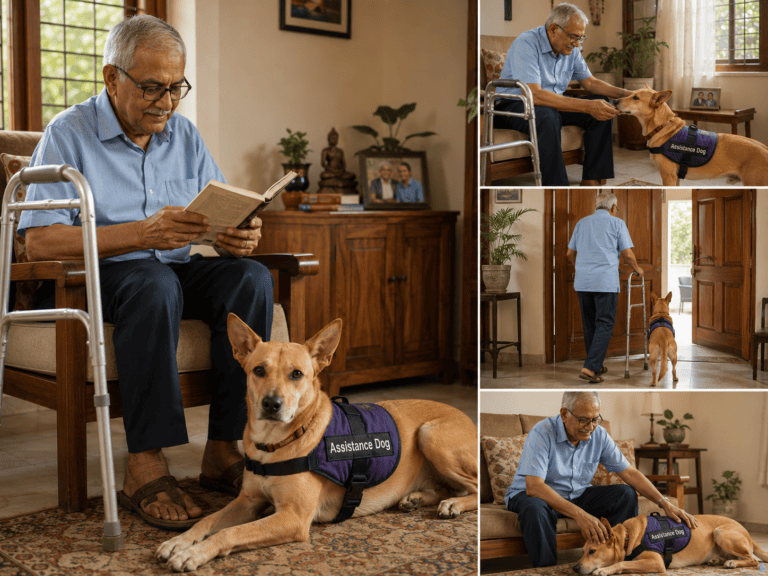
- A dog reduces dependence without replacing relationships. In India, most care falls on a family member, almost always a woman. A trained assistance dog can take on tasks that currently tie that person to the home around the clock, giving both the caregiver and the person with a disability more space and more freedom.
- A dog provides continuity. Human caregivers change. A well-placed assistance dog provides a consistency of support that is genuinely difficult to replicate with human care alone.
It's not either/or
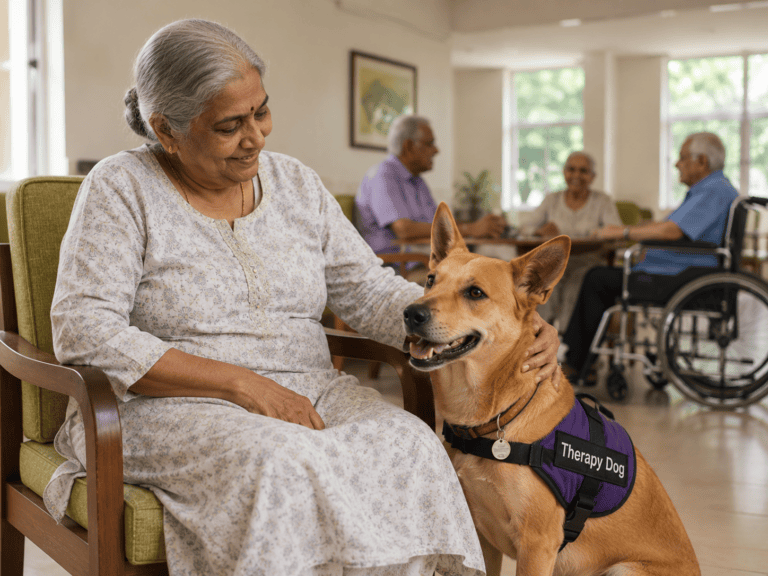
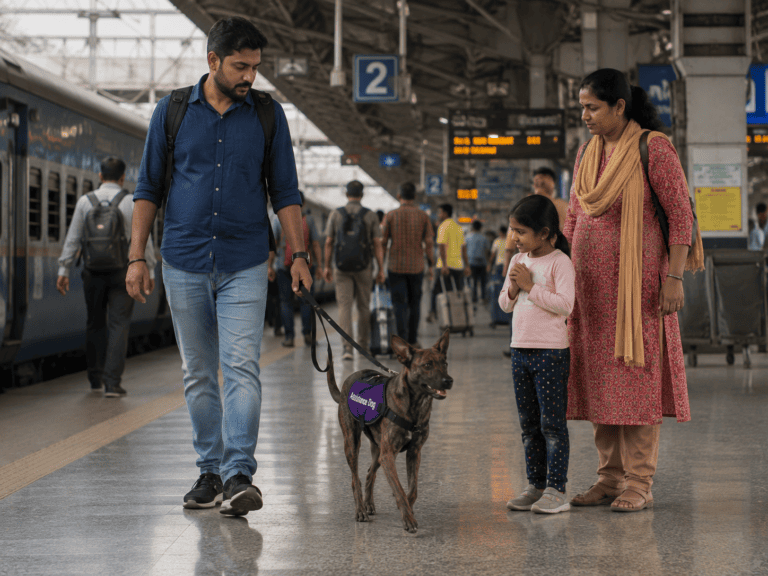
Framing this as dogs versus human caregivers misses the point. Assistance dogs (also known as service dogs) don't compete with human caregivers. They fill gaps that human caregivers cannot fill, reduce the burden on the people who provide that care, and give people with disabilities more agency over their own daily lives.
In a country where professional care is expensive, family caregivers are stretched thin and disability support systems are still developing, a trained dog isn't a luxury. It's a practical, everyday form of support that works around the clock in ways that nothing else does.
What we are doing about it
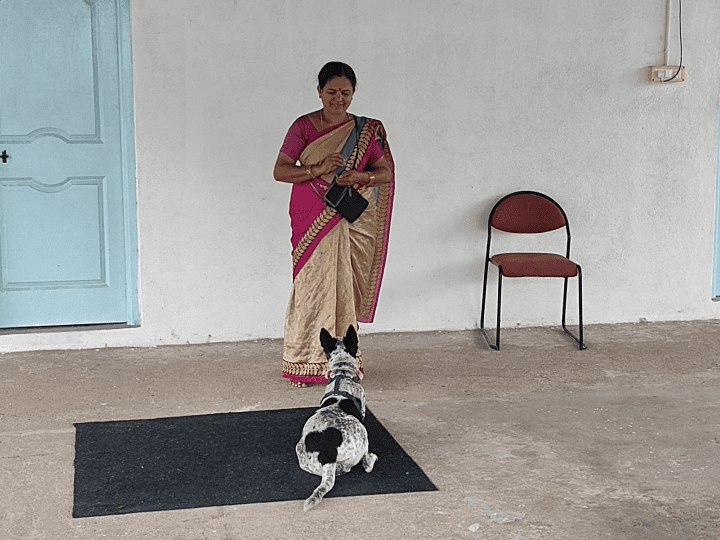
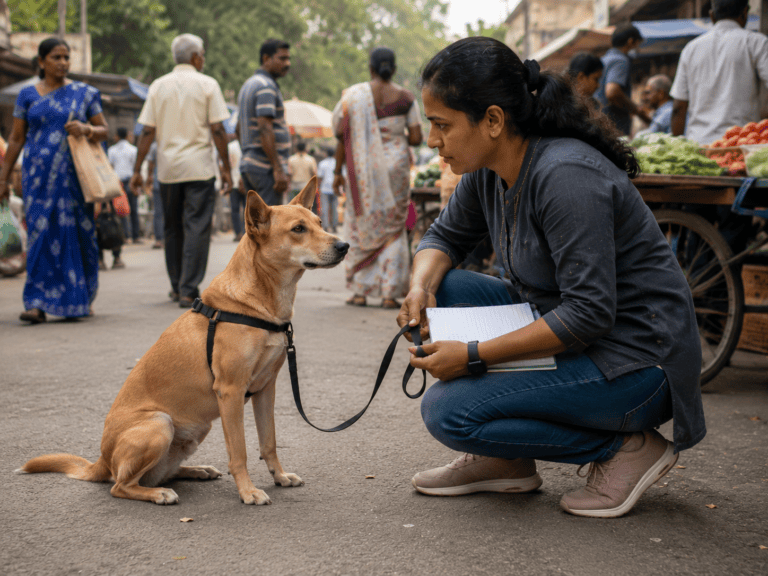
HeartDogs trains Indies - India's native landrace dogs - as assistance and therapy dogs in India. The programme runs in real homes in rural Karnataka, with women in the community working as paid foster-trainers. The model is built around what Indian families actually need, not what works elsewhere.