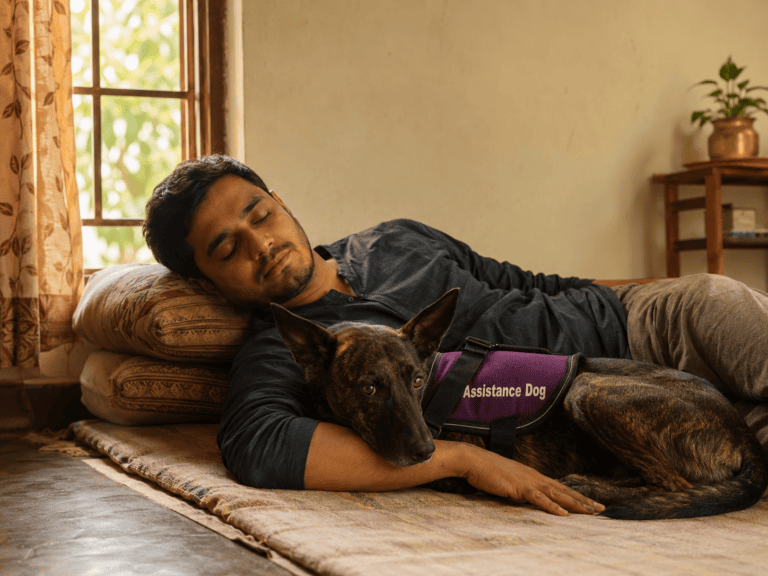
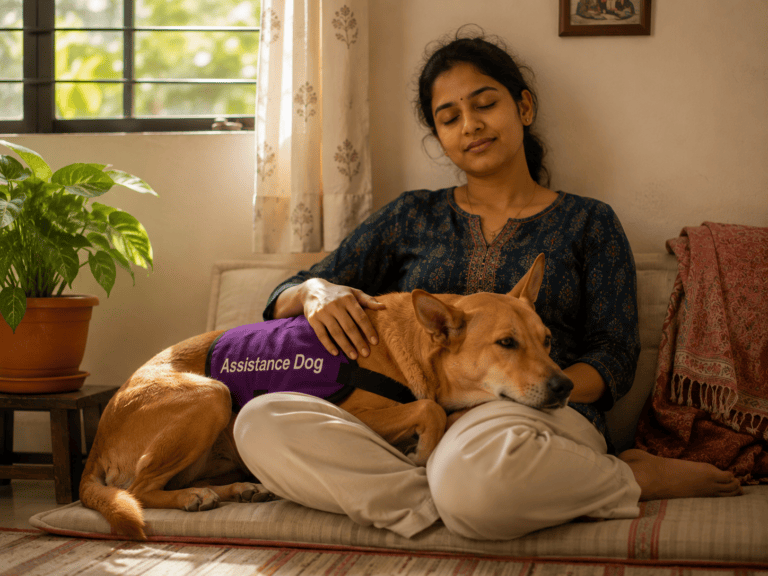
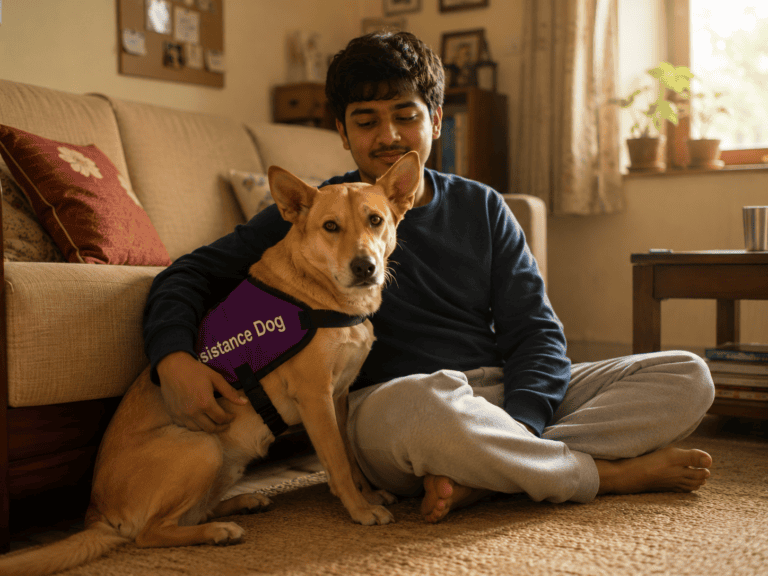
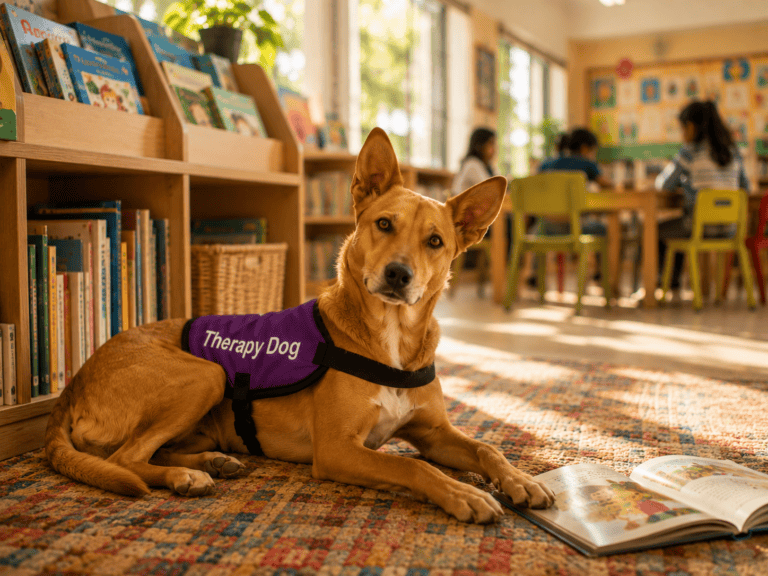
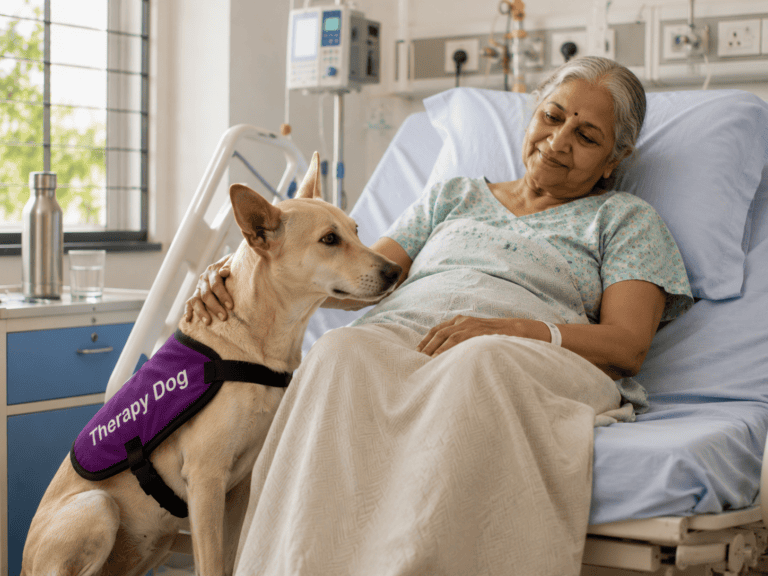
So what exactly is an assistance dog?
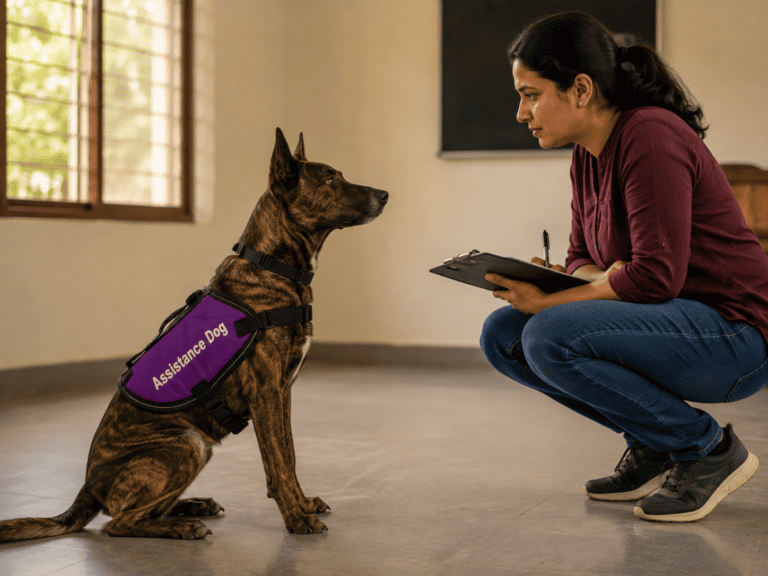
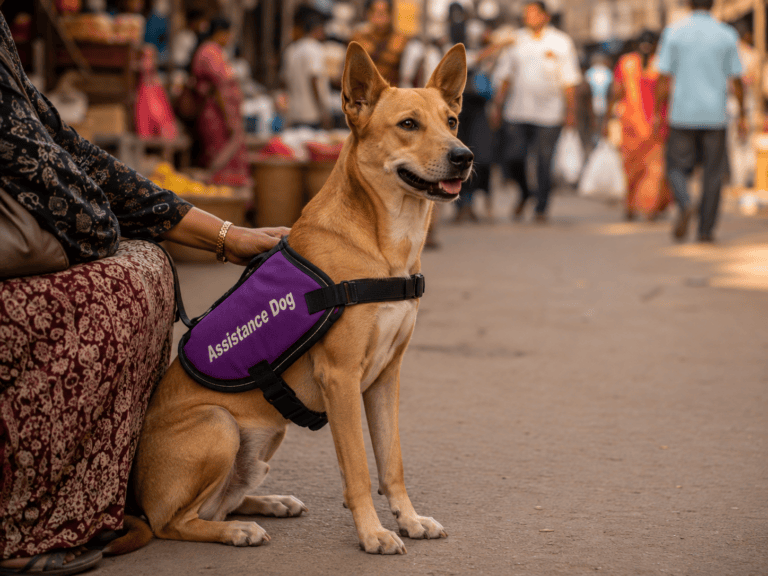
An assistance dog is a dog trained to perform specific tasks for a person with a disability. This is different from a pet, and different from a dog that is simply well-behaved. An assistance dog learns tasks that directly support a person's daily life and safety.
Some examples:
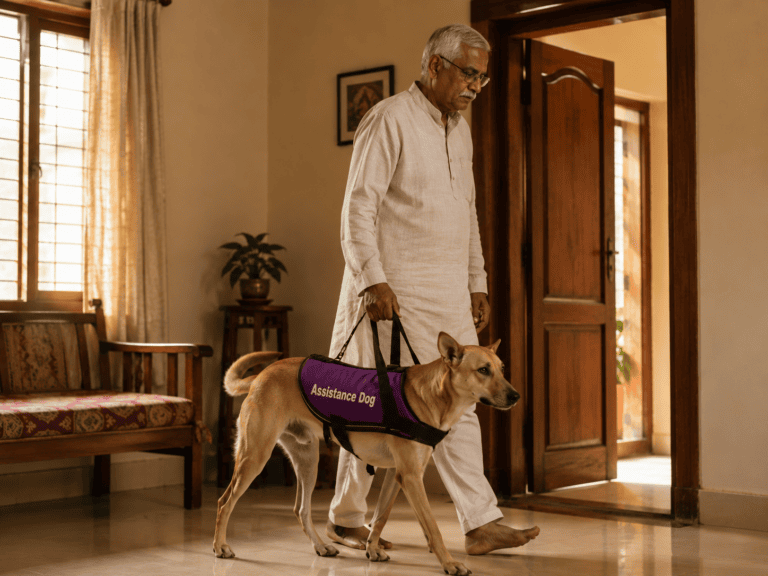
- Guiding a person who is blind or has low vision around obstacles
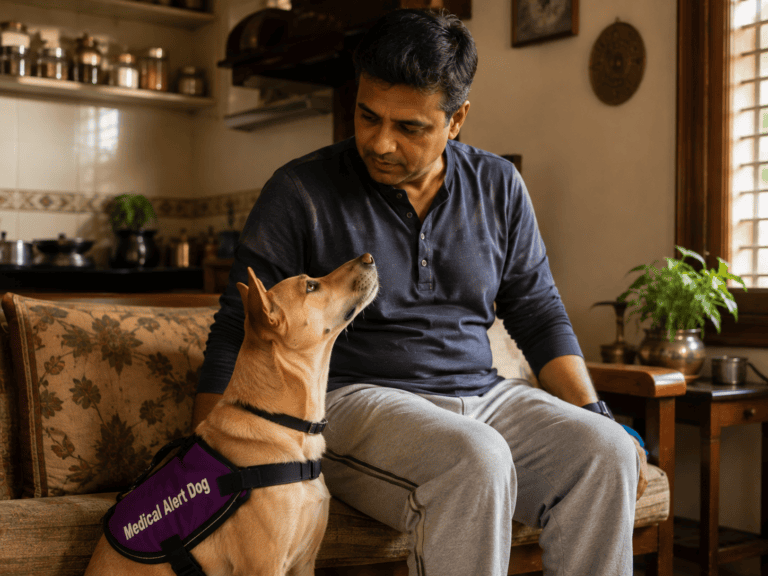
- Alerting a person before a seizure happens
- Picking up dropped items for someone with limited mobility
- Interrupting repetitive or distressing behaviour in an autistic person
- Waking someone during a panic attack or flashback
The dog isn't doing tricks. It is doing a job, and that job is built around one person's specific needs.
Why this barely exists in India
A few reasons.
- There's no public access law that recognises assistance dogs. In many countries, an assistance dog has the legal right to enter restaurants, offices, trains and flights with its handler. India has no such framework yet. This makes the entire idea harder to build a system around.
- Training is expensive and mostly happens abroad. The cost of breeding, raising and training an assistance dog overseas often runs into tens of lakhs of rupees. For most Indian families, this route is simply not realistic.
- Most training programmes use Western breeds. Labradors and Golden Retrievers dominate this space globally. They weren't bred for Indian heat, Indian streets or Indian conditions, which adds another layer of difficulty and cost.
- Disability support in India still falls mostly on the family. Without an established culture of working dogs, most families don't even know this kind of support exists as an option.
The need is real, and it is large
India's 2011 Census recorded approximately 26.8 million people living with a disability - about 2.2% of the population at the time. That sounds like a lot until you consider what it leaves out. The World Health Organisation estimates that around 15% of the world's population lives with some form of disability. Applied to India's population, that points to over 200 million people - nearly eight times the official figure.
The gap exists for specific reasons. The Census definition was narrow and counted only significant, visible impairments across a limited set of categories. Conditions like psychiatric disabilities, autism, chronic pain and many invisible conditions were excluded or severely undercounted. Stigma means many families do not disclose disability to a Census enumerator. Rural India has limited access to formal diagnosis, so many people living with disability have never received one. And the 2016 Rights of Persons with Disabilities Act expanded the recognised categories from seven to 21 - the Census predates that change entirely.
The next Census, already delayed from 2021, is expected to use an updated framework. When it does, the numbers will look very different. For now, the honest figure sits somewhere between 26 million and 200 million - and even the lower end represents an enormous population without adequate support.
A trained assistance dog doesn't replace family support. But it can ease it. A dog that alerts before a seizure, or helps someone stay calm in public, or simply gives a person the confidence to leave the house alone, changes what's possible for that family.
What we are doing about it
We're building India's own version of this idea, from the ground up. Instead of importing breeds raised for a different climate and culture, we train rescued Indies - India's native landrace dogs - who are already adapted to Indian conditions. Instead of training in kennels, we train in real homes in rural Karnataka, with women in the community working as paid foster-trainers.
The goal is simple: build a model for assistance dogs that actually works for India, and stays within reach of the families who need it most.