The science behind canine medical detection
Dogs have a highly developed olfactory system, with estimates of around 300 million olfactory receptors compared with roughly six million in humans. Their ability to discriminate odours is substantially greater than ours, which is why researchers have investigated their potential for detecting chemical changes associated with disease. That said, olfactory ability varies considerably by breed, individual dog, training method and the specific compound being detected - broad comparisons should be treated as approximate rather than universal.
Many medical conditions alter the body's chemistry in ways that produce distinctive volatile organic compounds (VOCs) - chemical signatures that enter sweat, breath, urine and other bodily secretions. This is the basis for most canine medical detection research: can a dog be trained to identify chemical patterns associated with a particular condition and signal their presence?
The challenge is that having a sensitive nose is not the same as having a reliable, standardised detection ability. Training, handler relationship, environmental factors and the consistency of the biological sample all affect performance significantly. The gap between what dogs can detect in controlled laboratory settings and what they do reliably in real-world daily life is substantial - and understanding it is essential to interpreting the research honestly.
Diabetes alert dogs - the most studied case
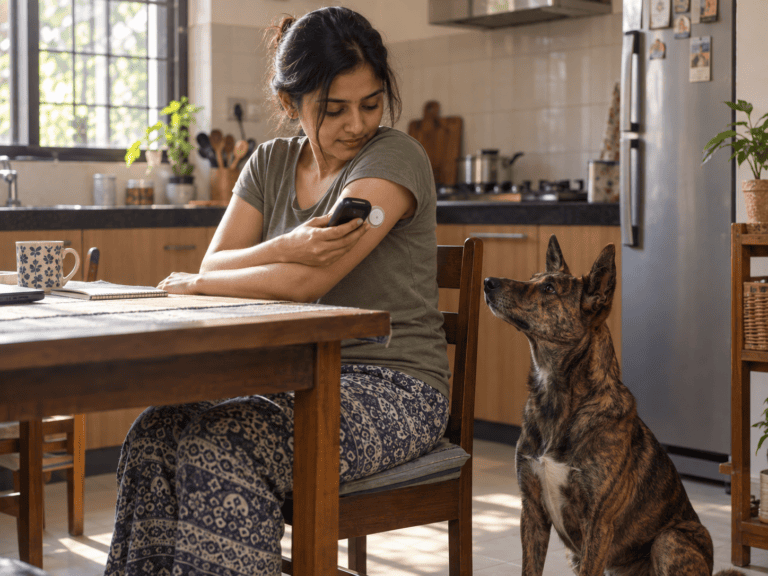
Diabetic alert dogs (DADs) are trained to alert their handler to hypoglycaemia (low blood sugar) or hyperglycaemia (high blood sugar) potentially before the handler is aware of the episode - giving them time to check their levels and intervene. These dogs are among the most studied examples of medical-alert assistance dogs.
A 2026 scoping review published in Medical Sciences (MDPI), which reviewed ten studies on DADs, found that most studies (7 of 10) reported that DADs could identify both hypoglycaemic and hyperglycaemic episodes, with sensitivity values consistently higher for hypoglycaemia than hyperglycaemia. None of the included studies reported false alert rates exceeding 20%. Half the studies also reported improvements in perceived safety, independence and quality of life for handlers.
However, the review's conclusion is measured: it describes the evidence as "heterogeneous and fragmented" and identifies key knowledge gaps in training protocols, outcome standardisation and performance reporting. An important earlier study - Gonder-Frederick et al. (2017) - specifically found that hypoglycaemia sensitivity in real-world settings was only 35.9% across the DADs studied during waking hours, which is substantially lower than what owner self-report studies typically suggest. Real-world accuracy varies significantly across dogs, training programmes and individual circumstances.
The available evidence suggests diabetic alert dogs can provide meaningful safety benefits for some people - but their accuracy is variable, often lower in real-world settings than in controlled studies, and should not be relied upon as the sole monitoring strategy for managing blood glucose.
Researchers suspect that dogs may respond to changes in volatile compounds associated with shifts in blood glucose, but the precise biological signals have not been definitively established - dogs may also respond to changes in the handler's behaviour, movement or routine. Most handlers and programmes emphasise that DADs work best as a complement to continuous glucose monitors and clinical management, not as a replacement.
Souza-Silva et al., Medical Sciences (MDPI), 2026 · Gonder-Frederick et al., Diabetes Research and Clinical Practice, 2017
Allergy alert dogs - a smaller but real evidence base
Some programmes train dogs to alert to odours associated with selected food allergens - such as peanuts or tree nuts - and other target substances, signalling their handler before they consume or come into contact with a trigger substance. This role is distinct from medical detection in that the dog is detecting an external substance in the environment rather than a change in the handler's body chemistry.
For people with severe anaphylactic allergies - where contact with even trace amounts of a substance can be life-threatening - an alert dog may offer a potentially useful additional layer of protection that precedes the physical reaction rather than responding to it. The evidence base for allergen-detection dogs is much smaller and less well-established than for DADs - most documentation comes from programme reports rather than controlled studies.
As with DADs, allergy alert dogs should be understood as an additional safety layer alongside standard allergy management - not as a standalone protection against accidental exposure.
Cancer detection dogs - a research context, not an assistance dog role
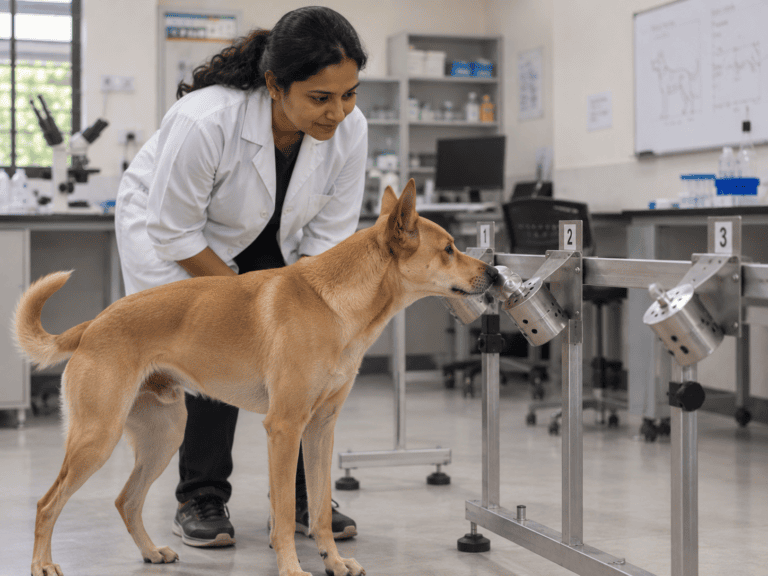
The research on dogs detecting cancer is genuinely interesting - and genuinely different from assistance dog work. A 2022 systematic review covering 62 studies on canine cancer detection found that some controlled laboratory studies reported high sensitivity and specificity for selected cancer types - including prostate, lung, breast and colorectal cancer. However, performance varied widely between studies and laboratories, only six studies used a genuinely double-blind design, and the review rated overall evidence quality as low.
However, the review concluded that there is currently insufficient evidence to warrant the use of medical detection dogs in clinical settings. Most studies suffer from methodological limitations - small samples, potential bias in how samples are presented, and challenges in standardising training and testing protocols across different laboratories and programmes.
Crucially, cancer detection dogs working in research settings are not the same as assistance dogs. They are working in controlled laboratory environments on pre-collected biological samples. The idea of a dog living with a person and spontaneously detecting their cancer is a different - and much less studied - concept. The two should not be conflated.
What a dog cannot reliably do - equally important
Honesty about limitations is as important as documenting capabilities. A few things that are important to state clearly:
- No medical detection dog should be a person's only safety system. Alert dogs complement monitoring technology and medical management - they do not replace blood glucose monitors, epinephrine auto-injectors or clinical oversight.
- Performance is individual and variable. A dog that performs well in one context may perform poorly in another. Environmental factors, the dog's health and arousal levels, and changes in the handler's physiology or routine all affect accuracy.
- Training standards are not uniform. There is no globally standardised certification system or performance standard for medical alert dogs, and programme requirements and validation methods vary considerably. Programme quality varies enormously, and so does the accuracy of dogs trained under different methodologies.
- Dogs are not infallible diagnostic tools. A missed alert is a real possibility. A false alert creates its own risks and anxiety. These are limitations of the method, though in some cases they may also point to training or discrimination issues. They are not a reason to abandon other monitoring, but to understand that detection dogs are one layer of support, not a diagnostic device.
Why medical alert dogs are particularly relevant in India
India has one of the world's largest populations of people living with diabetes - an estimated 101 million people in 2021, according to the ICMR-INDIAB study published in 2023. Hypoglycaemia is an important risk for people using insulin and some other glucose-lowering medicines, particularly those living alone or in households where a co-resident may not always be present to help. Continuous glucose monitors are available in India, but access and affordability remain uneven.
Severe food allergies represent another significant context, though population-level data on anaphylaxis incidence in India remains limited.
In both contexts, the appeal of a trained dog as an additional layer of daily safety is clear. The current limitations of the evidence base do not diminish the real-world value that many people with diabetes or severe allergies report from their alert dogs - but they do mean that expectations need to be managed carefully, and that clinical monitoring should never be replaced by a dog alone.
Where HeartDogs currently stands on medical alert work
HeartDogs' current programme focuses on autism assistance and therapy dog roles. Medical alert training - particularly for diabetes or allergy detection - requires highly specialised scent training methodologies and rigorous performance assessment that are distinct from the task-based training in our current programme. It is an area we are interested in and learning about, not one we are currently delivering.
We mention it here because it is a genuine and important application of assistance dog work - one that is directly relevant to India's health context - and because understanding the field honestly is part of building a programme that can eventually serve it responsibly.