What is a mental health disability?
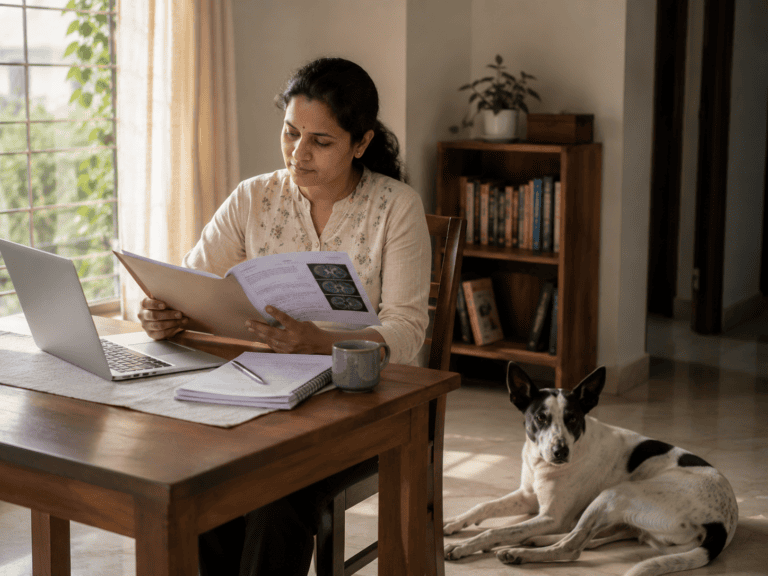
A mental health disability, sometimes called a psychiatric disability or psychosocial disability, is a condition where a mental health diagnosis significantly limits a person's daily functioning over a sustained period. The disability isn't the diagnosis itself - it's the impact the condition has on a person's ability to participate in everyday life.
India's RPWD Act 2016 recognises "mental illness" as a category of disability, which was a significant step. In practice, however, very few people with mental health conditions in India access the legal protections and support they're entitled to under this framework.
Conditions that can constitute a mental health disability
- Severe anxiety and panic disorders - where anxiety is so persistent or intense that it prevents a person from leaving home, maintaining work or functioning in social settings.
- Depression - particularly treatment-resistant or recurrent depression that significantly affects a person's ability to carry out daily tasks over a long period.
- Post-traumatic stress disorder (PTSD) - a condition that can follow trauma such as accidents, violence, abuse or disaster. Flashbacks, hypervigilance and avoidance behaviour can make ordinary life extremely difficult to navigate.
- Bipolar disorder - episodes of mania and depression can be severely disabling, particularly when unpredictable, affecting employment, relationships and safety.
- Schizophrenia and other psychotic disorders - conditions that can affect perception, thinking and behaviour in ways that require significant ongoing support.
- Obsessive compulsive disorder (OCD) - in its more severe forms, OCD can occupy hours of a person's day and make independent functioning very difficult.
The everyday challenges in India
- Stigma is severe and widespread. Mental health conditions in India are still widely associated with weakness, spiritual failing or family shame. This keeps people from seeking help and keeps families from talking openly about what they're dealing with.
- Mental health is not seen as a disability. Even among educated urban families, the idea that a mental health condition could be disabling enough to require formal support or legal protection is unfamiliar. This means people miss out on protections they're legally entitled to.
- Access to mental health professionals is extremely limited. India has one of the world's lowest ratios of psychiatrists and psychologists to population. Outside major cities, professional mental health support is nearly inaccessible for most families.
- Medication alone is the dominant treatment model. Where treatment is available, it tends to focus on medication rather than therapy, coping strategies or structured support. This leaves significant gaps in daily functioning even for people who are medicated.
- Employment and social participation suffer. People with mental health disabilities in India often lose jobs, withdraw from social life and become increasingly isolated, without any formal support structure to help them stay connected or functioning.
How psychiatric assistance dogs help
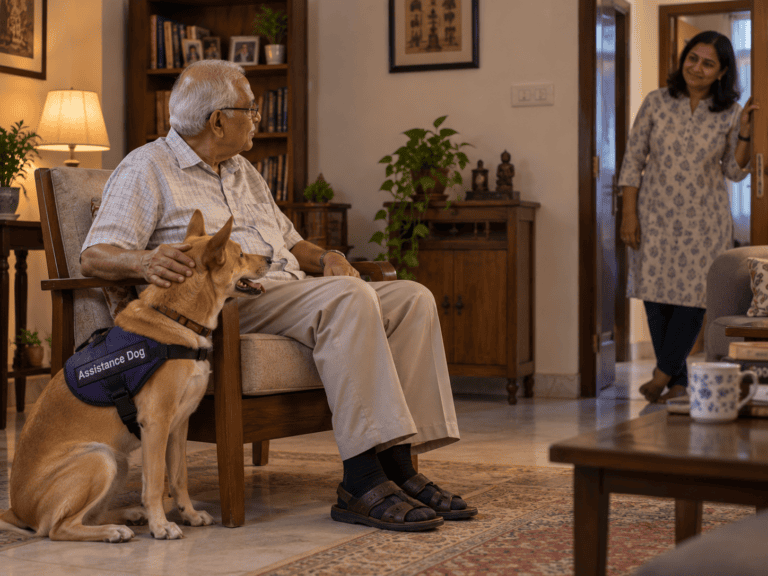
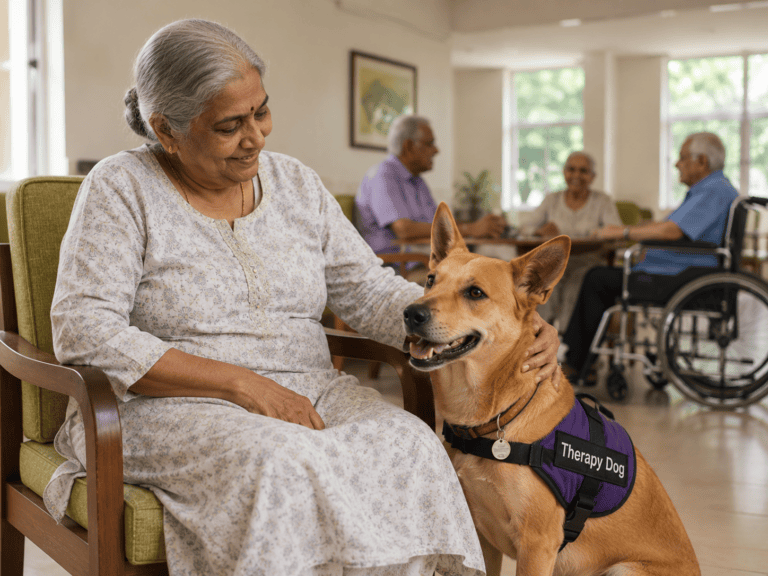
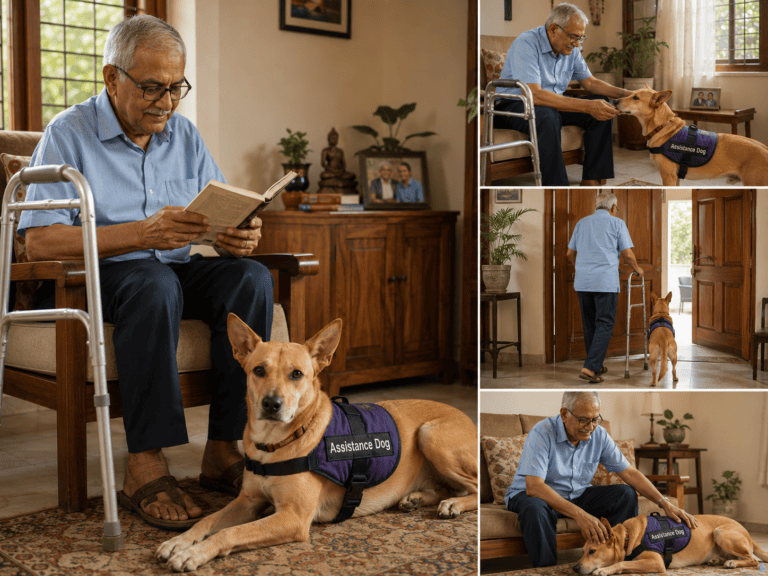
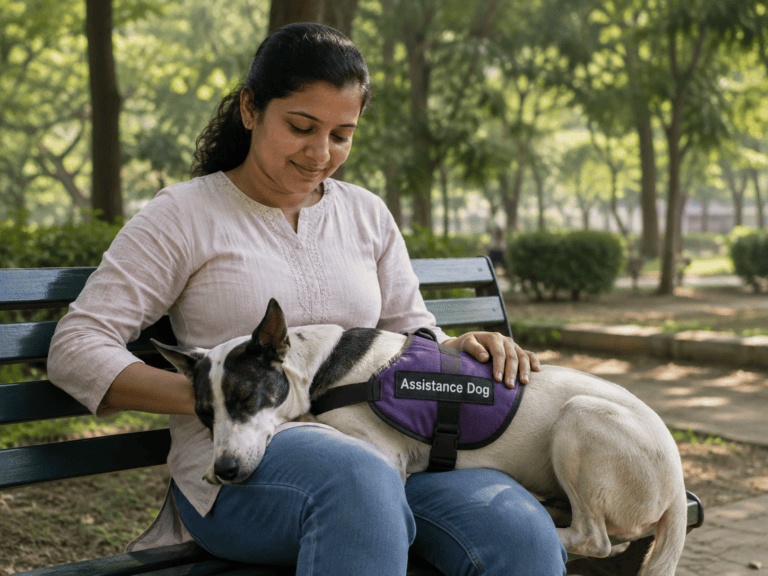
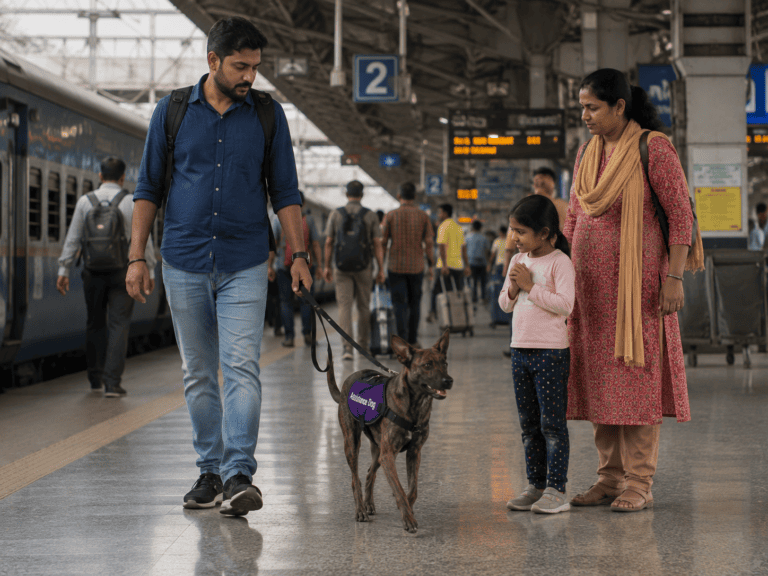
Psychiatric assistance dogs (also known as service dogs) are trained to support people with mental health disabilities through specific, learned tasks that reduce the impact of symptoms on daily life.
- PTSD. A dog can be trained to wake a person during a nightmare, check a room before the person enters, create physical space around the handler in crowds, interrupt a flashback by making physical contact, and provide grounding during a dissociative episode.
- Severe anxiety and panic disorders. A dog trained to recognise the early physical signs of a panic attack can apply deep pressure, redirect attention or guide its handler away from a triggering situation before the panic escalates.
- Depression and social withdrawal. The routine care a dog requires - feeding, walks, daily interaction - can provide structure and purpose on days when everything else feels impossible. The non-judgemental companionship a dog offers is well documented as a factor in reducing isolation.
- Bipolar disorder and OCD. Dogs can be trained to interrupt compulsive behaviour cycles or provide a calming anchor during the early signs of a manic or depressive episode.
These aren't replacements for professional mental health treatment. But in a country where that treatment is hard to access, a well-trained dog can be a meaningful, daily form of support that makes a real difference to how someone functions.
What we are doing about it
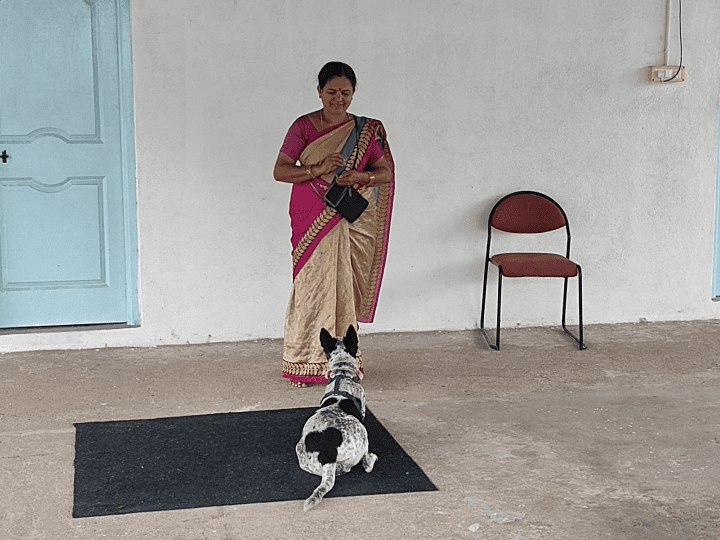
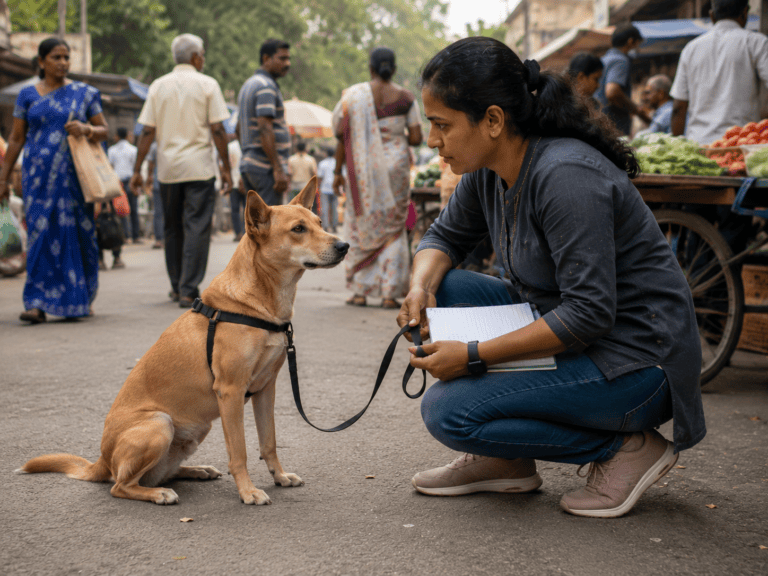
HeartDogs trains Indies - India's native landrace dogs - for psychiatric assistance roles alongside our wider programme. Training happens in real homes in rural Karnataka, with women in the community working as paid foster-trainers, building dogs that are calm, reliable and suited to the specific demands of this kind of support work.