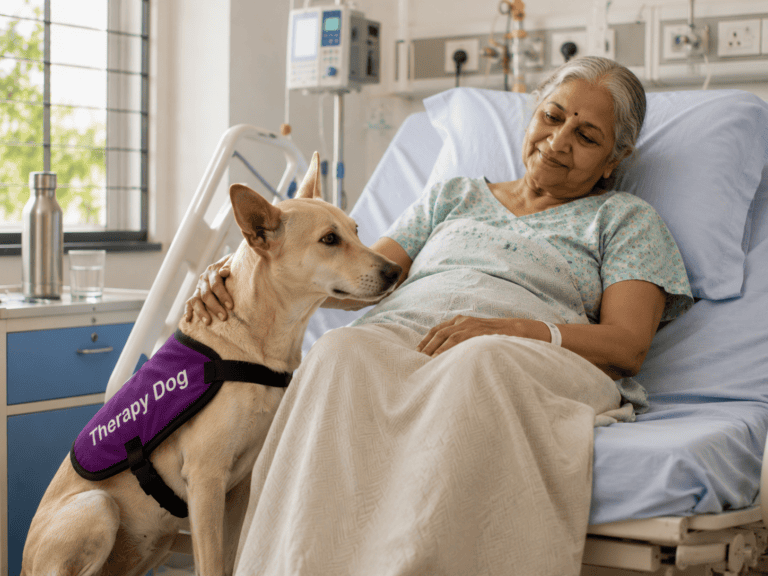
What a hospital therapy dog programme involves
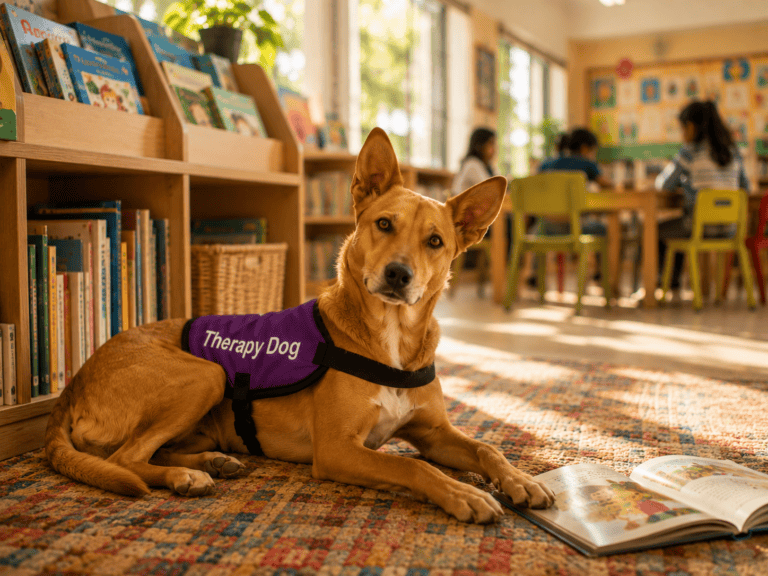
A hospital therapy dog programme is a structured arrangement in which trained therapy dogs accompanied by appropriately assessed handlers make regular visits to hospital settings. Unlike assistance dogs, which work with one specific person, therapy dogs visit many different patients across different wards, providing comfort and social connection without performing specific disability-related tasks.
Programmes vary considerably in their structure. Some programmes are coordinated directly by hospitals, while others partner with external therapy dog organisations that provide assessed dog-handler teams on a scheduled basis. What distinguishes a formal programme from an informal one is the presence of clear protocols - covering which wards the dog can access, hygiene requirements, how patient consent is obtained, how the dog's welfare is monitored, and how interactions are documented.
Common settings within hospitals include:
- Pre-operative areas. Patients waiting for surgery often experience significant anxiety. A therapy dog visit in the pre-operative period has been studied as a way to reduce anxiety and lower perceived distress before procedures.
- Rehabilitation wards. Therapy dogs have been used to encourage patients recovering from stroke or neurological injury to participate more actively in rehabilitation sessions, by providing motivation and social connection.
- Psychiatric wards and mental health units. Psychiatric settings show some of the more consistent findings in the literature for therapy dog benefit, where interactions have been associated with reductions in anxiety and improvements in mood and social engagement.
- Palliative care. In end-of-life settings, therapy dog visits offer comfort and companionship to patients who may be isolated or distressed, without requiring verbal communication or active participation.
- Waiting areas and outpatient clinics. Even brief encounters with a calm dog in high-traffic waiting areas can reduce anxiety and improve the waiting experience.
What the research actually says - honestly
The research on hospital therapy dog programmes is encouraging in some areas and more mixed in others. It is worth being specific about where the evidence is stronger and where it is weaker.
Where the evidence is strongest: A 2024 systematic review and meta-analysis published in JMIRx Med, focused specifically on dog-assisted therapy in healthcare settings, reported predominantly positive findings across four outcome areas: psychiatric disorders, neurological disorders, stress and anxiety, and depression. In four studies that directly compared dog-assisted therapy with established interventions, dog-assisted therapy was equally or more effective. The authors concluded that the findings "indicate that AAT is a robust intervention deserving of further exploration."
Where the picture is more mixed: An earlier and widely cited systematic review by Lundqvist et al., 2017 (BMC Complementary Medicine and Therapies), which reviewed 18 studies meeting the review's inclusion criteria, found a more nuanced picture. While 15 of 18 studies showed at least one significant positive effect, "in most studied outcome measures there was no significant treatment effect." The greatest potential was in psychiatric disorders; more modest effects were observed in cognitive disorders, stress and mood.
In emergency settings specifically: A 2022 systematic review in Academic Emergency Medicine found that while healthcare providers and patients reported positive experiences with therapy dog visits, the quantitative evidence was not strong enough to recommend the creation of new emergency department programmes specifically for this purpose. The authors note that "opportunistic expansion of existing AAI programmes may provide a low-risk and cost-effective way to expand AAI access" in emergency settings.
The honest summary: the evidence for hospital therapy dog programmes is most consistent for stress, anxiety and mood - particularly in psychiatric settings. The picture in other ward types and settings is more varied. The evidence base is growing, but many studies are small and methodologically limited. That is not a reason to dismiss the programmes; it's a reason to build them carefully, with documentation and evaluation built in from the start.
JMIRx Med, 2024 · Lundqvist et al., BMC Complementary Medicine and Therapies, 2017 · Gaudet et al., Academic Emergency Medicine, 2022 · Narvekar et al., Human Arenas, 2021 (India-specific review)
The barriers specific to the Indian context
India's hospitals face real barriers to establishing therapy dog programmes - some practical, some cultural, some structural.
- No national certification framework. In countries with active programmes, therapy dog teams are assessed against recognised standards. India has no national certification body for this work. Some organisations operating here - such as Animal Angels Foundation, which has run hospital AAT programmes since 2007 - adapt international frameworks such as Pet Partners (formerly Delta Society) guidance to Indian settings. But these adaptations are organisation-specific, not standardised, which makes it difficult for a hospital administrator to assess what they're agreeing to.
- Hygiene and infection control concerns. These are legitimate concerns that well-designed protocols directly address. We've covered this in a separate post on hygiene and working dogs. Published evidence from established programmes suggests that properly screened, vaccinated dogs following appropriate infection-control protocols have not been shown to increase hospital-acquired infection rates - though most of this data comes from US and European settings. Indian hospitals will reasonably want to see this evidence alongside locally documented protocols before acting on it.
- Cultural unfamiliarity and consent dynamics. The presence of dogs in clinical spaces is still unfamiliar for many Indian patients, families and clinical staff. India's diverse religious and cultural beliefs about animals add complexity - dogs are viewed differently across communities. Research in Indian clinical settings has found that while many patients respond positively to the idea of therapy dog visits, a significant share of family members do not consent, citing safety concerns and awareness gaps. This isn't an insurmountable barrier, but it means programmes need to be introduced carefully, with consent managed actively and concerns addressed with evidence rather than assumed away.
- Resource constraints. Many Indian hospitals - government and private - are stretched for basic resources. A therapy dog programme requires coordination, scheduling, documentation and oversight - all of which have a cost in time and capacity that many institutions genuinely don't have to spare.
None of these barriers are unique to India - versions of all of them existed when hospital therapy dog programmes were being established in other countries too. They were resolved through careful relationship-building with institutions, clear protocols, documented outcomes and time. The same path is available here.
What it actually takes to establish one
A hospital therapy dog programme requires three things working together: a trained dog with a certified handler, a hospital willing to establish and follow clear protocols, and a relationship of trust between the programme and the institution built over time.
The dog must be assessed specifically for hospital settings - not just friendly and calm at home, but able to stay settled around unfamiliar equipment, clinical smells, IV lines, wheelchairs and the unpredictable sounds of a ward environment. The handler must understand the dog's stress signals and manage interactions actively rather than leaving patients and staff to approach without guidance. And the hospital must have designated contacts, agreed protocols for which wards the dog can access, and a clear process for obtaining patient consent.
Programmes that work well also document their visits - programme activity, patient consent records and, where appropriate, patient-reported outcomes. This documentation is what allows a programme to build an evidence base within its own institution, which is ultimately what convinces administrators to continue and expand it.
What we are working towards
HeartDogs trains Indies - India's native landrace dogs - for therapy work that includes hospital settings. We are working with institutional partners to develop the kind of carefully structured, protocol-driven approach that hospital placements require. This takes longer than placing a dog in a family home - the relationship with the institution needs to be built before any dog enters a ward.
What we are building toward is a model that Indian hospitals can adopt with confidence - not because a charity asked them to, but because the protocols are clear, the dogs are properly assessed and the documentation allows hospitals to evaluate the programme's outcomes within their own setting.
India doesn't need to borrow this idea from abroad. It needs to build its own version of it - suited to Indian institutions, Indian patients and Indian dogs.