Selection and temperament assessment
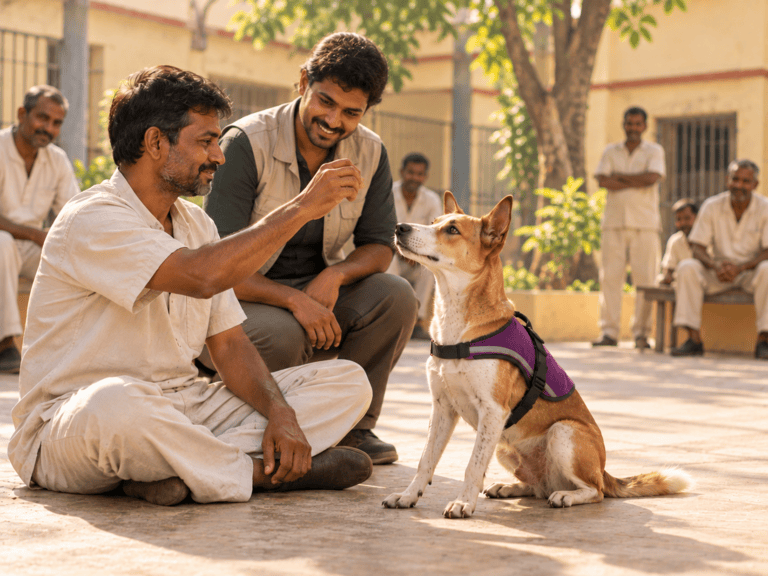
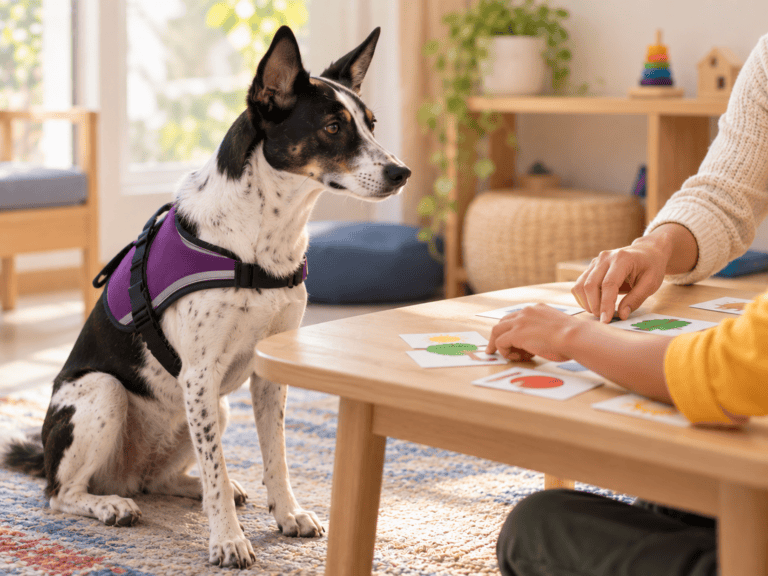
Before training begins, the dog needs to be assessed. Not every dog is suited to assistance work, regardless of breed or age. Trainers look for a calm, confident, sociable temperament - a dog that recovers quickly from surprises, isn't easily overwhelmed and shows a natural willingness to engage with people.
This stage exists to save time later. A dog that isn't suited to this work won't get there through training alone, so getting selection right at the start matters enormously.
Foundation training
Once a dog is selected, foundation training begins. This covers the core behaviours every working dog needs: responding reliably to basic cues, walking calmly on a lead, settling quietly in one place, staying focused around distractions and being comfortable with handling by strangers.
This stage isn't glamorous, but it's the most important. Everything that comes later depends on how solid this groundwork is.
Socialisation and exposure
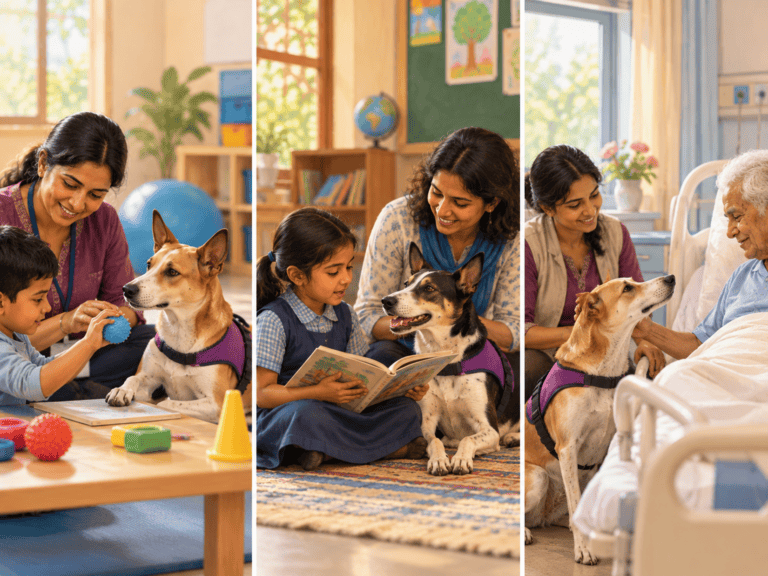
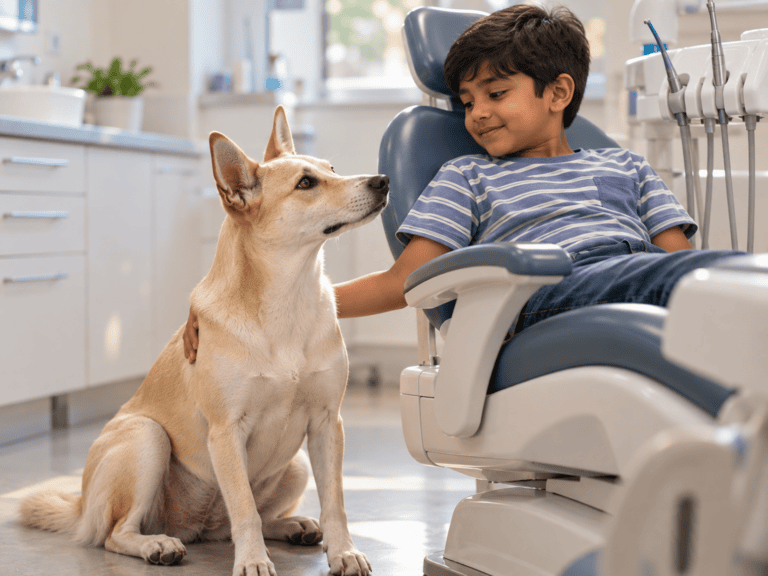
Socialisation isn't a separate phase that happens once and ends. It runs continuously through the training process, introducing the dog gradually to the kinds of settings, sounds, people and situations it will eventually need to navigate without stress.
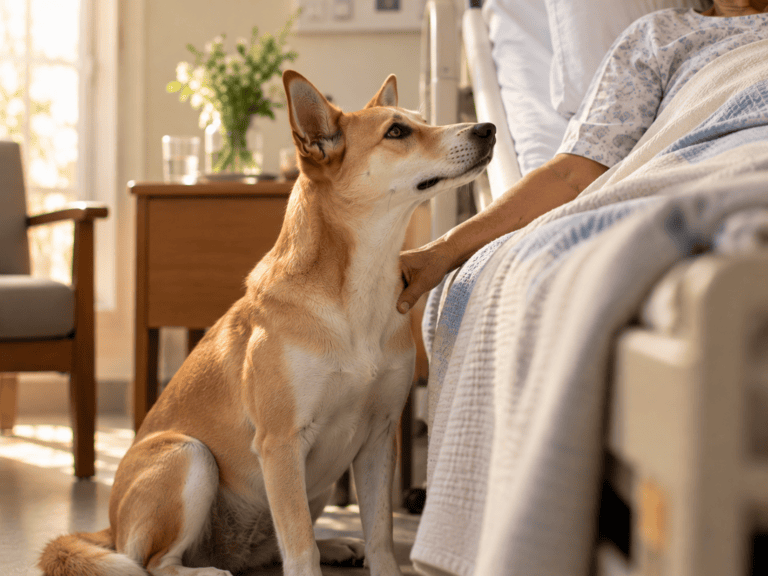
In an Indian context, this includes traffic, crowds, loud festivals, medical settings and varying levels of infrastructure - all of which are quite different from the environments most Western training programmes are built around.
Task training
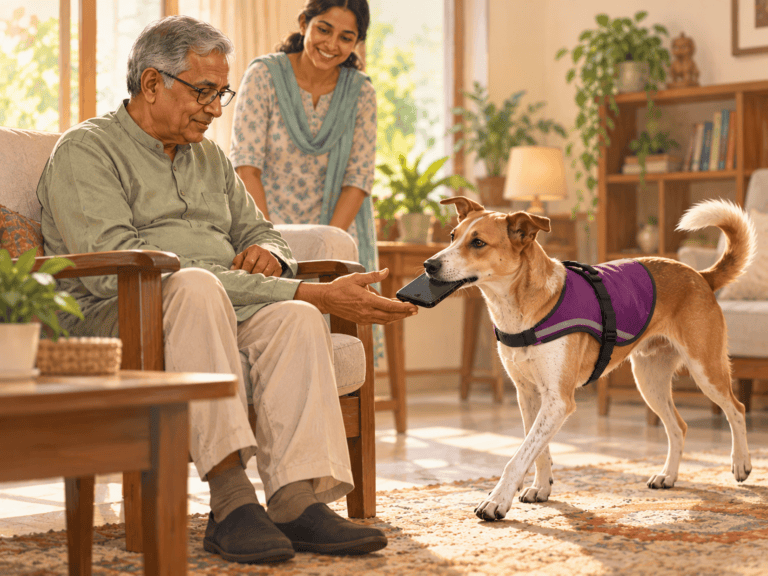
This is where training becomes specific to one person's needs. A mobility task, a seizure alert, an autism support behaviour - each requires a different set of trained responses, built gradually over many sessions.
Task training is the longest stage, and the most variable. Simple tasks can be trained relatively quickly. Complex or alert-based tasks, like detecting a physiological change before a seizure, can take many months and require careful, ongoing assessment to ensure reliability.
Handler training and matching
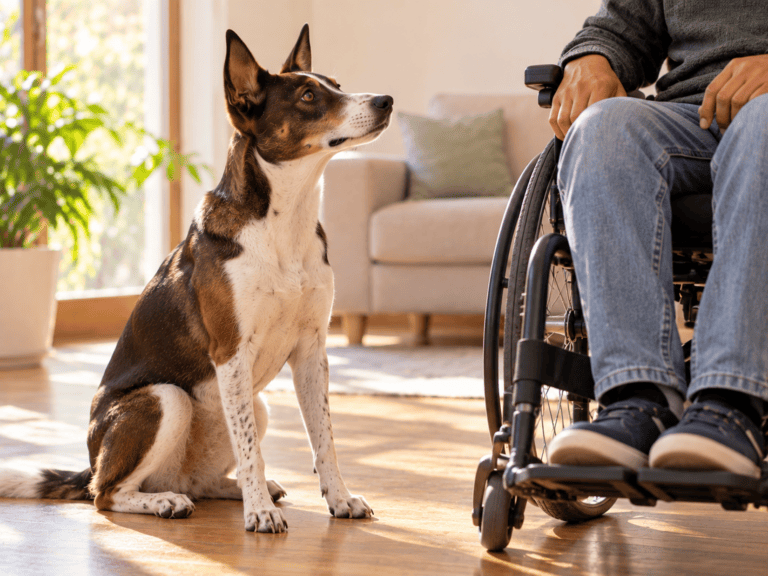
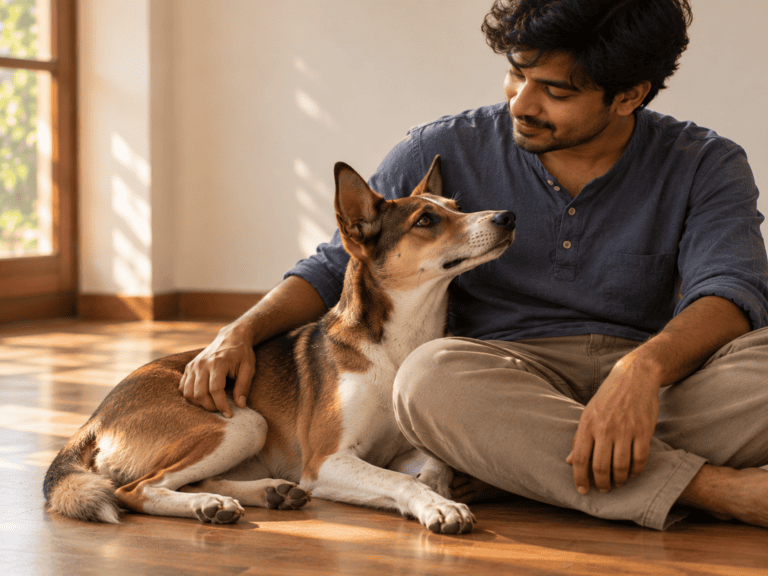
A trained dog without a trained handler isn't an assistance dog yet. The person receiving the dog also needs training - how to give cues correctly, how to maintain the dog's skills, how to manage public situations and how to care for the dog's wellbeing.
Matching matters too. The right dog for one person isn't necessarily the right dog for another, even if their conditions are similar. Temperament, energy level, household environment and daily routine all factor into a good match.
Placement and follow-up
Placement isn't the end of the process. Good programmes follow up regularly after placement to make sure the dog is maintaining its skills, the handler is managing well and the match is working in practice. Skills can drift without ongoing reinforcement, and life circumstances change.
So how long does it actually take?
For a well-trained assistance dog, the realistic timeline from selection to placement is 18 months to 2 years. Rushing this produces a dog that isn't reliable under pressure, which defeats the purpose entirely.
In India, the timeline may be longer in the early years of any programme, simply because the infrastructure, experience base and institutional familiarity are all being built at the same time as the dogs are being trained. That's not a weakness - it's the honest reality of building something that doesn't yet exist here.
What we are doing about it
HeartDogs trains Indies - India's native landrace dogs - through each of these stages in real homes in rural Karnataka, with women working as paid foster-trainers providing daily care and training. We're building this timeline carefully, without shortcuts, because the families who eventually receive these dogs are depending on the dog being genuinely ready.