The challenges an autism assistance dog is trained around
Autism is a neurodevelopmental condition associated with differences in social communication and interaction, alongside restricted or repetitive patterns of behaviour, interests, or routines. Many autistic people also experience differences in how they process sensory information - heightened or reduced sensitivity to sound, touch, smell, movement, or visual input. It is a spectrum: the challenges vary significantly between individuals. But in families living with autism, a few specific daily challenges recur consistently: difficulty with transitions between activities, sensory overload in unpredictable environments, self-injurious behaviour during distress, or repetitive behaviours that may increase when a person is overwhelmed, unsafe bolting or wandering, and the profound exhaustion of caregivers managing all of this around the clock.
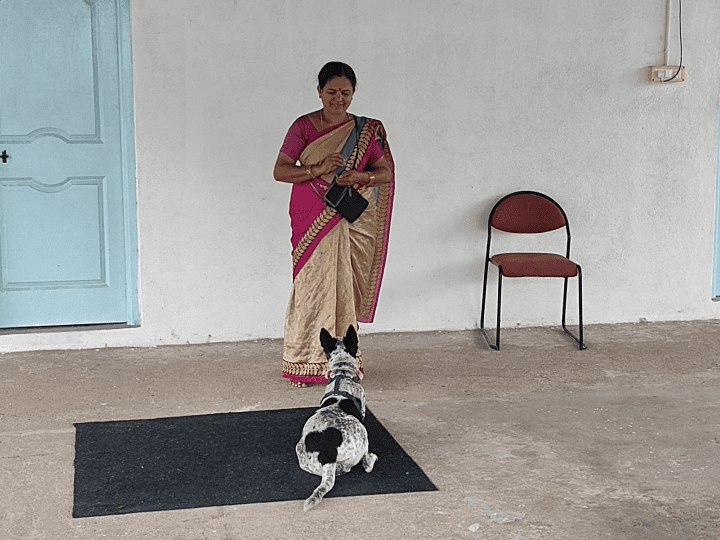
An autism assistance dog is trained to address specific items on this list - not all of them, and not identically for every person. The training is individualised to the specific needs of the person the dog will live with. What follows covers the tasks most commonly trained, and what they look like in practice.
Why sensory differences matter for understanding what the dog does
Many of the tasks an autism assistance dog performs are responses to sensory processing differences - so it helps to understand what those are before going through the task list.
Sensory processing is the way the brain receives, organises and responds to information coming in through the senses - sight, sound, touch, smell, taste, movement and body awareness. For most people, this happens automatically in the background. For many autistic people, this filtering process works differently. Sensory information can arrive too intensely, not intensely enough, or inconsistently - making the world genuinely harder to navigate than it looks from the outside.
Some autistic people are over-sensitive to certain inputs. A sound that most people tune out can feel physically painful. Clothing textures can be unbearable. Crowded, noisy environments like Indian markets, festivals or school halls can trigger genuine distress rather than mild discomfort. Others are under-sensitive and seek out intense sensory input - loud sounds, strong pressure, fast movement - because their nervous system needs more stimulation to register the world clearly. Some experience both at different times.
For an autistic person who is sensitive to sound, crowds, smells or unpredictable movement, everyday environments in India - from busy markets and festivals to crowded school spaces - can be particularly challenging. Someone who covers their ears, refuses to enter a temple during a festival or becomes distressed in a busy market is often seen as difficult or poorly disciplined, rather than as a sign that the person may be experiencing sensory overload. That misreading is one of the things a well-informed family, and a well-trained dog, can help address.
What the dog is trained to do
- Interrupting self-injurious behaviour. Many autistic people engage in self-injurious behaviour during moments of high distress - head-banging, hand-biting, scratching. A trained assistance dog may be taught to interrupt this by making physical contact - nudging, separating the person's hands, or providing trained pressure - when a caregiver or handler gives a cue, or in response to observable behavioural signs that have been specifically trained for that individual. This may offer a competing sensory input or a moment of interruption for some people, but it is not a substitute for an individual clinical safety plan, especially where there is a risk of serious injury.
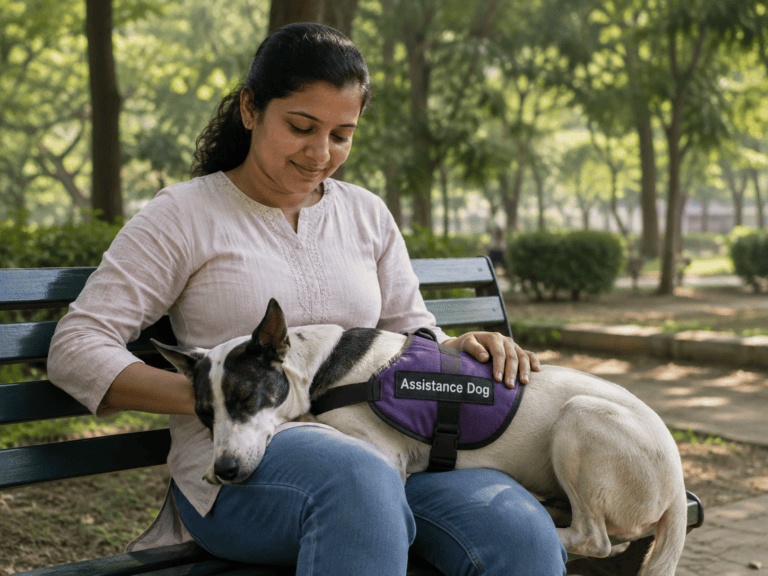
- Deep pressure on cue. Some autistic people find firm, predictable pressure calming or regulating. A dog can be trained to provide this - lying across the legs, leaning against the person - on a clear cue from the handler or caregiver, and only where it is appropriate and safe for that individual. Not all autistic people welcome pressure or touch, so this task must be individualised carefully.
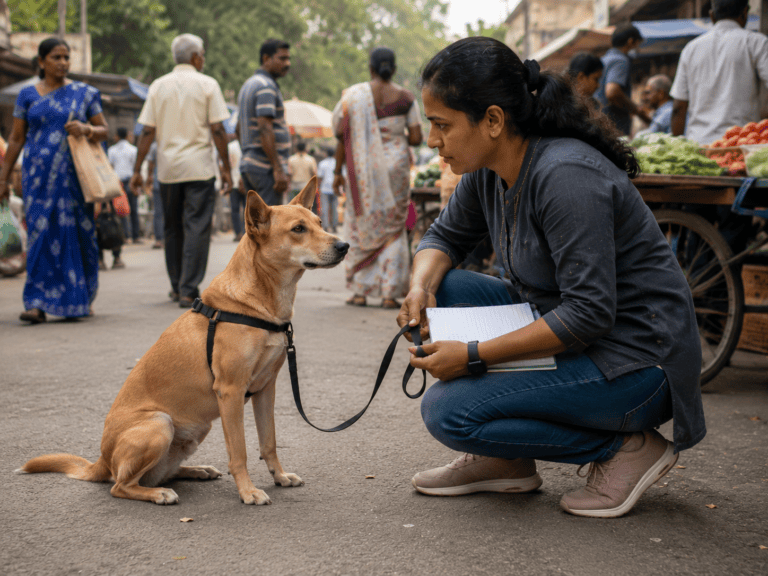
- Grounding during sensory overload. When an autistic person becomes overwhelmed in a high-stimulus environment - a crowded market, a family gathering, a busy road - the dog provides a consistent, familiar anchor. Touching or orienting to the dog can provide a predictable sensory reference point when the environment itself feels unmanageable.
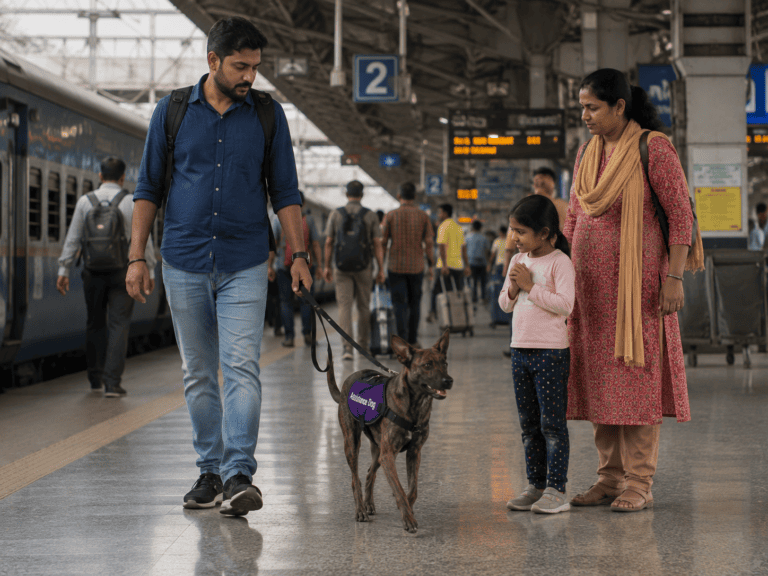
- Tethering and safety during outings. Some autistic individuals, particularly those who are non-verbal or have significant safety awareness challenges, are at risk of bolting - running unpredictably into traffic or unfamiliar spaces. Some specialised assistance-dog programmes use a carefully managed tethering system to reduce this risk, where the child may be connected to the dog through a purpose-built belt or harness while an adult handler controls the dog's lead. This is a specialised safety task, not a passive arrangement: it requires individual risk assessment, appropriately trained equipment and dog, adult supervision throughout, and ongoing review. Tethering can create risks of falls, entanglement, or pulling for both child and dog if not implemented correctly.
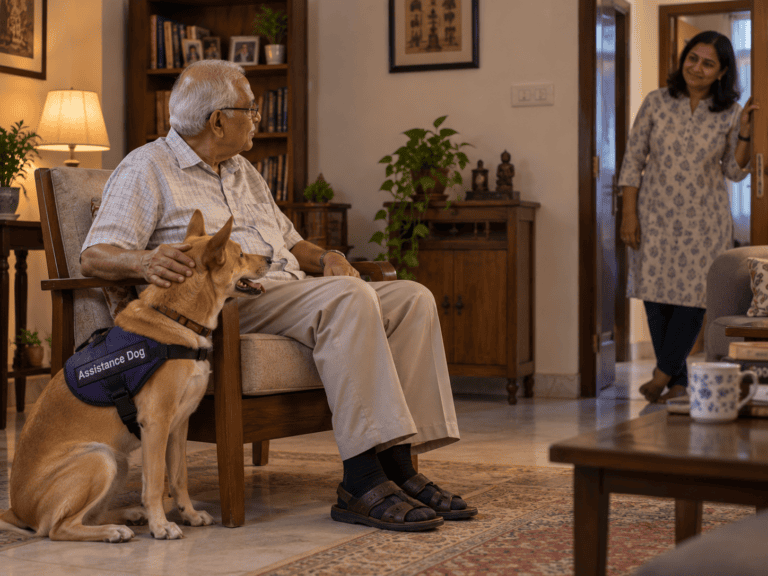
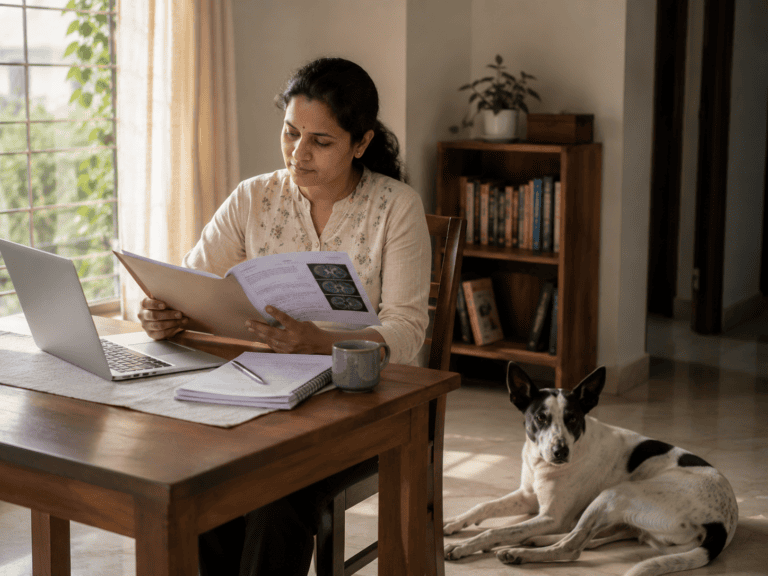
- Alerting caregivers. A dog can be trained to alert a caregiver - by going to them and returning, or signalling in another way - when the person has entered a predefined situation for which the dog has been trained to seek assistance. This is particularly relevant in Indian homes where the autistic person may be in one room while the caregiver is managing other household responsibilities.
- Supporting transitions. Autistic individuals often find transitions between activities or environments extremely difficult. Having the dog present and consistent across transitions provides continuity - the same warm, predictable presence in the bedroom as in the living room, at home as well as on the school run.
Agnew et al., Australian Occupational Therapy Journal, 2024 · International Working Dog Breeders Association, 2024
What changes for the family, not just the individual
The research on autism assistance dogs is notable for what it says about families, not just the autistic individual. A 2024 qualitative study by Agnew et al. in the Australian Occupational Therapy Journal interviewed six caregivers of seven autistic children partnered with assistance dogs. It identified three caregiver-reported themes: changes in participation before and after partnering with the dog, increased engagement in everyday activities, and impacts on the family unit. Participants described both benefits and practical challenges, including time, cost, public access, and the demands of dog care.
Caregivers described outings that had previously been impossible becoming manageable. Some also described improvements in sleep and reduced anxiety around safety. The caregiver's own experience - their confidence, their ability to participate in family life - came through consistently in the accounts.
"Having the dog as part of our family gives us hope." - family participant, Agnew et al., 2024
Being honest about the evidence
The research on autism assistance dogs is broadly positive in direction, but the evidence base has real limitations that should be acknowledged. A 2025 systematic review in Neuroscience and Biobehavioral Reviews concluded, based on its review of available studies, that while "assistance dogs are associated with some benefits for people with ASD, the evidence base is limited and of poor quality." This reflects a broader pattern across animal-assisted intervention research, where positive outcomes are consistently reported but rigorous study designs remain rare. Most studies are small, rely on caregiver self-report, and lack the control conditions that would allow firm causal conclusions.
Across studies and caregiver accounts, reported benefits include interrupted or reduced harmful behaviours, better sleep in some families, increased community participation, and improvements in family quality of life. The strongest recent review found only one randomised controlled trial among the 14 quantitative studies it included, and concluded that it was not yet possible to say confidently whether assistance dogs provide benefits beyond those associated with companion dogs.
Families report meaningful benefits, and those reported experiences matter. The research supports them as promising. It is not yet strong enough, however, to establish how large or unique those benefits are, which families benefit most, or how durable the effects are over time. Stronger research is needed to answer those questions - and that is what the field should be working toward.
Systematic review, Neuroscience and Biobehavioral Reviews, 2025
What this means specifically in an Indian home
The daily reality of autism in an Indian family has specific features that shape how an assistance dog would function here.
In India, families often carry much of the day-to-day responsibility for autism support, with mothers frequently carrying a substantial share of the caregiving burden. Professional support is expensive and less consistently available outside major cities, and often requires the caregiver to be present at every session. A dog that lives in the home provides support that is continuously present rather than episodic - at 3am as readily as at 3pm.
Indian homes are often multi-generational, with grandparents, siblings and extended family as part of daily life. An assistance dog needs to function in this richer, busier household environment - staying calm with multiple people, navigating shared spaces and remaining reliably responsive to the autistic person across that complexity. This places specific demands on the dog's socialisation and temperament that a well-designed training programme needs to address directly.
Public access for assistance dogs remains unclear in India. There is no single national framework that gives assistance-dog handlers a consistent public-access right across settings, although disability-access laws and sector-specific rules do provide broader accessibility protections. This means the primary value of an autism assistance dog in India, for now, is home and community-based rather than across all public settings. That is still an enormous amount of life - and an enormous amount of daily difficulty - that a well-trained dog can meaningfully support.
What we are working towards
HeartDogs is working towards training selected rescued Indies for assistance roles, including future autism-support placements. The calm, socially confident and adaptable temperament that living with an autistic person in an Indian home requires is built gradually through the home-based training our Heroes provide from the earliest stages of the programme.
Autism assistance placements are part of HeartDogs' longer-term direction. They require careful assessment of each dog's temperament, careful matching with each family's specific needs, and ongoing support after placement. Each placement takes time to get right. That is by design.