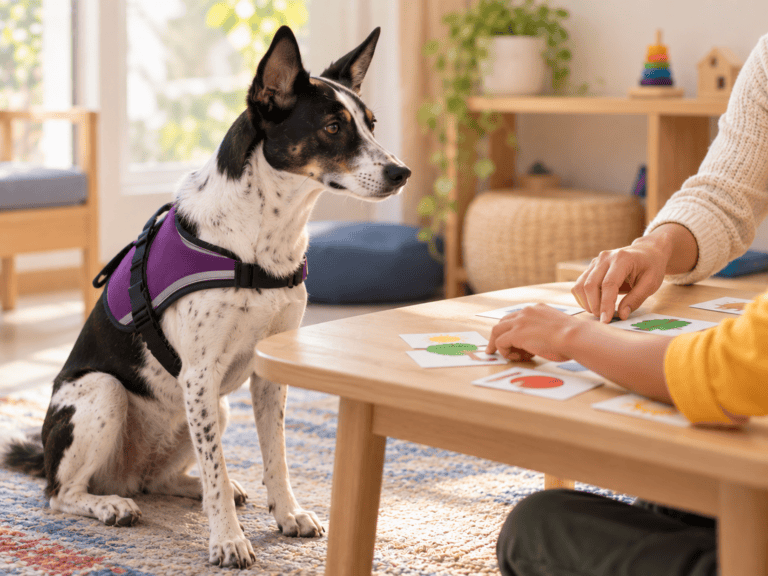
It starts with temperament, not tricks
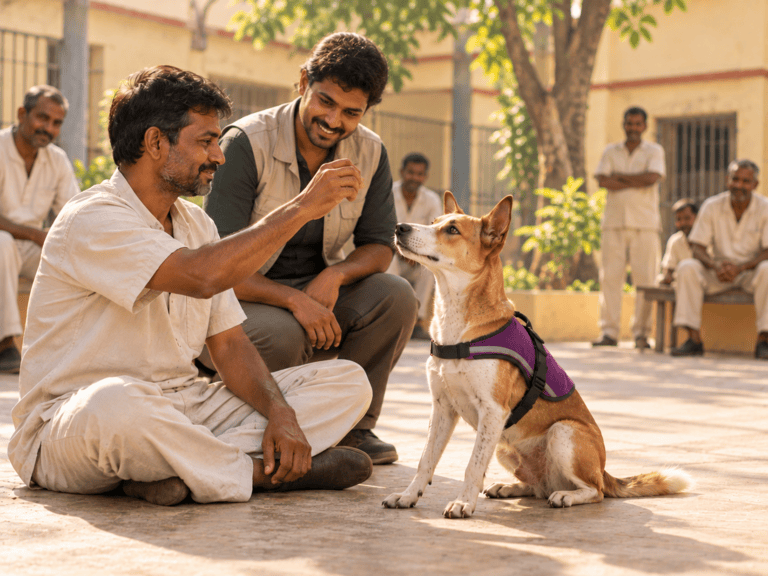
Before any task training begins, a dog needs the right underlying temperament. Calm, confident, sociable, not easily startled or stressed. Trainers spend the early stage observing a dog's natural behaviour around new people, new sounds, new spaces. A dog that struggles here usually isn't a good fit for assistance work, no matter how trainable it is otherwise.
Foundation training
This stage covers the basics every working dog needs, regardless of its eventual role. Reliable recall, calm lead walking, settling on cue, staying focused around distractions. This is the groundwork that everything else gets built on top of.
Socialisation - ongoing, not one-time
An assistance dog needs to stay calm in all kinds of real-world settings - traffic, crowds, unfamiliar smells, other animals. This isn't a one-time phase. It's ongoing exposure, gradually increasing in difficulty, so the dog learns to stay settled no matter where it ends up.
Task training built around one person
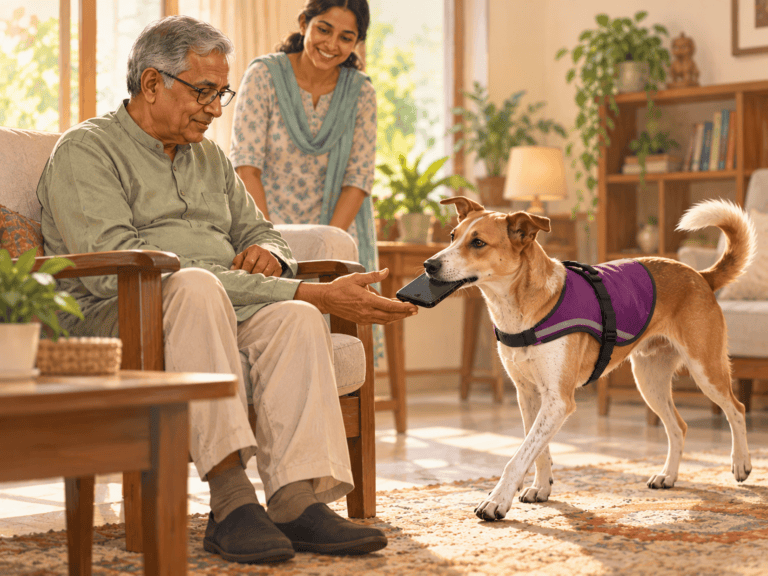
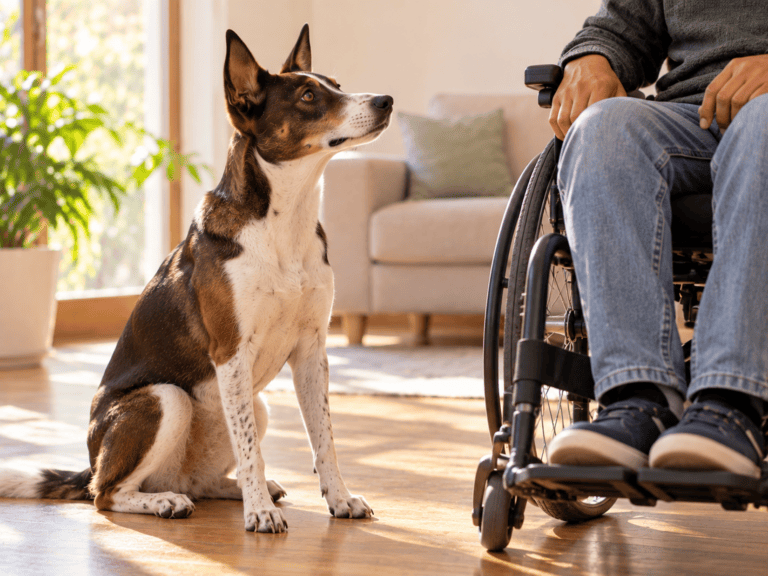
Once the foundation is solid, training moves to the specific tasks tied to one handler's needs. This is where the real individualisation happens - a mobility task looks completely different from a seizure alert task, and the training is shaped entirely by what that one person actually needs in daily life.
Public access training - where it applies in India
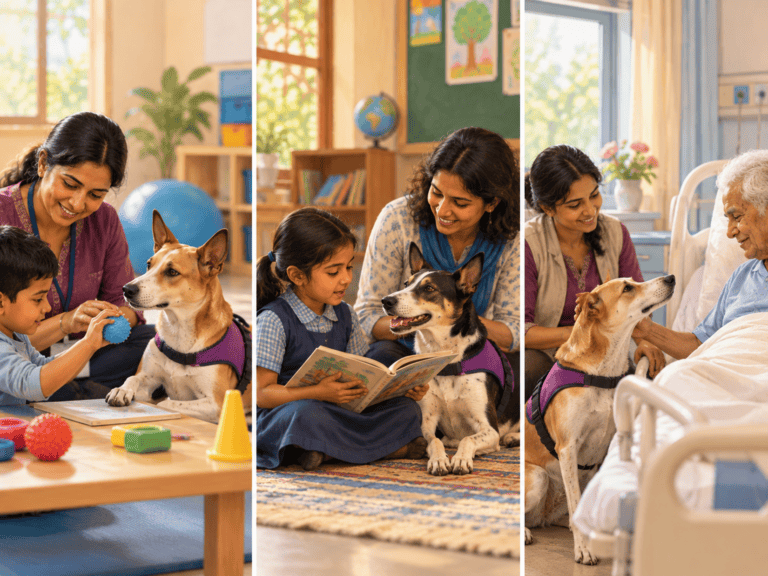
In countries with legal public access rights, dogs also train specifically for navigating public spaces calmly with their handler - restaurants, trains, offices. In India, where this legal framework doesn't exist yet, this stage looks different, focused more on community and institutional settings than full public access.
A few things people often get wrong
- It's not fast. Solid assistance dog training typically takes well over a year, sometimes close to two, depending on the dog and the tasks involved.
- Not every dog makes it through. Even with good training, some dogs simply aren't suited to assistance work, and that's a normal, expected part of the process, not a failure.
- It's not the same as obedience training. A well-behaved pet and a trained assistance dog are not interchangeable. Assistance work requires a level of reliability under pressure that basic obedience doesn't test for.
- Force-free methods work best. Reward-based, no-force training builds the kind of trust and confidence that this work depends on, rather than compliance built on fear.
A well-behaved dog at home and a trained assistance dog are not the same thing. The difference lies in reliability under pressure - and that takes time to build properly.
What we are doing about it
HeartDogs trains Indies - India's native landrace dogs - using force-free methods, in real homes in rural Karnataka rather than kennels. Women in the community work as paid foster-trainers, each caring for and training one dog daily, with structured visits to introduce new skills and assess progress.
We're building a training model suited to Indian conditions, Indian dogs and Indian family needs, from the ground up.