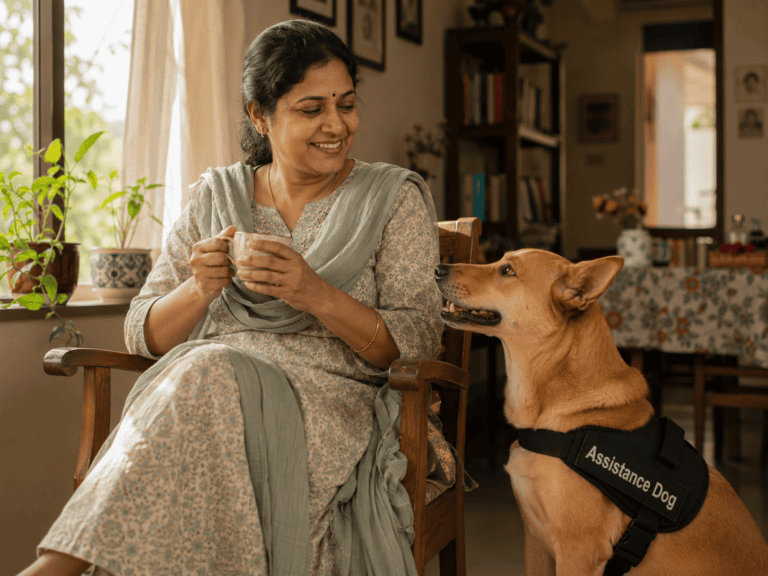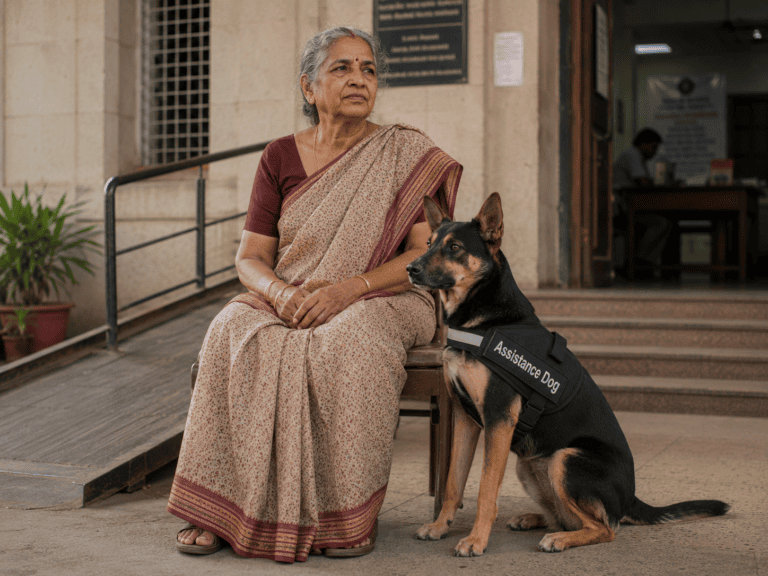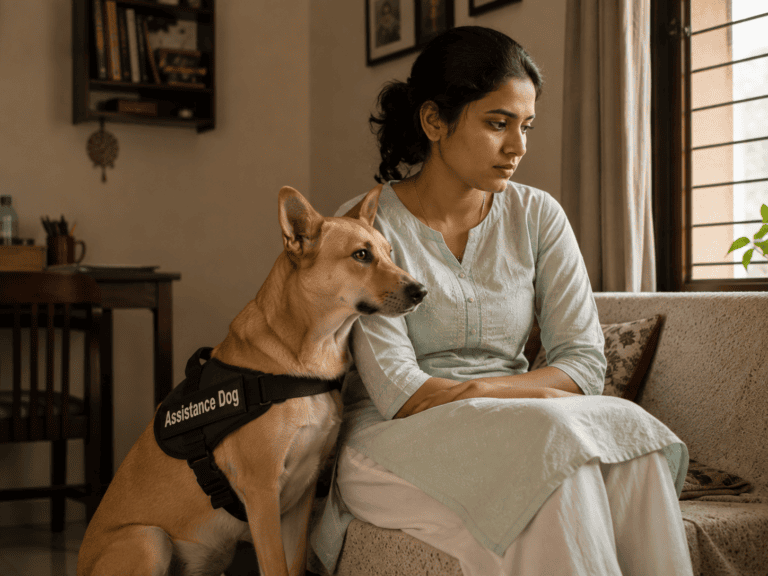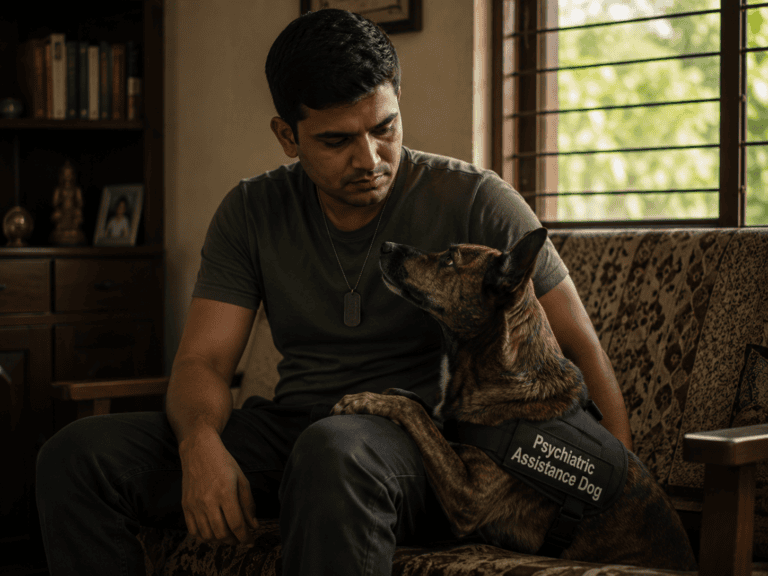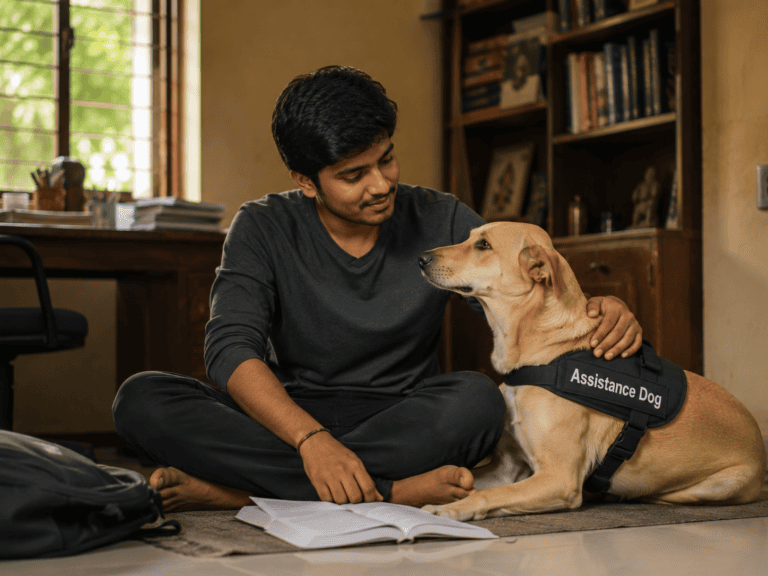
A short list that covers almost every situation
- Speak to the handler, not the dog. Calling out to the dog, trying to catch its eye, or greeting it directly is a distraction - even without touching it. If you want to acknowledge the team, acknowledge the person.
- Ask before touching, and accept the answer. Some handlers will allow a brief, calm interaction in specific circumstances. Many will not. Never assume the dog is available based on how friendly it looks. Think of it the way you might think of someone's wheelchair or hearing aid - you would not touch another person's medical equipment just because you found it interesting.
- Do not offer food. Food is one of the most powerful distractions for any dog, and the handler needs to control what the dog eats. Even well-meant treats can cause problems.
- Keep your own dog away. Always ask the handler before letting your dog approach. Another animal is a major distraction, and in the worst case, an unplanned interaction between the two dogs can turn into a real safety problem for the handler.
- Do not assume a resting dog is off duty. An assistance dog lying quietly beside its handler at a restaurant or on a train is still working. Rest during a long day is normal - it is not the same as being free to interact with.
- Do not photograph the dog or handler without permission. Assistance dog handlers sometimes face unwanted attention and photography in public. Asking first is basic courtesy, and many handlers will decline for good reasons.
The simplest version of all of this: treat the encounter the way you would treat passing two people having an ordinary conversation. Not an invitation to interact with an interesting animal.
What is actually at stake when attention breaks
For someone who relies on a guide dog, a moment of distraction in traffic or on a railway platform is a genuine safety risk. For someone whose dog is trained to alert before a seizure or interrupt a flashback, a missed cue because the dog was focused on a stranger's hand is not a minor inconvenience. For a child with autism whose dog provides grounding and routine in unpredictable public environments, an unexpected interaction with a stranger that upsets the dog changes the entire experience of the outing.
None of this is visible in the moment. You cannot tell, by looking, what task a dog is trained for or what its handler needs from it right now. The simplest approach - don't interact unless specifically invited to - works across all of these situations without needing to know the details.
If a working dog approaches you alone and seems to be seeking attention
A working dog approaching you in a harness, with no handler visible, is unusual. Do not assume it wants to play. It may be trying to get someone's attention because its handler needs help - though it could also simply be separated from its handler by accident, and there is no reliable way to know in the moment. If the dog persistently seeks your attention or seems to be leading somewhere, following it may be the right response depending on what it is doing. Alerting nearby staff or emergency services if the situation seems serious is sensible. This is one of the only circumstances where actively engaging with a working dog makes sense rather than stepping back.
The curiosity is good - what to do with it
Children are usually the most drawn to working dogs, and that curiosity is worth working with rather than shutting down. A simple explanation - "that dog is working right now, so we say hello with our eyes and not our hands" - tends to land well and gives a child something concrete to understand rather than just a rule to follow.
It is also a genuinely good opportunity to explain why some people need a dog's help every day. A child who understands that a dog might be helping someone see, or alerting them before something bad happens, or keeping them calm in a crowd, tends to develop real respect for the partnership rather than just reluctant compliance with a rule. That understanding is more durable and more useful in the long run than "don't touch the dog."
Why this matters more here, not less
In countries where assistance dogs have been visible for decades, the basic etiquette is relatively well understood by most adults. In India, where trained working dogs in public are still a rare sight, almost no one has encountered this before. A shopkeeper who does not understand why a dog is inside their shop, a fellow passenger who wants to photograph the dog on a train, a crowd that gathers around a handler trying to navigate a busy market - all of these create real friction that takes effort and time to manage, effort and time that should be going into the handler's actual day.
As assistance dogs become more common in India through programmes like HeartDogs, public understanding of working dog etiquette will need to grow alongside them. This is not a luxury or a nice-to-have. A public that instinctively knows how to behave around a working dog is part of what makes the partnership actually functional in daily Indian life.
If you work in a school, a hospital, a business, or any public setting where a working dog team might arrive, sharing this information with your team in advance is one of the most practical things you can do. It costs nothing and prevents a lot of awkward, distracting, sometimes harmful encounters.
The courtesy that makes the partnership possible
An assistance dog team in public is not a spectacle. It is a person going about their day with the support they need to do so. The etiquette around working dogs exists not because handlers are precious about their dogs, but because the dog's ability to do its job depends on being able to stay focused on one person in a world full of distractions.
The ask is small: look without touching, speak to the person not the dog, and let the team get on with their day. For someone whose independence depends on their dog staying focused, that small courtesy is not a minor politeness. It is part of what makes the whole thing work.