What "force-free" actually means
Force-free training - also called reward-based training or positive reinforcement training - means deliberately avoiding the use of pain, fear or physical discomfort as tools to change a dog's behaviour. It relies instead on rewarding behaviours you want to see more of, and preventing unwanted behaviours from being reinforced, while teaching and rewarding desirable alternatives.
A precise definition matters here, because the term is sometimes misunderstood. Force-free training doesn't mean a dog never experiences consequences for unwanted behaviour. If a dog jumps up and the guardian turns away, the dog loses the attention it was seeking - that's a consequence. If a dog pulls on the lead and the walk stops, that's also a consequence. What force-free training specifically avoids is deliberately adding pain, physical correction, shock, intimidation or fear to decrease behaviour.
The contrast is with training methods that use positive punishment - adding something the dog finds aversive to reduce behaviour - or negative reinforcement, where discomfort continues until the dog complies (such as lead pressure that continues until a dog stops pulling). Force-free training seeks to avoid the deliberate use of positive punishment and negative reinforcement as training strategies.
What the research actually says
The American Veterinary Society of Animal Behavior's 2021 position statement on humane dog training is the clearest institutional summary of the current evidence:
"Based on current scientific evidence, AVSAB recommends that only reward-based training methods are used for all dog training, including the treatment of behavior problems. Aversive training methods have a damaging effect on both animal welfare and the human-animal bond. There is no evidence that aversive methods are more effective than reward-based methods in any context."
This position reflects a body of research, not a single study. Some of the key findings include:
- Aversive methods are associated with higher rates of problem behaviour. A 2008 study by Emily Blackwell, involving 192 dogs from three countries, reported an association between exclusive reward-based training and lower rates of fear, aggression and other problem behaviours. Guardians who used punishment alongside rewards still showed higher rates of problem behaviour than those who used rewards only - though as an observational study, causation cannot be directly established from this alone.
- Aversive methods affect dogs' emotional state. A 2021 study by Casey et al., published in Scientific Reports, found that dogs trained using two or more aversive methods showed measurably more pessimistic responses in cognitive bias tests - a marker for negative emotional state. The effect was present even when the dogs were not being actively trained.
- Reward-based training produces higher obedience. A study by Hiby et al. reported significantly higher owner-rated obedience scores in dogs trained with reward-based methods alone, compared with those trained with punishment-based methods, while not seeing any increase in problem behaviour.
It's worth acknowledging that animals - including dogs - do learn from both pleasant and aversive events. The Law of Effect in behavioural science says that consequences of both kinds influence future behaviour. Force-free training doesn't deny this. The argument is that aversive methods are not more effective than reward-based methods, and that they carry documented costs to welfare and the human-animal bond that reward-based methods do not.
AVSAB 2021 Position Statement · Casey et al., Scientific Reports, 2021 (DOI: 10.1038/s41598-021-98584-7)
"But real working dogs need stricter methods"
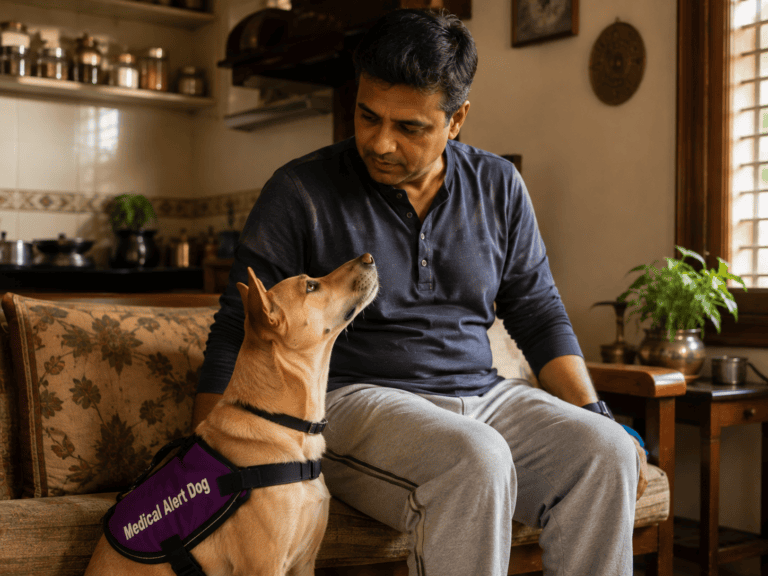
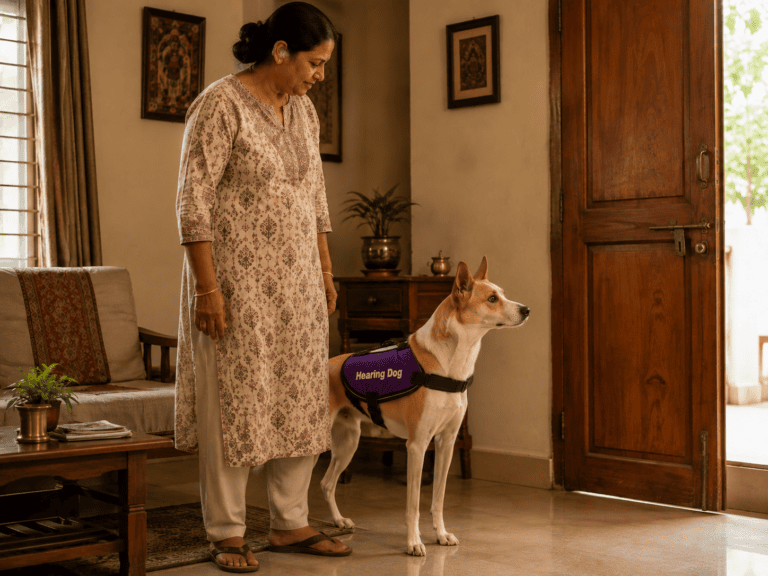
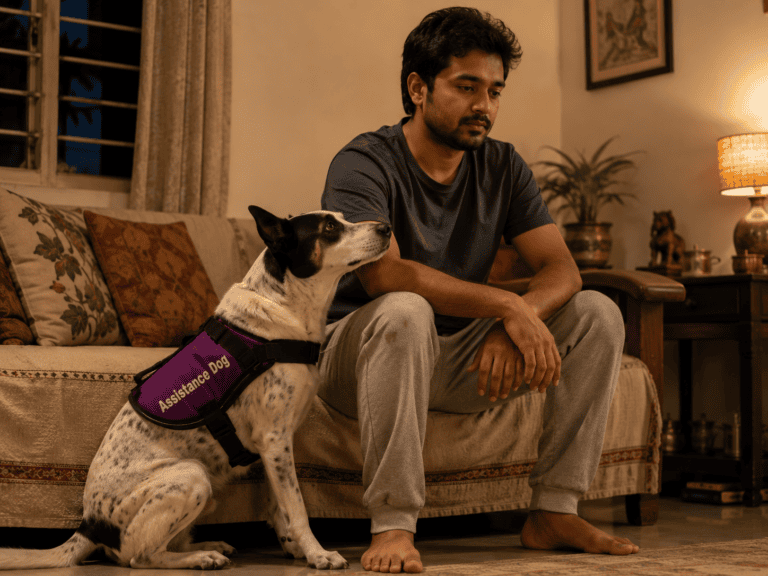
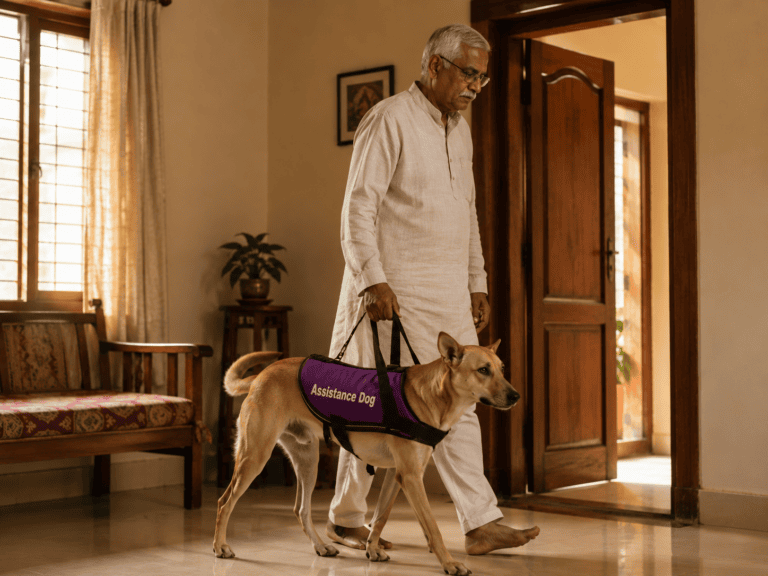
One objection that comes up specifically in the context of assistance and working dogs is that force-free methods are fine for pets but insufficient for dogs that need to perform reliably in high-stakes situations. This is a persistent belief, and it is worth addressing directly.
The major international organisations that accredit assistance dog programmes use reward-based training as their standard. In 2023, Assistance Dogs International (ADI) and the International Guide Dog Federation (IGDF) - together representing the global accreditation standard for assistance and guide dog programmes - issued a joint statement explicitly stating: "We do not believe that aversive, compulsive, punishment-based or mixed training methods are in the best interests of either dogs or clients." The AVSAB's position statement similarly concludes there is no evidence that aversive methods are more effective "in any context" - including working dog training. Many contemporary military, detection and search-and-rescue dog programmes have also moved predominantly towards positive reinforcement methods, though practice across these sectors varies.
The reason is practical, not just ethical. A working dog needs to be confident, not compliant under threat. A dog that performs a task because it is afraid of what happens if it doesn't is a less reliable working dog than one that performs because it has a clear understanding of what is expected and a positive association with doing it. Training based primarily on fear or coercion may become less reliable under stress while also carrying documented welfare costs. Training built on clear communication and positive association tends to produce more consistent responses across varied environments.
ADI and IGDF Joint Position Statement, 2023 · AVSAB 2021 Position Statement
How force-free training actually works day to day
Force-free training in practice looks like consistent, clear communication between the trainer and the dog - built around marking the exact moment the dog does what is wanted, and rewarding it quickly. The dog learns which behaviours produce good outcomes and repeats them. Over time, the association is strong enough that the behaviour becomes reliable across different environments and under distraction.
- Reward markers. A short, consistent signal - a click from a clicker, or a verbal "yes" - marks the precise moment the right behaviour happens. This gives the dog clear information about what earned the reward, rather than a vague sense that good things sometimes follow certain situations.
- High-value rewards for new or difficult tasks. Not all rewards are equal. When a dog is learning something new or being asked to perform in a challenging environment, a higher-value reward - something the dog genuinely wants - makes the learning stronger and faster.
- Clear cues, not repetition. A cue is given once, clearly. Repeating a cue the dog doesn't respond to teaches the dog that it can ignore the first few asks. The trainer manages the situation so the dog is likely to do the right thing, rather than asking repeatedly and hoping.
- Managing the environment. A lot of training success comes from setting the dog up in situations where it's likely to succeed, rather than repeatedly exposing it to situations where it's likely to fail. Difficulty is increased gradually, not thrown at the dog before the foundation is solid.
Why HeartDogs uses force-free training as a non-negotiable
HeartDogs uses force-free training methods throughout its programme - not as a preference, but because the evidence points clearly in this direction and because it is the right approach for assistance and therapy dog work specifically.
An assistance dog needs to stay confident and responsive in hospitals, schools, crowded streets and unpredictable situations. Building that confidence through positive association, clear communication and consistent reward produces a dog that is genuinely reliable under pressure. Training based primarily on correction carries risks to welfare and the human-dog relationship without evidence of superior effectiveness. The difference matters when someone's daily safety depends on the dog.
Force-free training also shapes how our Heroes - the foster-trainers who raise each dog in their homes in rural Karnataka - work with the dogs daily. A training method that relies on pain or intimidation is not something we could teach with integrity to women working with dogs in their own homes. Reward-based training is something anyone can learn, apply consistently and feel good about. That is also part of why it works here.