The once-in-a-lifetime bond, explained
A heart dog is the dog who gets all the way in. Not just the dog you love and care for and take to the vet and worry about when they are sick - but the one who seems to understand you in ways you cannot quite explain. Their presence quiets something in you. You think about them when they are not in the room.
The term is widely used among dog lovers, particularly online, to describe a canine-human bond that feels qualitatively different from others. Not better than the love you have for your other dogs - but different in a way that is hard to put into words. A heart dog is the one that, when you think about losing them, something in your chest tightens in a way you know will not resolve easily.
Every dog you love becomes part of your life. A heart dog becomes part of who you are.
A heart dog is not just a beloved pet. It is the dog who seems to have been made for you - whose presence changes how you move through the world, and whose absence, when it comes, leaves a shape in you that nothing quite fills.
It is not about breed, training, or temperament alone
People sometimes think heart dogs are the most well-behaved dogs, or the most affectionate, or the most impressive. That is not it. Heart dogs can be anxious, or stubborn, or complicated. They can be rescue dogs with difficult pasts. They can be the dog that cost you sleep and money and patience before they settled. The heart dog bond is not about ease. It is about resonance.
What dog lovers consistently describe when talking about their heart dogs is a sense of being understood. Not trained, not managed - understood. The dog that seems to know when you are sad before you do. The dog that finds the person in the room who needs them most. The dog that simply sits with you, without needing anything from you, in a way that feels like company of a different quality than most human company.
The science of the human-animal bond offers some context. Research has documented mutual gaze, physiological and behavioural synchrony in some human-dog interactions, and attachment relationships that share features with infant-caregiver bonds. The bond is not merely a projection; research suggests it can be a two-way relationship in which both dog and human contribute. A heart dog is, in some sense, a dog who is also bonded to you in that particular way. Both directions matter.
But science only goes so far. Anyone who has had a heart dog knows there is something about the specific pairing - this dog, this person - that exceeds what the research fully captures.
On multiple heart dogs and what the question reveals
Dog lovers argue about this. Some feel strongly that a heart dog is once-in-a-lifetime - singular, irreplaceable. Others have had two or three heart dogs over a lifetime, each claiming that particular place in them.
Both are probably right, and the tension between the two positions reveals something interesting about the nature of the bond. A heart dog is not a category you assign a dog to. It is something you recognise after the fact - often only when the dog is gone and you realise the size of what you are missing. If another dog later achieves the same depth of resonance, the fact that it happened before does not make it less true the second time.
What seems clear is that not every dog becomes one of your heart dogs, and that is not a failure of love on either side. You can love a dog completely and not have this particular quality of bond. Heart dogs are rarer than that. When it happens, you know.
The grief that surprises even people who expected it
If you have lost a heart dog, you already know what this section is going to say. The grief is bigger than people expect it to be - bigger than you expected it to be, even knowing how much you loved them. It is not just the loss of a companion. It is the loss of a way of being in the world that this specific dog made possible.
People sometimes feel embarrassed by the depth of this grief, particularly when they sense that others around them don't fully understand why losing a dog could feel this large. But the grief after losing a heart dog is not disproportionate. It is proportionate to what the bond actually was. If a dog has been woven into your identity, your daily rhythms, your sense of safety or calm or joy - their absence is not a small thing. It is a reorganisation of who you are.
The heart dog leaves a shape behind. Some people find, in time, that another dog grows to fill a portion of that shape. Others carry it. Neither response is wrong.
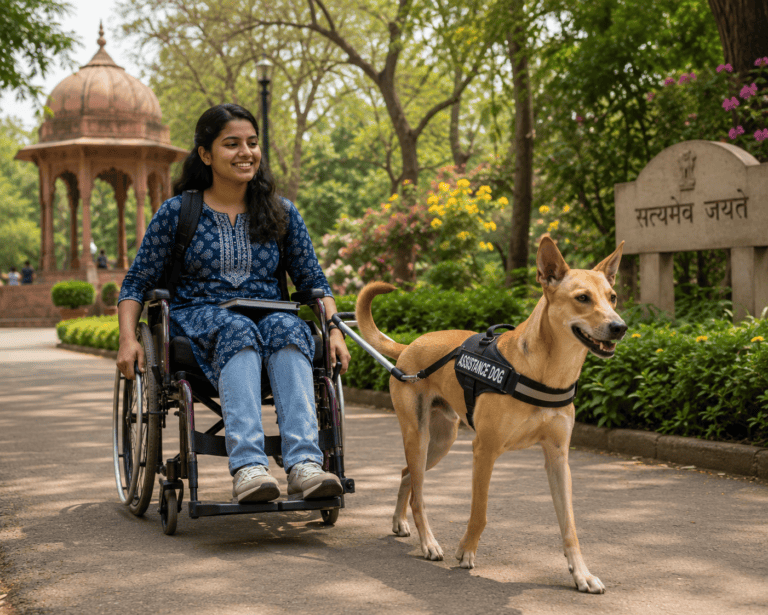
And while people usually talk about heart dogs in the context of companionship, the same depth of bond can take on a very different meaning when the dog is trained to support someone with a disability.
The name we chose, and what it means
HeartDogs Enablement Foundation is building a systematic programme in India training rescued Indie dogs - India's native landrace dogs - as assistance and therapy dogs for people with disabilities. We train with women from rural communities in paid skilled employment. And we named ourselves HeartDogs deliberately.
When we chose the name, we were thinking about exactly what this piece has been describing. The dog that gets all the way in. The bond that changes things. But we were also thinking about something more specific: what happens when a heart dog is also an assistance dog.
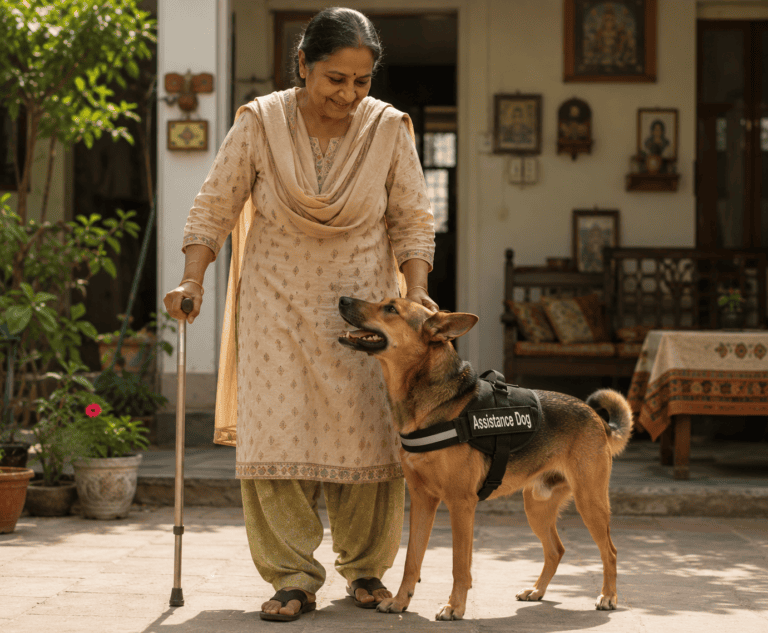
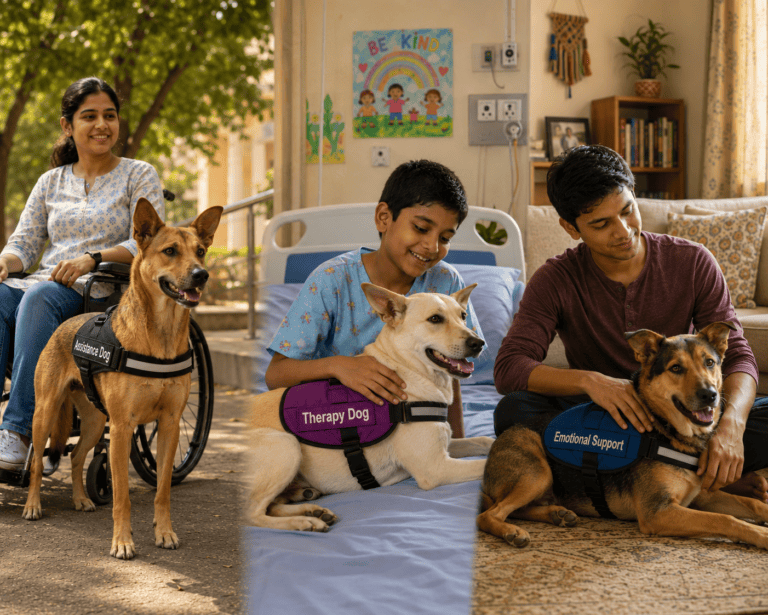
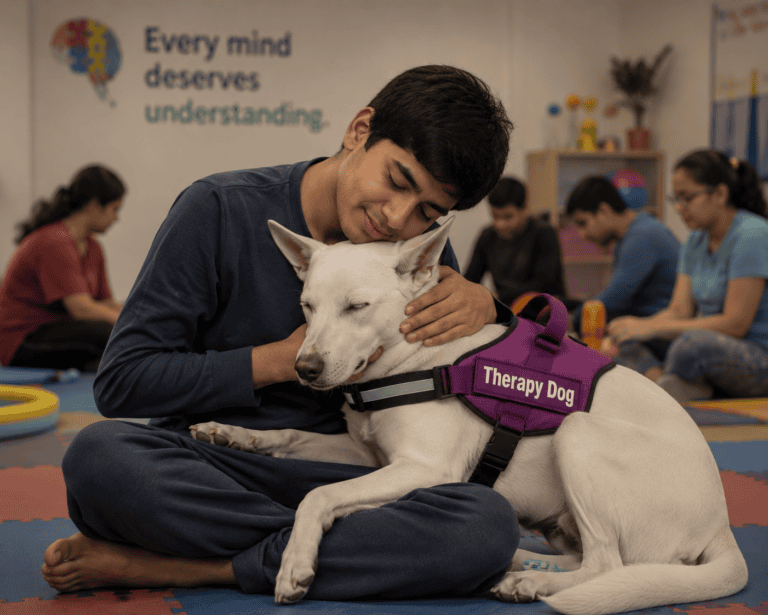
For someone without a disability, a heart dog is the dog who makes life richer, warmer, and more meaningful. For a child with autism who has a trained assistance dog that keeps them safe during meltdowns and helps them stay connected to the world - that dog is a heart dog in every emotional sense. And it is also the reason they can go to school. For a person with PTSD whose psychiatric assistance dog interrupts flashbacks and helps them leave the house - that dog is a heart dog. It is also what makes going outside possible. For someone with severe ADHD whose dog reminds them to take their medication, redirects them when attention has collapsed, grounds them during emotional flooding - that dog is not just beloved. That dog is load-bearing.
Every assistance dog we train is meant to become a heart dog - not just a working tool or a trained animal, but a dog who goes all the way in. Because the bond is not separate from the work. The bond is how the work happens.
The dog, the bond, and the work - inseparable
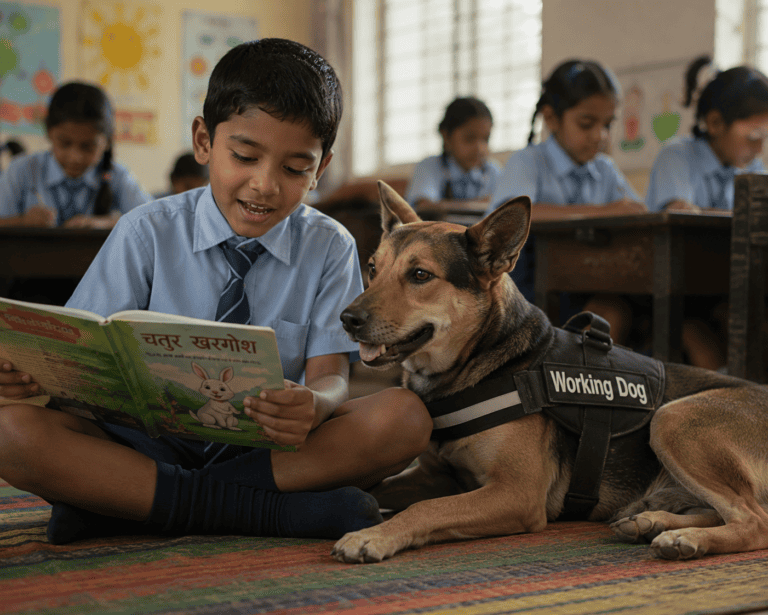
Within our programme, we use the word HeartDog to mean the individual dog trained and placed as an assistance or therapy dog. Each HeartDog is a rescued Indie - pulled from streets or shelters, raised by a foster-trainer in a real home in rural Karnataka, trained over months to perform the specific tasks that will change another person's life.
The Indie - India's native landrace dog - is an animal shaped by thousands of years of living alongside humans. Unlike many pedigree working breeds, Indies have generally not been selectively bred for a narrowly defined human-directed working role. They are street-smart, observant, and deeply attuned to the people around them in ways that emerge from genuine relationship rather than selective genetics. When an Indie becomes a HeartDog, it is because they and their person have found each other - and because something real has formed between them.
We do not use the word lightly. A HeartDog is not just any trained dog. It is the dog that someone with a disability will come to depend on, in the deepest and most practical sense of that word. The dog that will wake with them every morning and go to bed with them every night. The dog that will be there for the hard moments - the seizures, the anxiety spirals, the days when leaving the house feels impossible. The dog that will, over time, become woven into who they are.
In other words: a heart dog. In the fullest sense of the term.
The gap between need and what exists
India has more than 26 million people living with disabilities, according to Census 2011. Some may be meaningfully supported by a trained assistance dog, depending on their disability, needs, and circumstances. The country has almost no assistance dog infrastructure. India's disability-rights framework does not yet provide clear national statutory recognition or guaranteed public-access rights specifically for assistance dogs. There is minimal awareness among families, clinicians, institutions, or policymakers that this form of support even exists.
At the same time, India has millions of stray Indies - intelligent, hardy, perfectly adapted to Indian conditions - living without homes, purpose, or the chance to be what they are capable of being. And India has communities of women in rural areas with the capacity for the kind of patient, consistent, relationship-based work that assistance dog training requires.
HeartDogs exists to connect these things. To take a dog from the street, a trainer from a rural community, and a person who needs both - and to create something that the dog-owner world has a name for, even if the disability world in India does not yet know it exists.
A heart dog, trained to help. A HeartDog, ready to go to work.