How HeartDogs adapted an existing idea for India
In countries with established assistance dog programmes, the concept of home-based dog raising is well known. Programmes in the US, UK and Australia use "puppy walkers" - volunteers who raise young dogs in a home environment during their early months before formal training begins. The dogs are usually unpaid work, cared for by volunteers, before returning to a centralised training facility run by professional staff.
HeartDogs has taken that underlying idea - a dog raised in a real home, not a kennel - and formalised it into a paid, structured job role suited to the Indian context. India has no equivalent centralised infrastructure, no large assistance dog organisations and very few specialist trainers. Rather than waiting for that infrastructure to exist, HeartDogs distributes the training across real homes in rural Karnataka and pays the women running those homes for the skilled work they do. The "foster-trainer" title is HeartDogs' own formalisation of this role within its specific model.
What a foster-trainer actually does, day to day
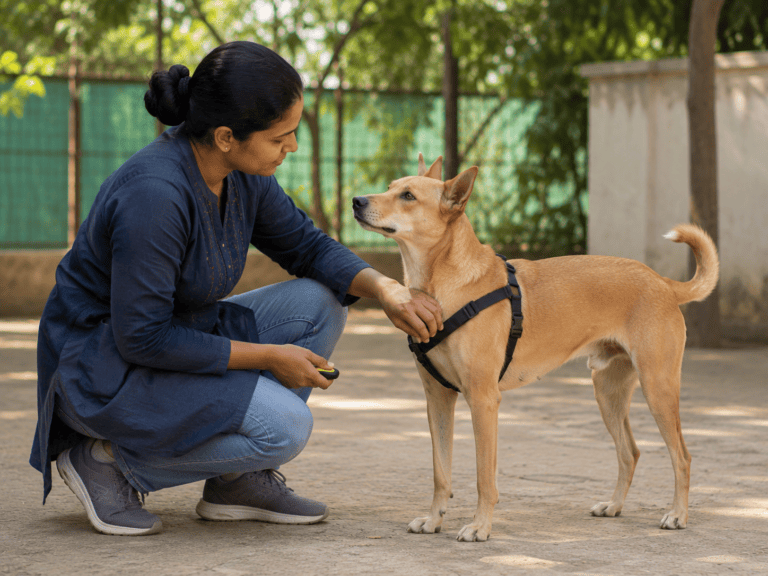
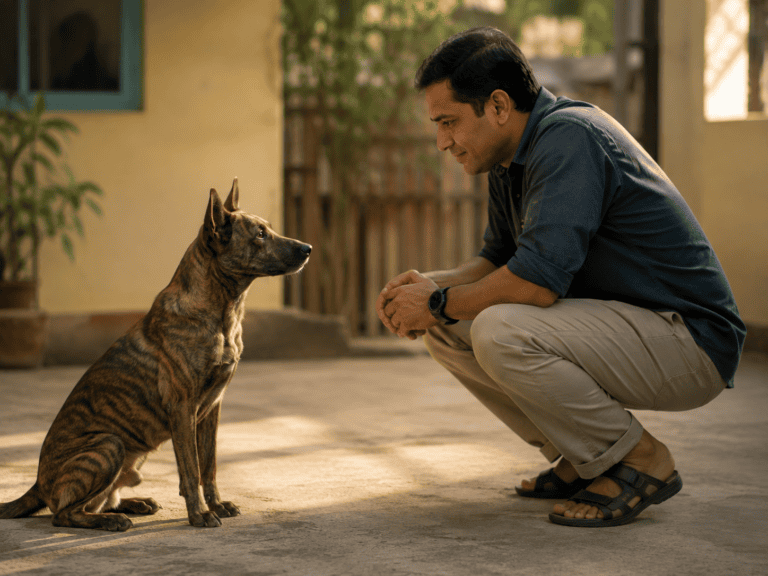
A foster-trainer is responsible for one dog at a time, living with the dog in her home throughout its training period. The role covers daily care - feeding, grooming, health monitoring - alongside structured training that follows a curriculum developed and overseen by a professional trainer.
In practice, this means:
- Daily training sessions. Following a structured plan, the foster-trainer works with the dog each day on specific cues and behaviours, building progressively from foundation skills towards more complex tasks. Sessions are designed to be achievable by someone without prior professional training experience, with clear guidance on what to reinforce and how.
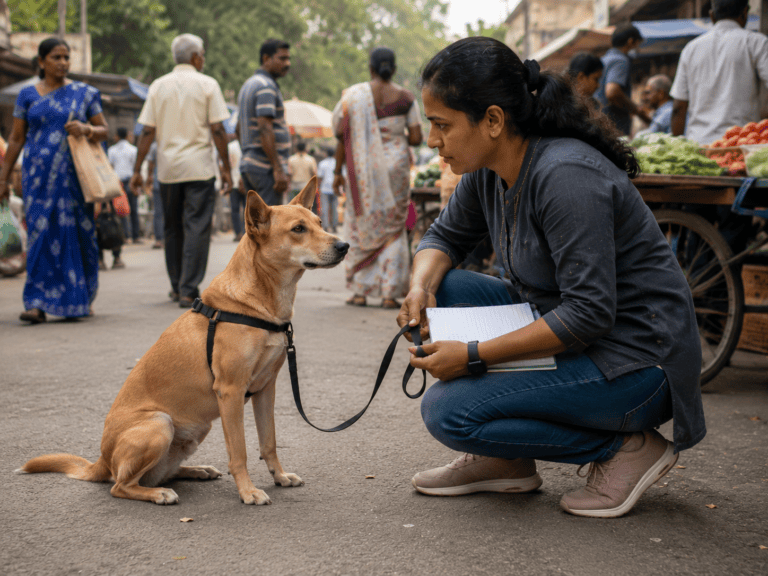
- Socialisation. A core part of the role is exposing the dog to the kinds of environments, people and situations it will eventually need to navigate calmly - markets, traffic, visitors to the home, unfamiliar sounds. This happens naturally through daily life in a real household, which is one of the reasons home-based training produces better-socialised dogs than kennel environments.
- Observation and reporting. The foster-trainer is the person who knows the dog best - its habits, its triggers, its progress and its setbacks. Accurate observation is part of the role. What she notices informs the professional trainer's decisions about how the dog's training should evolve.
- Health care and monitoring. Basic health maintenance - feeding, tick prevention, deworming schedules, noticing changes in behaviour or appetite that might signal a health issue - is part of the daily responsibility. The programme provides veterinary support, but the foster-trainer is the first line of observation.
Clearing up common misunderstandings
The foster-trainer role is sometimes misread as either more or less than it is. A few clarifications.
- It isn't volunteering. Foster-trainers are paid for their work. The work is skilled, time-intensive and consequential - it shapes the dog that will eventually support a person with a disability. It deserves proper remuneration, and HeartDogs treats it that way.
- It isn't replacing professional trainers. The professional trainer designs the training curriculum, assesses each dog's progress, makes decisions about when a dog is ready to move to the next stage, and manages the overall standards of the programme. The foster-trainer carries out the daily work within that structure - the two roles are complementary, not interchangeable.
- It isn't temporary or casual work. A dog's training takes months. The foster-trainer's commitment to that dog over that period is what produces the consistency the dog needs. This isn't a role for someone with unpredictable availability. It requires steady, daily presence.
- It isn't just pet ownership. The dog in the home is in training for a specific purpose. The foster-trainer's responsibility is not simply to care for a dog she loves, but to actively develop a dog for a role that will benefit someone else. That distinction shapes how the work is done.
A deliberate choice, not a compromise
The choice to work with women in rural Karnataka as foster-trainers isn't incidental to the model. It's central to it.
Women in rural communities often have the daily availability that this kind of consistent, home-based work requires. They bring to the role skills that formal employment has historically ignored and undervalued - the patience, attentiveness and care for living things that come from years of managing households, livestock and community relationships.
For many of these women, paid, skilled work with recognised social value is genuinely hard to come by. The foster-trainer role offers exactly that. The work is not charity - it creates something real, trains something valuable, and connects directly to the welfare of a person with a disability who will eventually rely on the dog that was raised in her home.
The same home that is the dog's first classroom is also the place where a woman's skills are finally treated as skills - not as background, not as informal labour, but as the foundation of a programme that serves people who have very few other options. That is why HeartDogs calls them Heroes. Not because the word sounds good. Because it is accurate.
What HeartDogs looks for in a foster-trainer
Prior experience with dogs is helpful but not essential. What matters more is temperament and commitment - patience, consistency, attentiveness and a genuine willingness to learn a structured method and follow it.
Every foster-trainer in the HeartDogs programme goes through an induction before a dog is placed with them. They receive ongoing support and guidance from the professional trainer throughout the training period, and their work is assessed regularly. The formal background comes from the programme itself - the role is designed to build the knowledge it requires, not to demand it upfront.
What cannot be taught is availability and reliability. A dog in training needs consistent daily presence. That's the non-negotiable part of the role.
Why this role matters beyond the dog
The foster-trainer role is designed to create value in three directions simultaneously. The dog gets the consistent home environment it needs to develop into a reliable working animal. The woman gets paid, skilled work with real social purpose. And eventually, a person with a disability receives a dog that was shaped, day by day, by someone who knew it well.
None of those three outcomes happens without the others. That's not a coincidence - it's the design. The Hero sits at the centre of everything HeartDogs builds. The dog becomes what it becomes because of her. The person who will one day rely on that dog will never meet her. But the steadiness, the patience and the daily care she brought to the work will be present in the dog's life long after it leaves her home.
That's what a Hero does.