Good news for anxiety and comfort, a more mixed picture for children
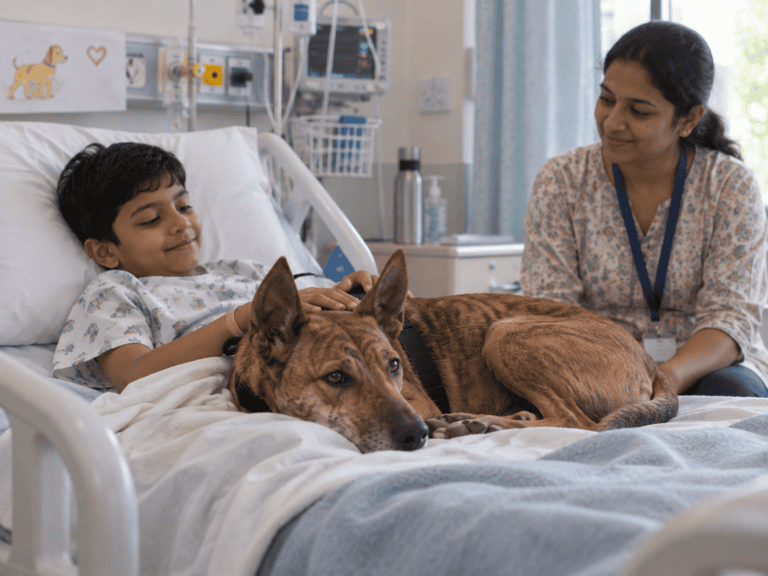
For adults receiving chemotherapy or other cancer treatment, some small studies report lower anxiety, distress or improved mood right after a therapy dog visit. A study of head and neck cancer patients going through combined chemotherapy and radiation found improvements in emotional and social wellbeing over the course of treatment, though it did not compare against a group that received no dog visits, so it cannot say how much of that improvement came from the dog itself. A more recent survey at a cancer infusion centre found a meaningful drop in anxiety scores after a single visit. These are encouraging findings, but the studies behind them tend to be small and often lack the kind of control group needed to say for certain that the dog caused the improvement, rather than simply resting, being cared for, or the passage of time. The honest summary for adults is that there is encouraging evidence for short-term comfort and lower anxiety around a visit, but it comes mainly from small, non-randomised studies. Anything beyond that, like lasting improvements in quality of life, is not yet established with confidence.
Childhood cancer is where the picture gets more interesting, and more honest. The best-known study here is a large, multi-hospital randomised trial that followed newly diagnosed children with cancer, aged 3 to 17, through several months of weekly dog visits alongside their usual care. Children in both the group that got dog visits and the group that did not showed a drop in anxiety over time, but there was no meaningful difference between the two groups, meaning the study could not show that the dog visits themselves made the difference. Parents in the dog-visit group did report feeling less stressed. A more recent, smaller randomised trial set out to test this again in hospitalised children, but had to stop recruiting early because of the COVID-19 pandemic, ending with only 26 patients instead of the 40 it had planned for. With that smaller-than-planned sample, the study was underpowered to detect its planned effect on the children, though it did find lower anxiety among the parents who took part. Taken together, this does not mean dog visits do nothing for children with cancer. It means the effect, if it exists, is harder to detect and prove than the popular idea suggests, and shows up more reliably in parents than in the children so far.
Fleishman et al., 2015 · McCullough et al., Multisite RCT, 2018 · Chubak et al., 2023/2024
Is it actually safe for a patient with a weak immune system?
This is the fair question to ask, and hospitals take it seriously before allowing any dog into a cancer care setting. Chemotherapy can reduce the white blood cells that fight infection, so some patients are more vulnerable than usual, and exactly how vulnerable depends on the type of cancer, treatment and degree of immunosuppression. Where hospitals do allow therapy dog visits, programmes typically combine several safeguards: veterinary health checks, vaccination and parasite-control records, handler training, hand hygiene before and after contact, and screening of which patients are eligible for a visit at all. Requirements vary by institution, and some high-risk units, such as those treating patients with severely weakened immune systems, may not offer animal visits at all.
The research on this specific question is encouraging but limited. One randomised trial in children with cancer found that, when hand sanitising was part of the visit, dog visits did not increase the level of germs found on patients' hands afterward compared with usual care. That is a genuinely useful finding, but it is narrower than it might sound. The study looked at hand germ levels only, not at whether any infections actually occurred, and it did not rule out other ways germs might pass between a dog and a patient. The fair conclusion is not that these visits are risk-free, but that a well-run programme with proper hygiene steps can reduce some measurable routes of microbial exposure, which is a different and more honest claim.
Patients are also generally advised to be careful with animals during cancer treatment more broadly, whether that is a hospital visit or a pet at home - avoiding contact with animal waste, being cautious about bites, scratches and licking, and keeping animals away from open wounds. A hospital therapy dog visit run through a proper programme is a managed, supervised situation, with its own checks and a clinical team overseeing it, and it should be treated and approved as such rather than assumed to be automatically fine because a pet at home is usually fine.
Earlier research involving group hospital visits found evidence of microbial sharing between patients and therapy dogs, meaning changes in the community of microbes found in each other's noses after contact, although this did not establish transmission of harmful infections, and other patients or the hospital environment may also have played a part.
Chubak et al., 2023/2024 · Microbial Sharing Study, 2021 · OncoLink - Pet Care During Treatment
What this evidence does and does not tell us
It would be tempting to say the science proves therapy dogs help cancer patients. That is not quite right. What the research actually supports is narrower and still meaningful: some studies associate brief, well-run dog visits with lower short-term anxiety or distress in adults receiving cancer care, and there is genuine reason to think a properly managed visit can be handled safely in a hospital setting. Its effect on children specifically is harder to pin down than the warm anecdotes suggest. These visits are supportive care, meant to ease the experience of treatment. None of the cited studies show that a dog visit changes how the cancer responds to treatment or affects survival, and no one running a serious programme claims otherwise.
That is still worth taking seriously. Quality of life during cancer treatment matters on its own terms, and a short visit that leaves someone feeling a little less afraid, even for twenty minutes, is not a small thing.
Where this fits into our plans
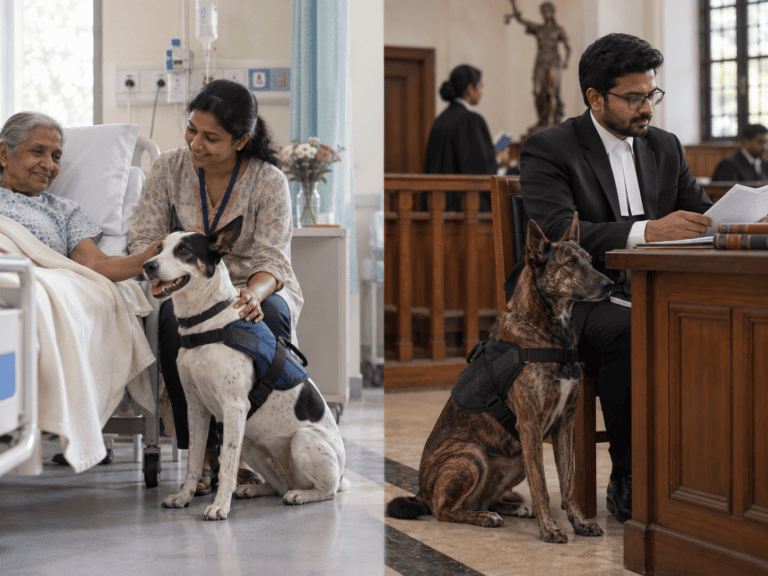
Hospital and clinical settings are part of the longer-term vision for our therapy dog track, and cancer care is one of the more sensitive corners of that vision because of exactly the safety questions above. Any future work with cancer patients, in a chemotherapy ward or infusion room, would need to follow the same standards hospitals already use elsewhere - health screening, vaccination records, strict hygiene routines, clear patient eligibility criteria, and close coordination with clinical staff rather than an informal drop-in visit.
We are not there yet, and we are in no hurry to get there before the groundwork is right. But it is a good example of the kind of work our dogs and Heroes are training toward: not just being friendly around people, but being reliable enough, and handled carefully enough, to work safely in a setting where the stakes are genuinely high.