A temperament built by natural selection, not human breeding
The Indie is a landrace, not a breed in the conventional sense. Unlike dogs selectively bred by humans for particular traits - a herding instinct, a retrieval drive, a guarding temperament - the Indie evolved through natural selection over thousands of years. The traits that survived were the ones that worked in India's real conditions: the ability to read people accurately, to adapt to unpredictable environments, to stay calm under pressure, and to form bonds with the humans who provided food and shelter.
According to the INDog Project, which has studied this population since 2002, the INDog has retained its full range of mental faculties precisely because it hasn't been selectively bred - a process that concentrates some traits while simultaneously losing others. What you get with an Indie is a dog that is complete, not optimised for one purpose.
Extremely alert, cautious with strangers - and this is not a flaw
The INDog Project's breed standard describes the Indie as "an extremely alert, very social dog." The caution around strangers - which some people interpret as shyness or poor sociability - is more accurately understood as the legacy of surviving in environments where not every human was friendly. This caution, the breed standard notes, "is not to be mistaken for a lack of courage."
In practice, this means an Indie that is well socialised from an early age is genuinely social and confident. Without adequate early socialisation, the caution can become a significant behavioural challenge. This is true of many intelligent, observant breeds, and it's why socialisation is the first priority in any serious Indie training programme.
Highly intelligent - but not in the way most people expect
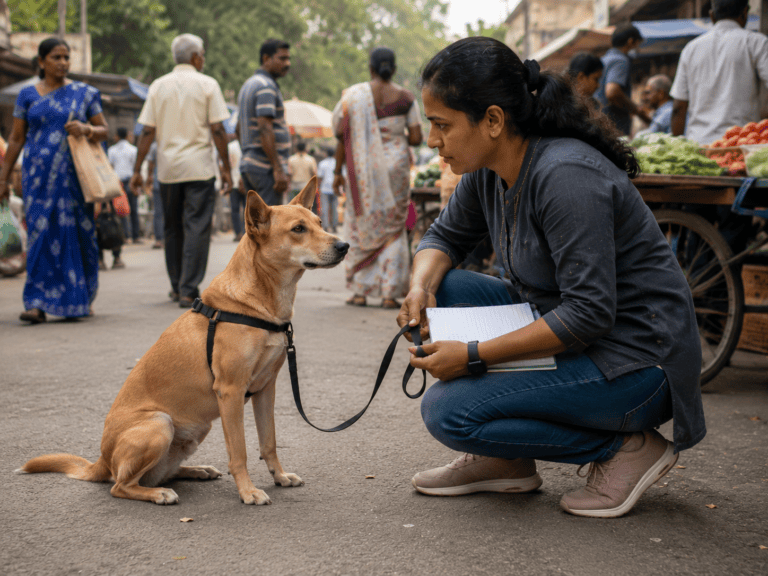
The intelligence of an Indie is practical rather than obedience-oriented. Research on free-ranging dogs in India, including Anindita Bhadra's Dog Lab at IISER, has documented the independent problem-solving abilities of Indian free-ranging dogs - their capacity to read human cues, navigate complex social situations and make decisions without direction from a handler.
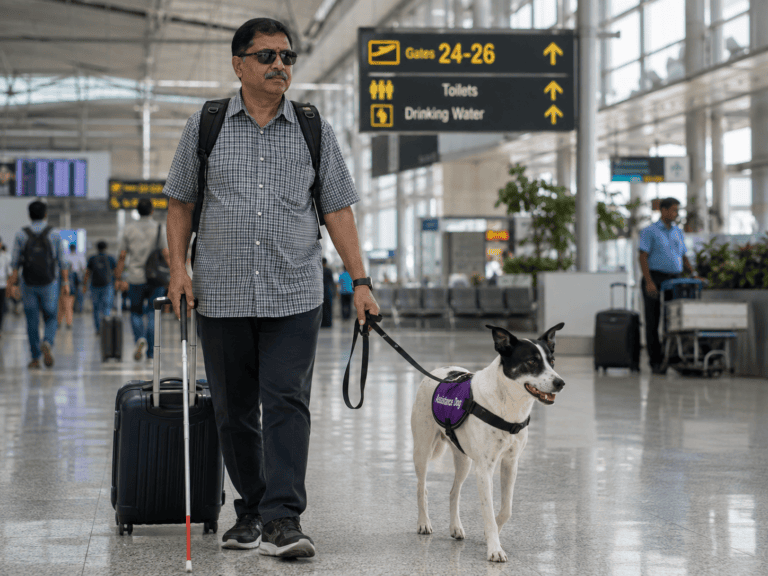
This is different from the intelligence most pet owners are familiar with in retrievers or herding breeds, which is oriented towards working with a human. An Indie is smart in a broader, more self-directed way. It reads situations, makes assessments, and sometimes decides that its own judgment is better than the instruction it's been given. This is simultaneously one of its greatest strengths for assistance work - the ability to notice something is wrong before the handler does - and one of the training challenges that requires an experienced trainer to work with.
The INDog Temperament Guide, compiled from direct feedback from 45 owners in the INDog Club community, describes them as "highly intelligent, easy to train" once the foundational bond and trust are in place.
Deep loyalty - but on their own terms
Indies bond closely with their people, but the bonding style is different from the open, immediate affection of a retriever. The INDog Temperament Guide describes them as ranging "from somewhat aloof to very affectionate" depending on the individual - and notes that while they may not show open affection in the same way as retrievers, they are "overjoyed upon being reunited with owners" in ways that make their attachment clear.
This bonding depth is highly relevant for assistance work. A dog that forms a strong, stable bond with its handler is a dog that is motivated to stay attentive and responsive to that person over a working life of many years. The Indie's loyalty, once earned, is consistent and enduring.
Adaptable to an extraordinary range of conditions
Decades of published research on free-ranging dogs in India - including S.K. Pal's long-running studies of dog behaviour in West Bengal, published in Applied Animal Behaviour Science from 1998 onwards - document how Indian free-ranging dogs navigate complex social environments, form stable social structures, and adapt their behaviour across a wide range of situations with minimal predictability.
This adaptability is one of the core reasons Indies are well-suited to assistance work. A dog placed into a family home in Bengaluru, a school in rural Karnataka, or a hospital in Mumbai needs to stay settled and functional across very different environments. That's exactly what generations of natural selection in India have prepared the Indie to do.
What new owners and handlers actually experience
Based on the INDog Project's temperament guide and owner community feedback, a few practical things to understand about Indie temperament:
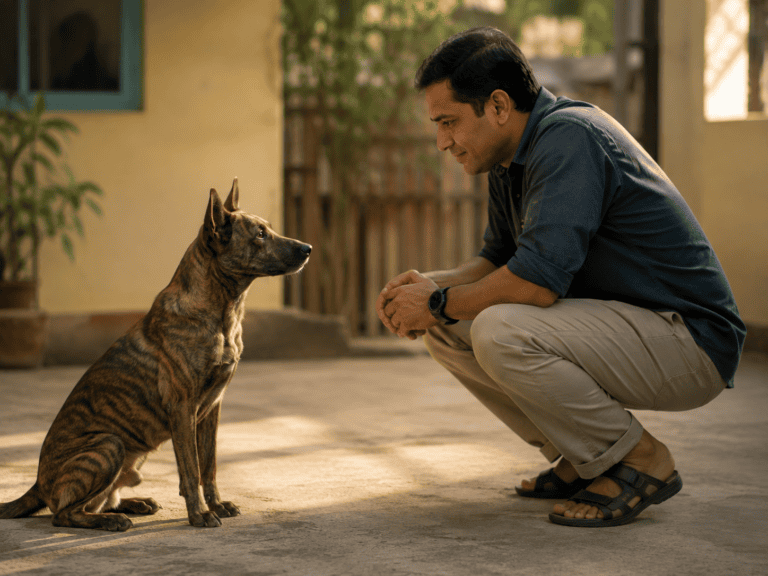
- They take time to settle. An Indie in a new environment can seem reserved or cautious for weeks before showing its full personality. This isn't a problem - it's normal for the breed. Patience in the early period pays off significantly.
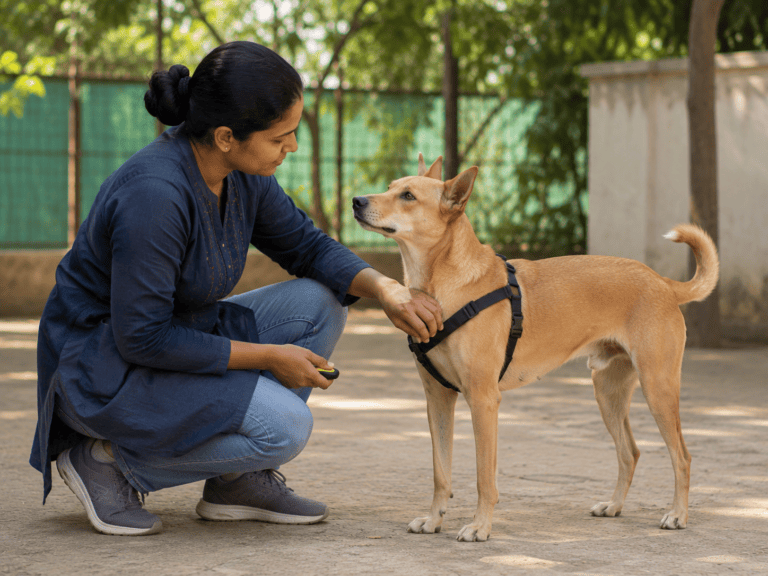
- They respond best to positive reinforcement. The INDog Project notes that Indies are sensitive dogs - "soft punishment affects them emotionally." Force-free training isn't just an ethical preference with Indies; it's the approach that actually works.
- They are not a breed for passive ownership. Indies need mental stimulation and physical exercise. A bored Indie is likely to find its own entertainment, which isn't always convenient. Daily engagement - training, games, activity - keeps them settled and focused.
- They are not uniformly one thing. The Indie population is genetically diverse and covers a wide range of individual temperaments. Not every Indie is suitable for every role. Assessment matters.
The INDog has never undergone selection for any specific function. It has no inherited traits that make it unsuited to being a family companion or a working dog, provided it gets sufficient exercise, socialisation and engagement. - INDog Project
Why this matters for assistance work
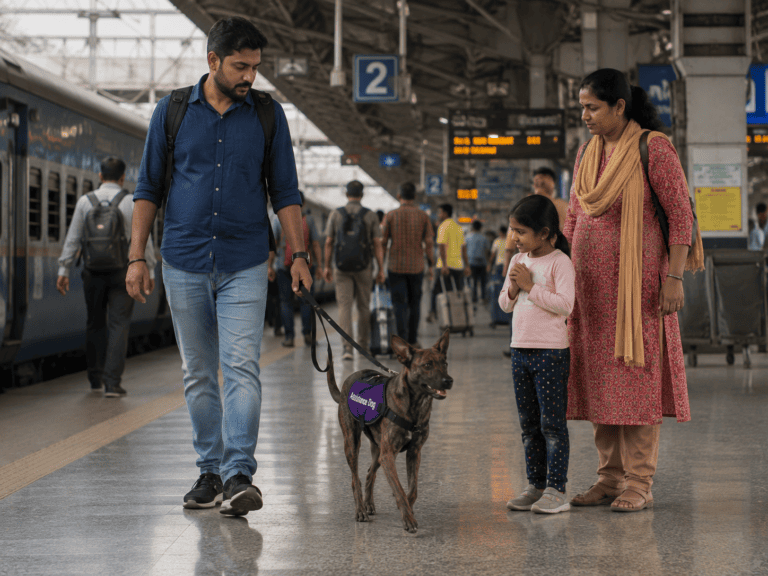
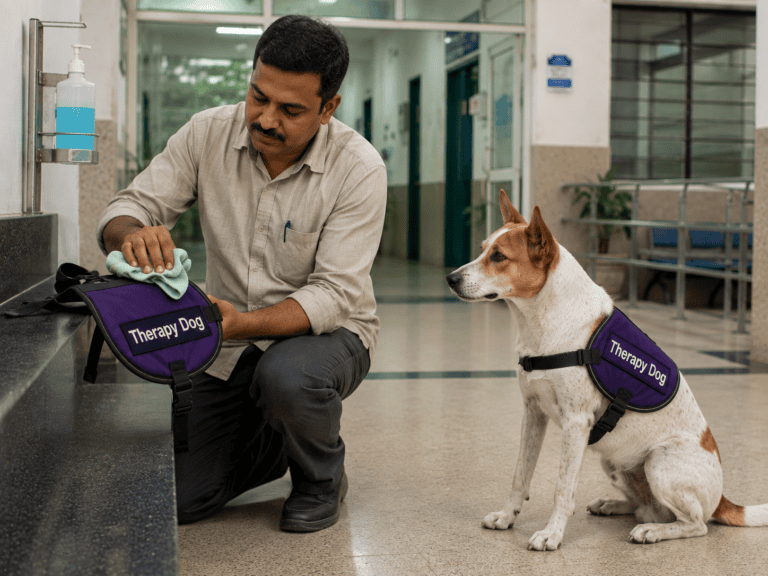
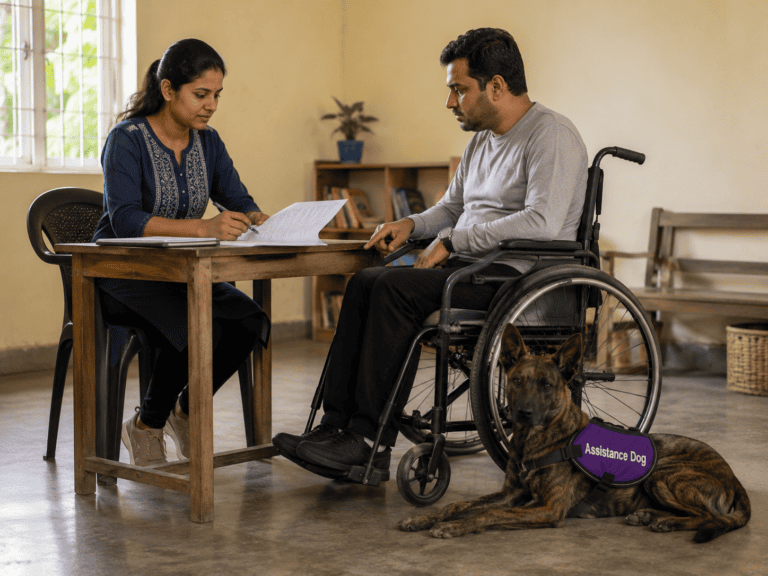
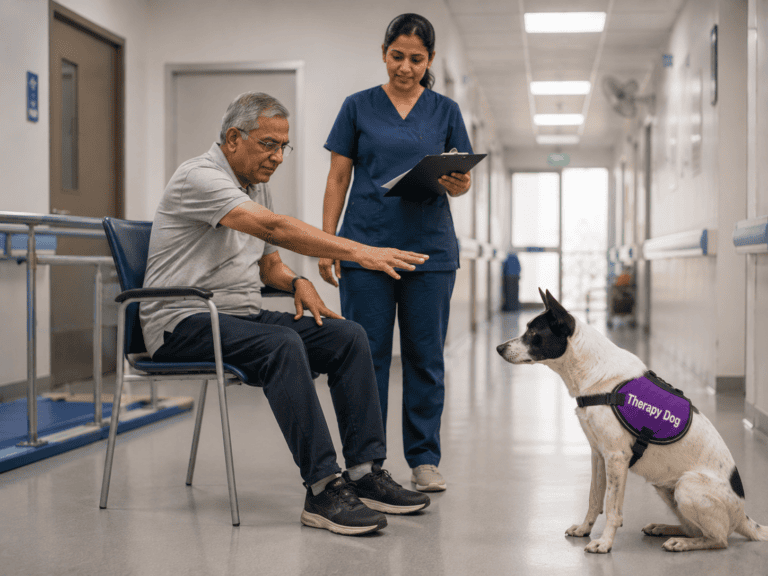
HeartDogs trains Indies - India's native landrace dogs - as assistance and therapy dogs. The traits described above - alertness, loyalty, adaptability, practical intelligence and resilience - are not incidental to this work. They are the foundation of it.
Every dog is individually assessed for temperament before entering our programme. We're not assuming every Indie is suitable. We're selecting for the specific combination of traits that assistance work requires - and working with a population that has been shaped by India itself to carry exactly those traits.