How therapy dog programmes typically work
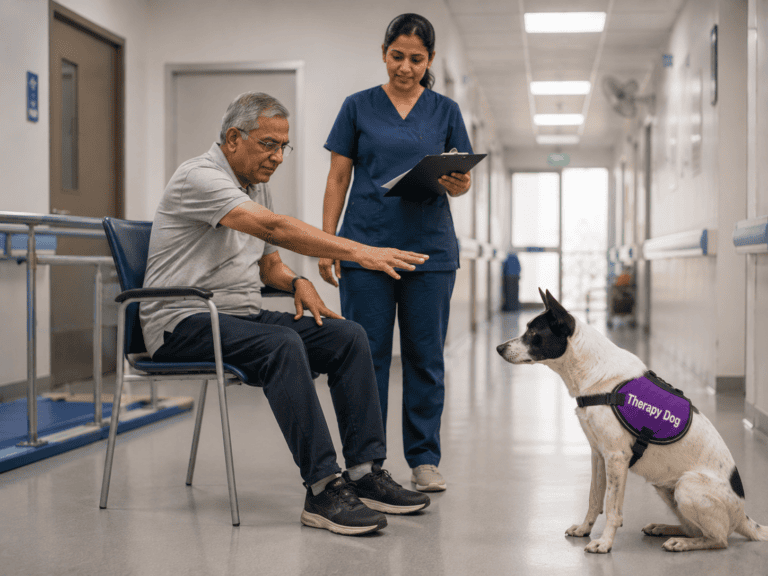
A school therapy dog visit is structured differently from an assistance dog placement. The dog visits the school alongside a trained handler - often for a set period each week - and is available to students in specific settings: a reading corner, a counselling room, a calm-down space or simply a quiet area during a high-stress period like exam season.
The dog doesn't do anything in the way an assistance dog does a task. Its role is its presence - calm, non-judgemental and consistent in a way that many other parts of a school day are not. Students can interact with it, sit beside it or simply be in the same space. That distinction - that the dog is there, not performing - is important for understanding why these programmes work.
Common formats include:
- Reading sessions. A student reads aloud to a therapy dog rather than to a teacher or peer. The dog doesn't judge, correct or react negatively - which can reduce the anxiety that many students feel when reading aloud, particularly those who struggle with literacy or confidence.
- Wellbeing visits. Structured sessions where students can spend time with a therapy dog - particularly useful during exam periods, after difficult events or for students experiencing anxiety or low mood.
- Classroom presence. In some programmes, a dog is present in a classroom as a regular part of the environment, reducing ambient stress levels and improving the overall atmosphere.
- Counselling support. A therapy dog present during counselling or support sessions can help students feel more at ease, particularly those who find one-to-one conversations with adults difficult.
What the research actually says - honestly
The evidence base is strongest for emotional and physiological benefits, and more mixed for academic outcomes specifically. It's important to be precise about this.
On anxiety and stress: The evidence here is reasonably consistent. A 2025 meta-analysis of randomised controlled trials published in PMC, examining canine-assisted therapy in educational settings, found "strong evidence" that it is effective for reducing anxiety and stress, with a moderate effect size across studies. Research consistently shows that interaction with a calm dog measurably reduces cortisol levels - the primary stress hormone - and increases oxytocin, which supports feelings of trust and ease.
On mood and engagement: A 2022 systematic review of 23 studies, published in the Educational and Developmental Psychologist, reported associations between therapy dog programmes and improvements in students' mood, social skills, confidence and relationship with teachers. The same review notes that some studies found no significant effect, and that the field is characterised by methodological limitations - small sample sizes and reliance on self-report - that mean conclusions should be drawn carefully.
On reading specifically: Reading-to-dogs programmes report positive associations with reading confidence, motivation and reduced reading anxiety. A systematic review by Hall et al., 2016 (PLOS ONE) found multiple studies reporting improvements in motivation, confidence and reduced anxiety when reading to a dog. However, the same review and a more recent 2024 review in the Literacy journal both note that this research is "underdeveloped" and that large-scale rigorous studies are still needed. The picture on actual reading skill improvement is less clear than the picture on attitude and anxiety.
The honest summary: therapy dog programmes in schools show promising evidence for reducing anxiety, improving mood and supporting social-emotional wellbeing. The evidence is stronger in some areas than others, and many studies have methodological limitations - small sample sizes, reliance on self-report, and short follow-up periods. The evidence for direct academic gains such as improved reading skills is less conclusive than the evidence for emotional benefits. That is a meaningful distinction, but the emotional and wellbeing benefits - particularly around anxiety - are valuable in their own right and matter significantly for a student's ability to engage with learning.
PMC meta-analysis, 2025 · Dimolareva et al., Educational and Developmental Psychologist, 2022 · Hall et al., PLOS ONE, 2016
The Indian school context and why this matters here
The anxiety and stress that therapy dog programmes address are not abstract concerns in Indian schools. Board exam pressure, competitive admission processes and academic performance expectations create a specific, intense form of student stress that is well documented in Indian research and reporting. Mental health support in Indian schools remains limited - counsellors are rare, structured wellbeing programmes are uncommon outside urban private schools, and stigma around seeking mental health support remains significant.
The appeal of a therapy dog programme in this context is precisely what makes it work elsewhere too: it is accessible, non-stigmatising and doesn't require a student to identify as struggling or to engage with anything that looks like therapy. A student can simply spend time with a dog. That low barrier to access is particularly valuable in an environment where many students who would benefit from support never seek it.
Specific Indian contexts where therapy dog visits seem particularly relevant include: counselling cells in secondary schools and colleges during exam season, special education classrooms, paediatric wards in school health programmes, and transition periods - the first weeks of a new school year, or after a difficult community event.
What makes a school therapy dog programme actually work
Not every calm dog is suitable for school visits, and not every school is set up for them. A few things determine whether a programme works well.
- A well-assessed, trained dog. The dog needs to be reliably calm in unpredictable, high-stimulation environments - unexpected noise, crowded corridors, sudden movement. This requires specific assessment and preparation, not just a dog that is friendly at home.
- A trained handler. The dog's handler manages the visit, reads the dog's stress signals and manages student interactions. An unmanaged visit - where students crowd around a dog or a dog is left without clear handler oversight - creates welfare risks for the dog and safety risks for students.
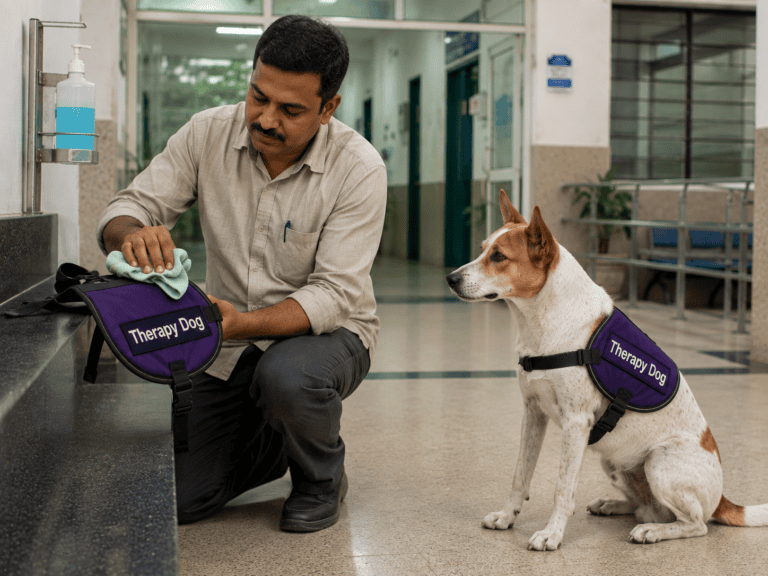
- Clear protocols. Which students? What sessions? How long? What hygiene procedures? Schools that approach this casually, without protocols, create problems that undermine the programme's credibility.
- Institutional buy-in. A school administrator who understands what a therapy dog visit involves, and has agreed to the protocols, is essential. This is one of the key areas where building trust with institutions takes time - and why HeartDogs works carefully with partner schools before any dog enters the building.
What we are building
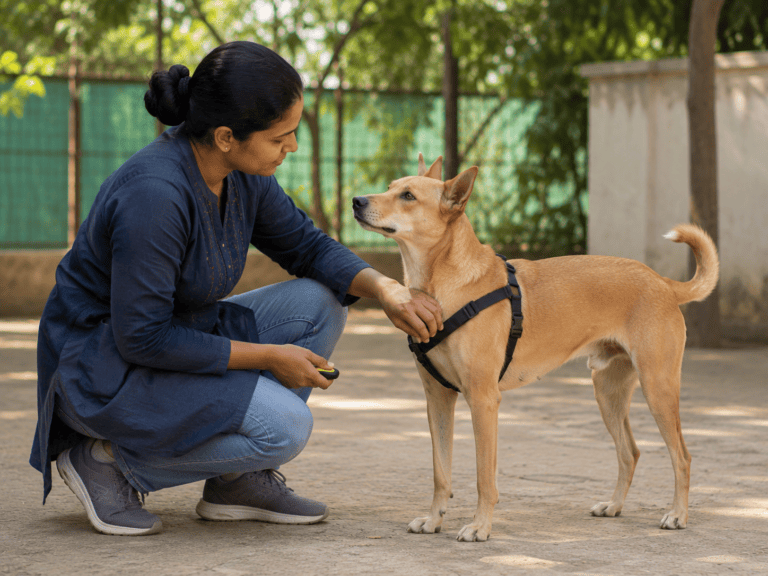
HeartDogs trains Indies - India's native landrace dogs - for therapy roles that include school settings. The dogs are raised in real homes in rural Karnataka by women working as paid foster-trainers, building the calm, confident and social temperament that institutional therapy work requires.
School placements are part of the longer-term direction of the programme. Building the relationships, protocols and institutional trust that make those placements successful takes time - but it is the kind of work that produces durable results rather than one-off visits.
India doesn't need to wait for an imported model. It has the dogs, the need and - increasingly - the understanding to build something here that fits how Indian schools actually work.