No Poverty: a contribution to household economic security
SDG 1 is about ending poverty in all its forms, including access to economic resources and social protection. Our foster-trainer model creates a regular, paid role for women in rural Karnataka who had no formal income before joining us. The income is designed to be earned close to home, reducing the need for commuting or relocating to access paid work. We see this as a contribution to household economic security, not a claim that one employment programme can end poverty in the communities where it works.
Good Health and Well-Being: support for independence and daily wellbeing
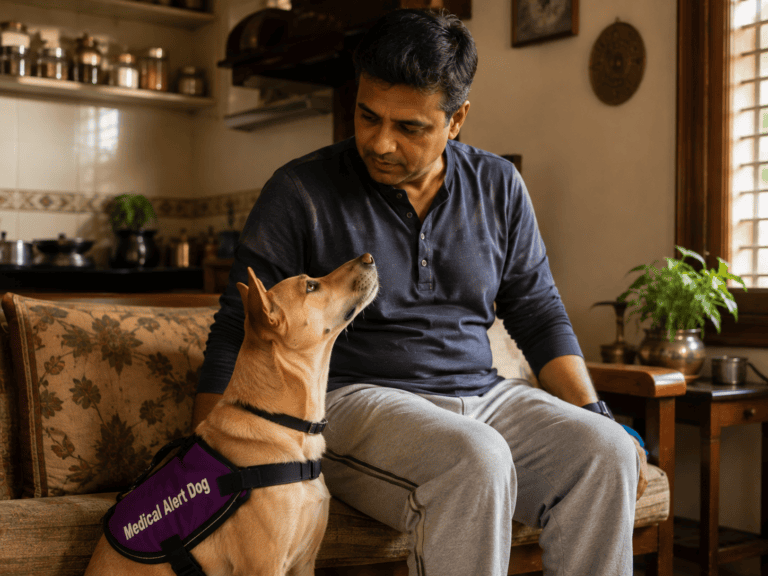
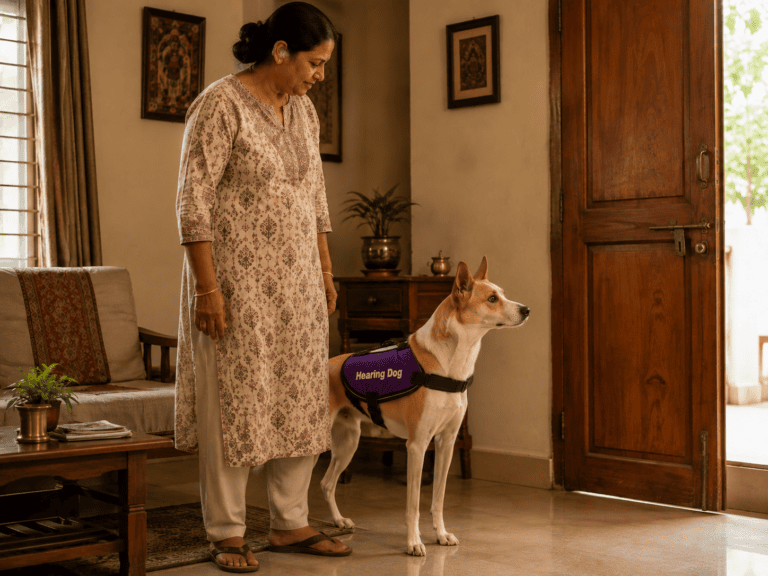
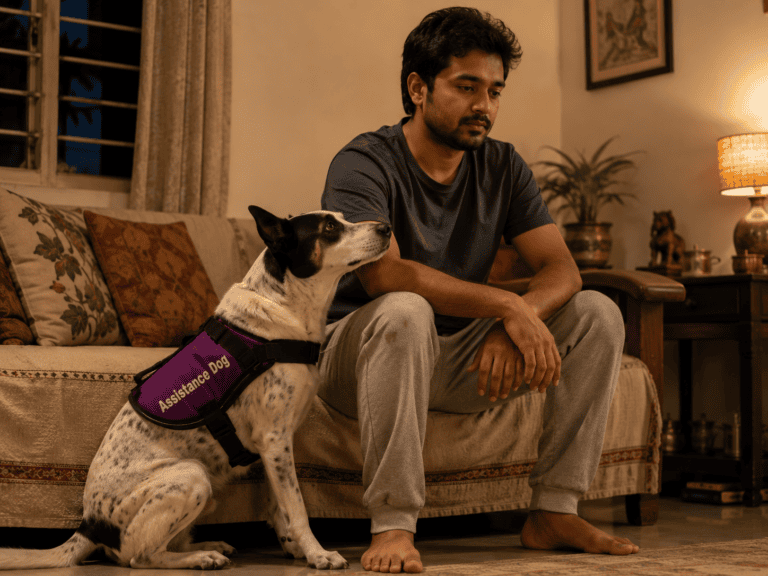
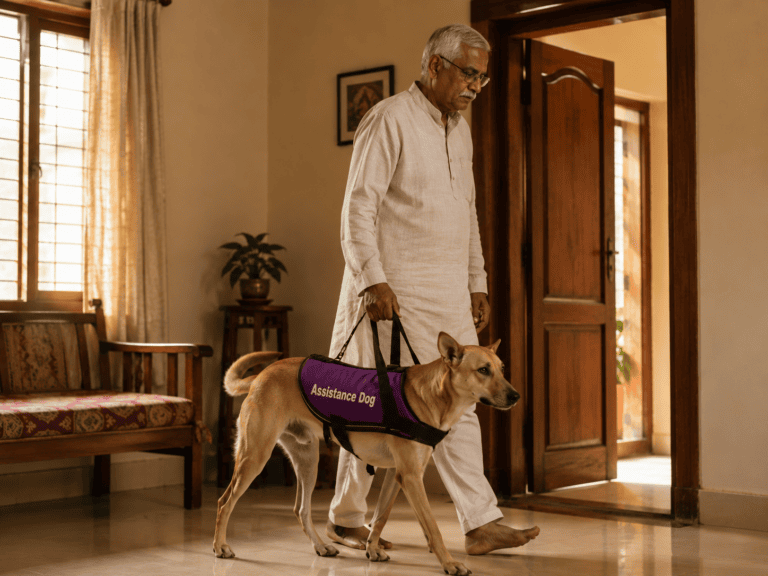
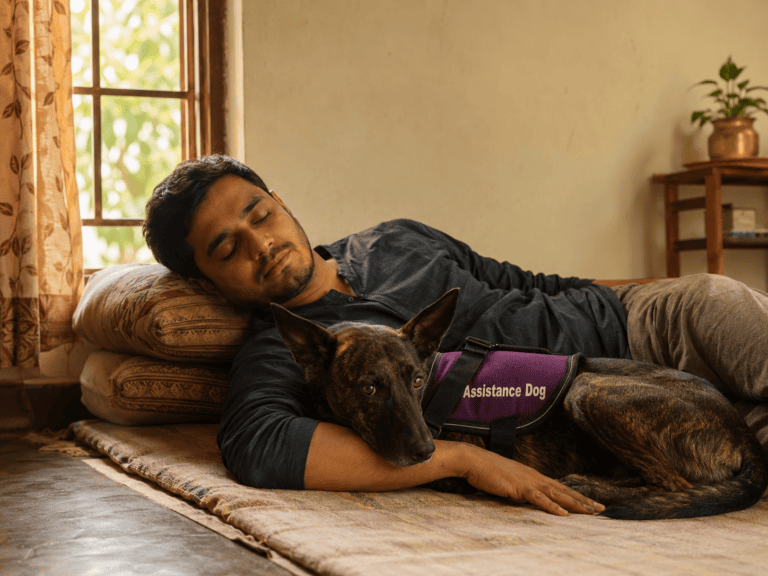
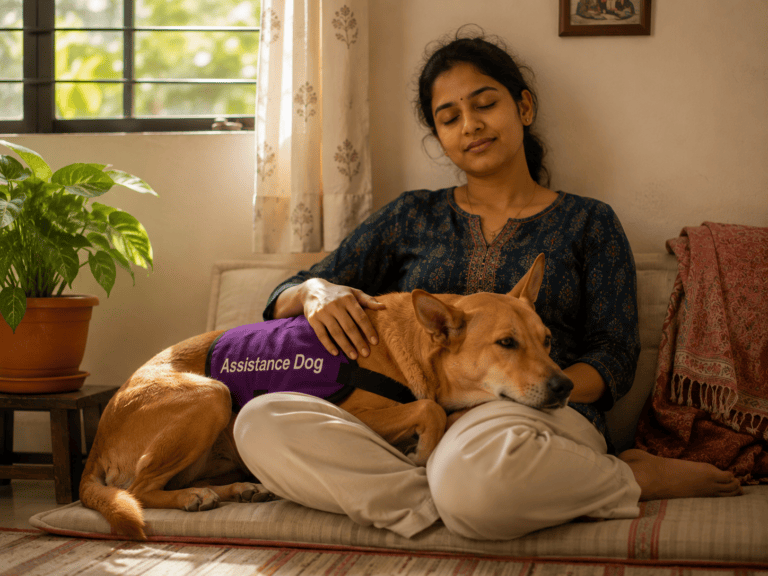
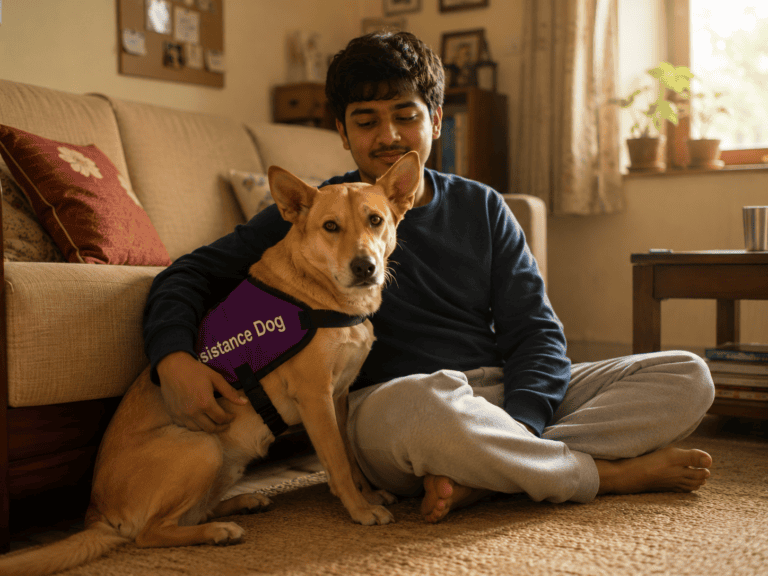
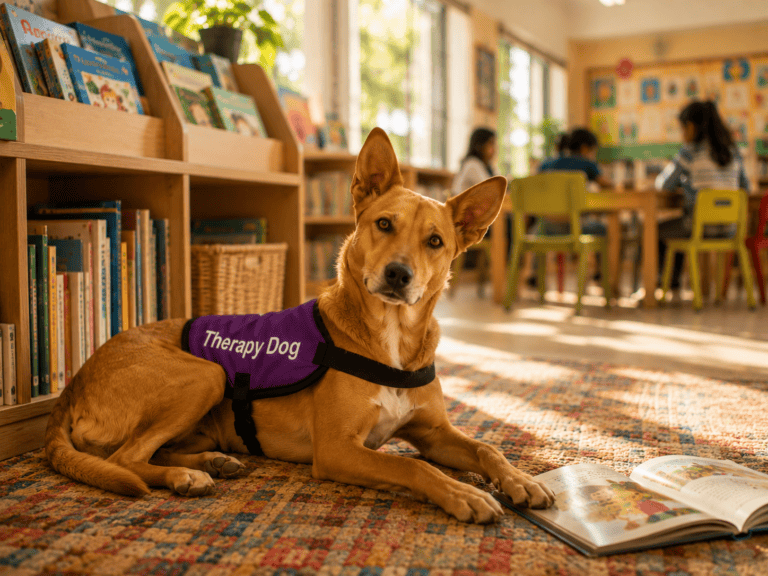
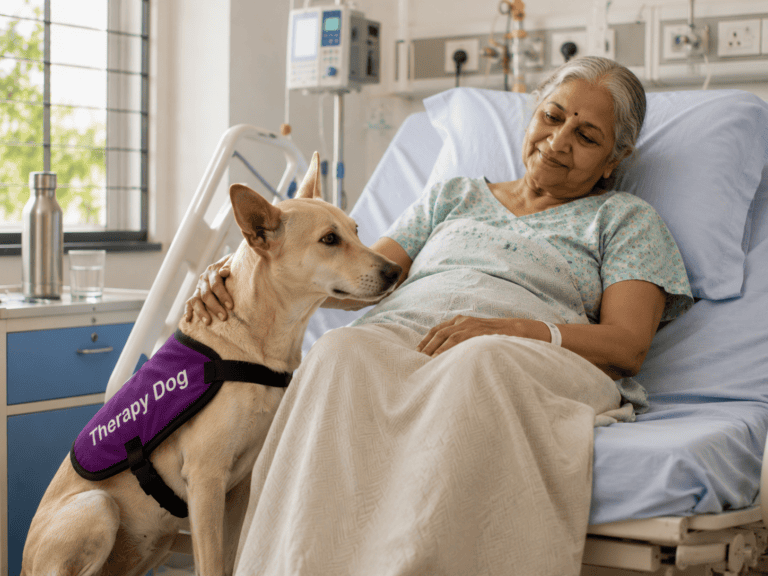
SDG 3 covers healthy lives and wellbeing for people of all ages. Our assistance dog training is designed to support people with physical disabilities, autism, hearing impairment and psychiatric conditions, and our therapy dog work is being developed for hospitals, care homes and schools. Our assistance and planned therapy dog work may contribute to wellbeing, participation and independence for some people, but we do not present our dogs as medical treatment or as a substitute for healthcare and rehabilitation professionals.
Gender Equality: a skilled career for women entering paid work
SDG 5 calls for empowering all women and girls, including their participation in economic life. Many of our Heroes had not previously held formal paid employment before joining the programme. HeartDogs gives them a genuinely skilled career, a regular income, and work that can strengthen their skills, income and participation in community life, carried out in their own villages, in a way designed to fit their household and community circumstances, rather than requiring them to leave their communities to find paid work. Employment alone does not achieve gender equality, but we see it as a real, local contribution to that goal.
Decent Work and Economic Growth: an employment pathway, not just one job
SDG 8 is about sustained, inclusive economic growth and decent work for all, including people with disabilities. Our aim is to develop a new, dignified employment pathway in rural Karnataka, in a setting where formal work options for women have historically been limited. As the programme grows, each additional dog in training has the potential to create work beyond the foster-trainer role itself, including logistics, coordination and community support roles, though we present this as the direction we are building toward rather than a fully established employment structure today.
Reduced Inequalities: closing a real access gap for disabled people in India
SDG 10 focuses on the social, economic and political inclusion of people with disabilities, among other forms of inequality. In India, access to trained assistance dogs remains limited and uneven, and there is no unified national framework governing their training, recognition and access across settings, as we discussed in an earlier FootNotes piece on assistance dog law in India. We are building toward a systematic programme that may help address part of that gap, one placement at a time, rather than claiming to have closed it already.
Rescue over breeding: a principle we hold alongside the SDGs
Every HeartDogs dog is a rescued Indie, one of India's native or community dogs, rather than relying on purpose-bred dogs sourced from specialist breeding programmes. We want to be precise here: animal welfare does not have its own standalone, numbered UN Sustainable Development Goal in the way health or gender equality do. What we can say honestly is that this choice reflects a responsible-sourcing principle that sits comfortably alongside the SDG framework, giving dogs that would otherwise have an uncertain future a second life and, where suitable, a working purpose, while also keeping our whole model rooted in what India already has rather than what needs to be sourced from elsewhere.
Why we mapped this out properly
It would have been easy to simply list "we support six SDGs" on our website without checking each one against the actual goal it claims to serve. We would rather be precise, both about where our work has a genuine connection to an official UN goal, and about where a value we hold, like rescue over breeding, is a principle of ours rather than a formally recognised target.
We see these as areas of contribution, not badges of achievement. HeartDogs is not ending poverty, achieving gender equality, or eliminating disability inequality on its own. We are building a local model that contributes in specific ways: creating paid work for rural women, developing support pathways for people with disabilities, and demonstrating that rescued Indian dogs can be trained and matched responsibly. Mapping our work to the SDGs helps us describe those contributions clearly, and gives us a framework for asking honestly, over time, whether they are real.