A specific protection for guide dogs, a proposal for everyone else
India's civil aviation rules for passengers with disabilities are set out in a Directorate General of Civil Aviation regulation known as CAR Section 3, Series M, Part I, a framework that dates back to 2008 and has been revised several times since. It includes a specific provision for guide dogs: a properly trained, harnessed and vaccinated guide dog may travel in the cabin at the passenger's feet, subject to the airline's procedures and the passenger providing written proof of training from an appropriate institution, along with vaccination and medication details. This is a genuine, longstanding regulatory protection, not just an airline courtesy, but it is a conditional one rather than an unconditional right to board in every circumstance.
The word used in that regulation is specifically "guide dogs." In September 2025, reporting described DGCA draft rules that would broaden this language to a wider category of "service dogs," covering physical, sensory and psychiatric disabilities rather than vision impairment alone. We have not found an official DGCA publication confirming that this proposed expansion has since become finalised in the current CAR, so it is worth treating it as a proposal in progress rather than a settled right for every category of assistance dog. Separately, some individual airlines publish their own broader service animal guidance, including provisions covering physical, sensory, psychiatric, intellectual or other mental disabilities. Since airline guidance can vary and even differ across an airline's own published pages, the treatment of non-guide assistance dogs needs to be checked against the specific airline's current policy for your route and booking, rather than assumed from the guide dog provision alone.
A specific accommodation for guide dogs, different rules for pets
Indian Railways draws a similar, sharp line, though it is worth being precise about what that line actually is. Railway rules provide for a "Seeing Eye" dog accompanying a blind passenger to travel with the passenger in First Class, subject to the applicable booking and carriage rules, and the handler should confirm the applicable class, booking procedure and documentation with Indian Railways before travel. The dog is charged at the same tariff as a dog carried in the brake van, calculated on a 30 kg basis, which is a lower chargeable weight than the 60 kg basis used for an ordinary dog travelling in the passenger compartment, but it is not free of charge. This is a specific accommodation distinct from the general pet dog rules, and it recognises the working role of the dog rather than treating it simply as an ordinary pet.
Ordinary pet dogs may generally travel with their owners only when an entire First Class or AC First Class coupe or cabin is booked for the passenger's exclusive use. Otherwise, they may be booked separately through the luggage or brake-van process, and are not permitted with passengers in most other passenger classes at all. This is worth knowing because it shows how differently Indian Railways' rules distinguish a Seeing Eye dog accompanying a blind passenger from an ordinary pet dog, and it reinforces just how specifically the existing accommodation is written around the guide dog category. The published rules we found do not establish an equivalent, general category covering other kinds of assistance dogs, such as those trained for autism, hearing, psychiatric or mobility support, so handlers in those categories should confirm the position directly with the relevant railway authority before travelling rather than assume the guide dog provision applies to them.
A few honest takeaways for handlers today
- Guide dog handlers are on the strongest footing, in aviation and on trains alike. Both DGCA's aviation rules and Indian Railways' policy specifically name and provide for guide dogs, even though the exact conditions differ between the two.
- Other assistance dog categories sit on much less settled ground, especially on trains. For flights, individual airline policies can offer more than the guide dog provision alone, so it is worth checking directly. For railways, the published rules we found do not establish an equivalent category for autism, hearing, psychiatric or mobility assistance dogs at all, so handlers should confirm directly with the railway rather than assume the guide dog provision extends to them.
- Advance notice is prudent. Airline procedures generally expect passengers to notify the airline of a disability-related requirement at the time of booking, and it is worth getting written confirmation before travelling wherever possible.
- Documentation matters differently depending on the category. For guide dogs, DGCA's rules specifically require written proof of training, vaccination and medication, so this is not optional. For other assistance dogs, carrying equivalent documentation, such as proof of training, task work, vaccination and health records, is a sensible precaution in an area where the regulatory position is less settled, even though it may not create a right where the applicable rule does not already provide one.
Why this matters for the dogs we are training
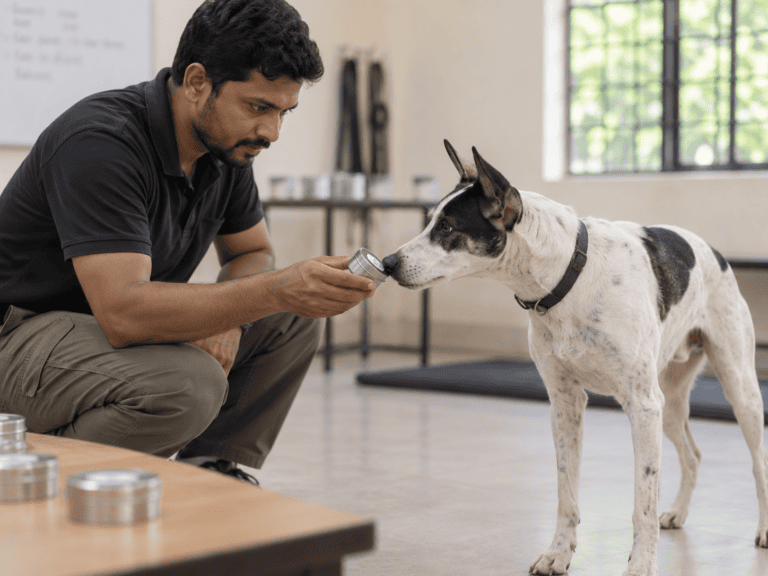
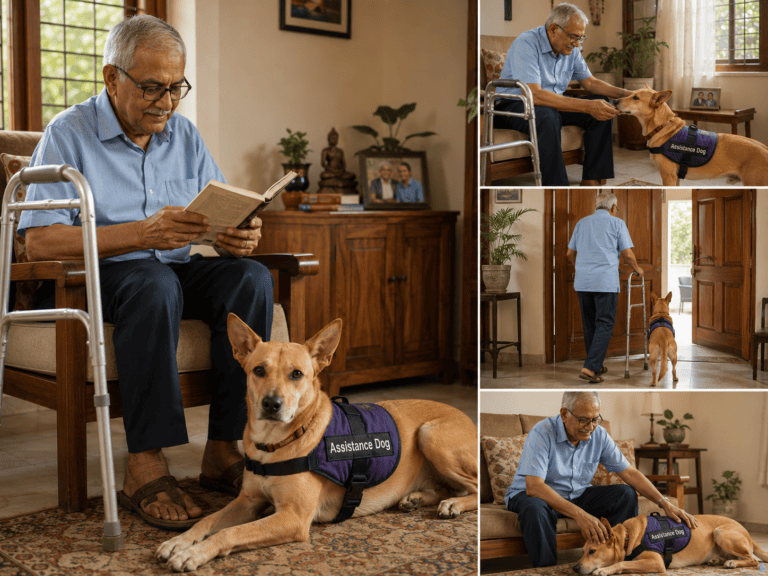
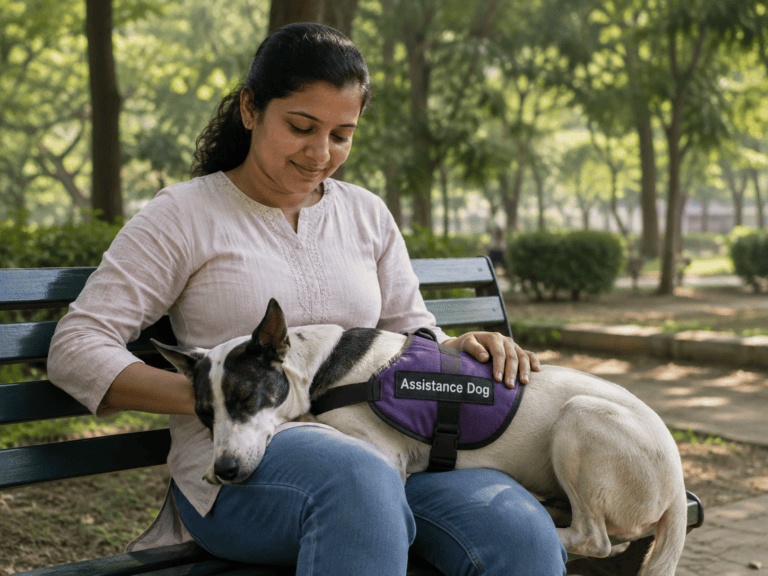
Several of our Cohort 1 dogs are being evaluated for assistance roles outside the guide dog category, including tasks intended to support people with autism and older adults with mobility-related needs. Understanding exactly where Indian transport law stands today, rather than assuming a broad, unified right exists simply because guide dogs have one, is part of preparing our Heroes and future handlers honestly for what travel might actually look like.
We also see this as one more reason India benefits from a clearer, more unified legal definition of an assistance dog, a gap we wrote about in an earlier FootNotes piece. Until that exists, we think it is better to tell people plainly where the law is settled and where it is still catching up, rather than presenting rights as guaranteed when they are, in places, still a work in progress.
Rules can change, so verify before you travel
Legal position checked: August 2026. Transport rules and airline policies can change, and may differ by route, operator and individual circumstances. This article is written for general understanding, not as legal advice. If you are planning travel with an assistance dog, verify current requirements directly with the airline, Indian Railways, or the relevant authority before you travel.