No single standard, shaped by the land they came from
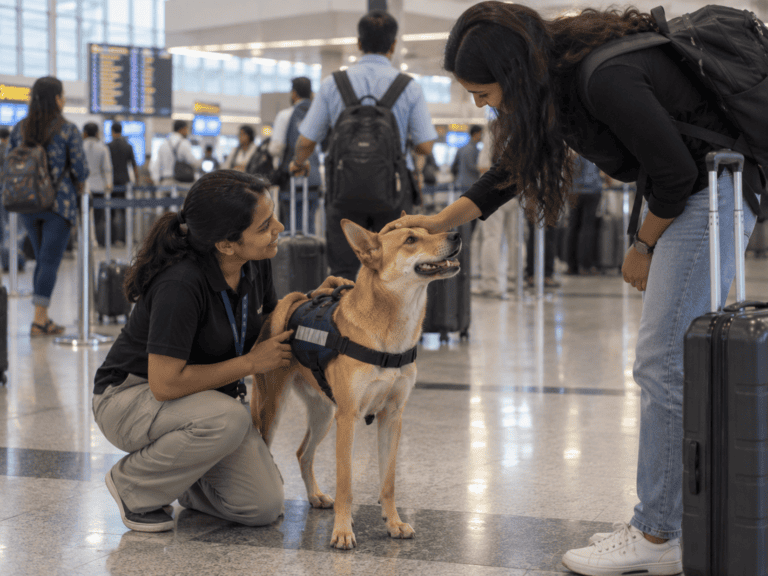
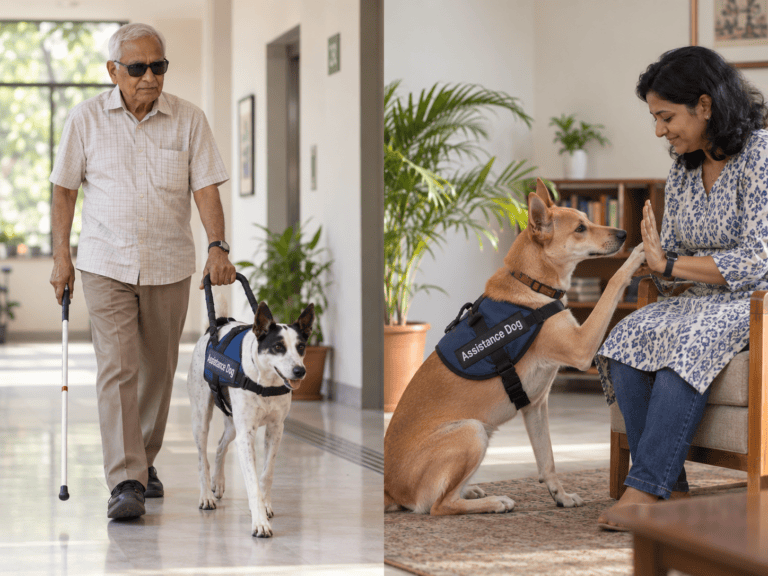
Indies are typically medium sized, lean dogs with short coats, upright or semi-upright ears, and a slightly curved tail, though there is real variation. Coat colours range widely, including fawn, tan, black, white and pied. Appearance varies by region and population, shaped by local environments over generations, which is exactly why you will not find one fixed "look" the way you would with a purpose-bred breed. These are typical descriptions rather than a formal breed standard, since Indies are a landrace, not a standardised pedigree.
Greater genetic diversity, with potential health advantages
Unlike purebred dogs, selectively bred within closed gene pools, village dog populations like the Indie generally carry wider genetic diversity. Greater diversity can reduce the risks associated with intensive inbreeding and narrow gene pools, though it does not make any individual dog immune to inherited or acquired health problems. Natural selection has favoured dogs capable of surviving and reproducing under Indian environmental conditions over many generations, and Indies are naturally adapted to India's climate as a result. Like all dogs, Indies can still develop inherited and acquired health problems, and individual health screening remains important regardless of a dog's background. Their long history in this specific environment is one reason we believe selected, individually assessed Indies are well suited to working roles here.
Alert, perceptive, and highly adaptable
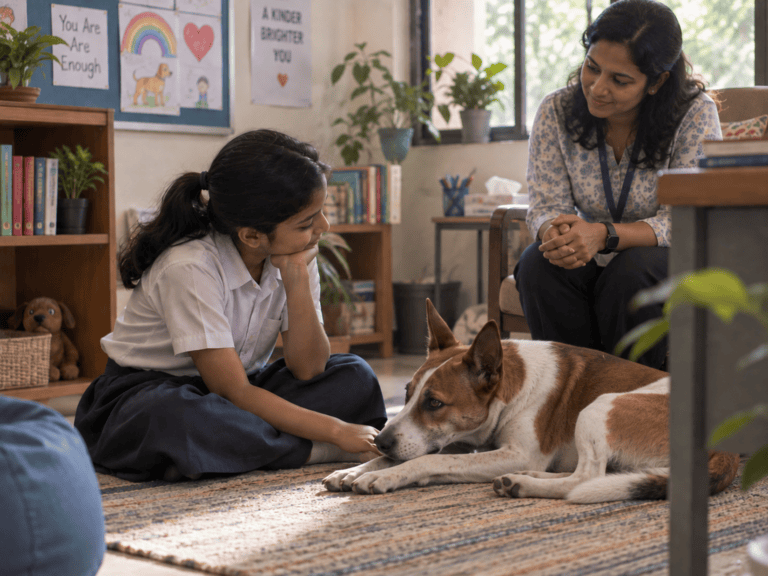
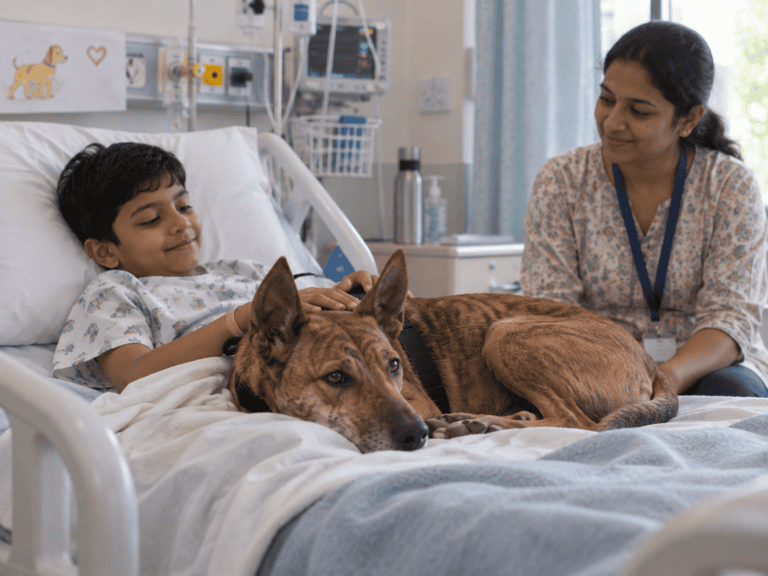
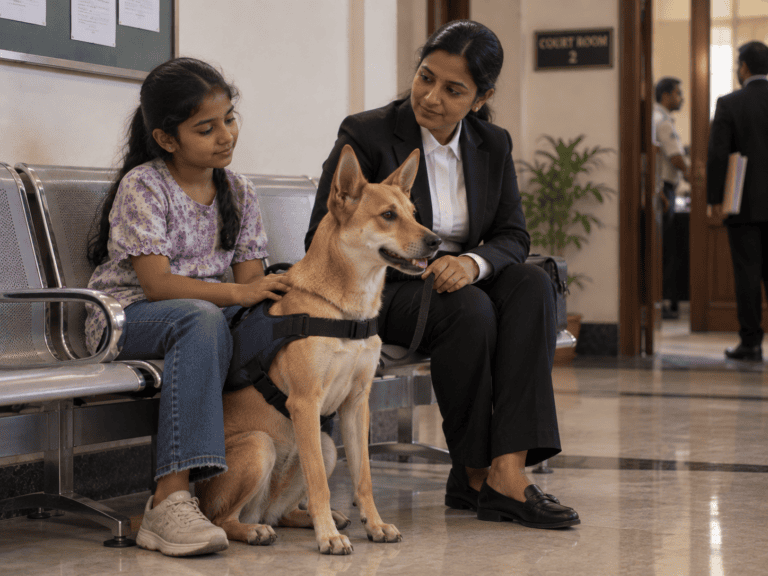
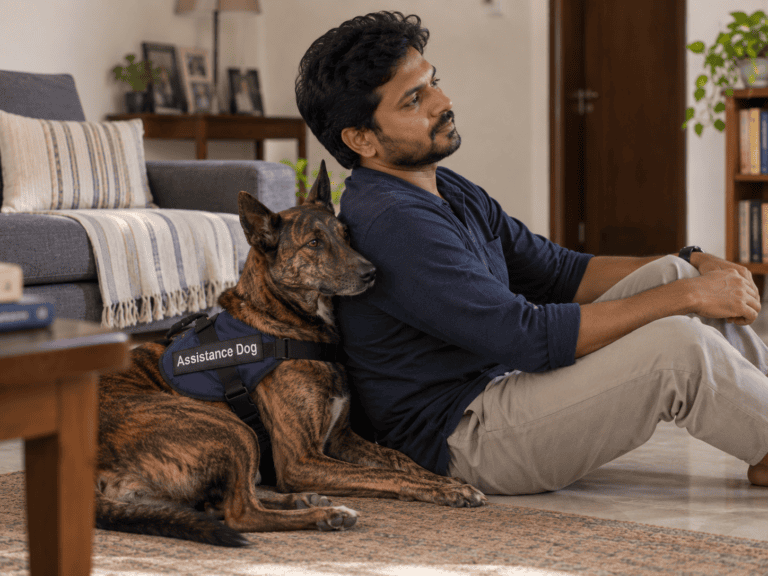
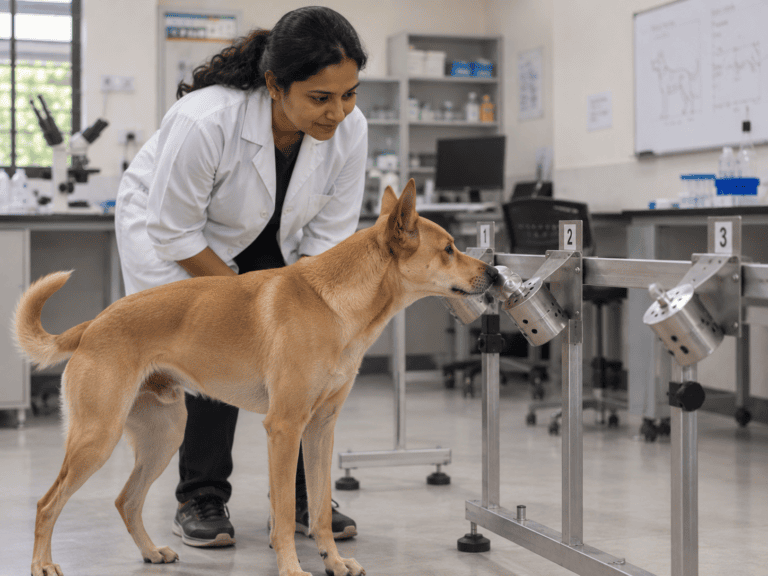
Because Indian village and free-ranging dogs have long lived alongside people in varied, often unpredictable environments, many show strong environmental awareness and independence. Individual temperament varies widely, however, and Many Indies are independent and environmentally aware, while their sociability and confidence around unfamiliar people can vary considerably from dog to dog. With early socialisation and careful selection, many Indies are highly trainable and capable of forming exceptionally strong bonds with the people they work with. Their intelligence tends to be practical. They notice things, and they problem solve, qualities that can be genuinely useful in an assistance or therapy dog, alongside the emotional stability, low reactivity and resilience that working roles also demand. Suitability for this kind of work has to be assessed dog by dog, not assumed from the breed alone.
Overlooked for a long time. That is slowly changing
- Charlie, a three legged Indie at Bengaluru's Charlie's Animal Rescue Centre, spent more than eight years working as a therapy dog for children with special needs, including children with autism.
- Asha, a rescued Kolkata street puppy, performed better than some pedigree peers in training and became the first mixed-breed dog to join the West Bengal Police's elite dog squad in 2019.
- Bengaluru Police have run an experimental programme training rescued Indies for K9 duty.
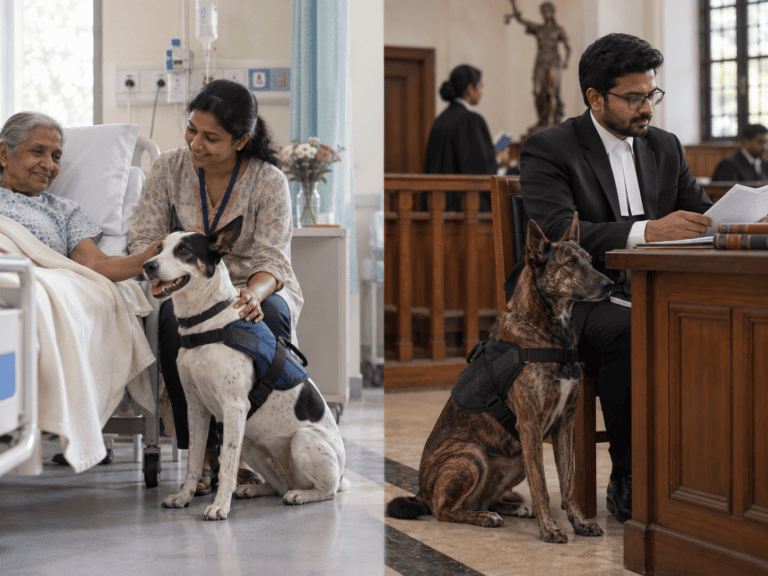
HeartDogs is part of this same shift, building a model that, to our knowledge, is the first in India to combine rescued Indies, home-based training and paid women foster-trainers for assistance and therapy dog work.
Bangalore Mirror, Charlie's Animal Rescue Centre · NDTV, Asha · NDTV, Bengaluru Police Canine Unit
Shaped in India, capable of adapting far beyond it
The Indie's adaptability does not stop at India's borders. Indies adopted abroad have consistently shown a real ability to settle into new environments, climates and cultures. Aloka, rescued near Kolkata, joined a group of Buddhist monks on their 112-day peace pilgrimage across India in 2022, then went on to complete a roughly 3,700 kilometre Walk for Peace across the United States, including a second leg of the walk in 2025 and 2026 during which he suffered a leg injury requiring surgery and later rejoined the pilgrimage for its final stretch, completing the journey in February 2026. He now has close to half a million followers on Instagram and an international fan base.
- Mickey and Bella, rescued from Amritsar, are thriving with a family in Calgary, snow and all.
- Close to 50 Indies brought to Canada and the US between 2018 and 2019 have all continued to thrive, according to the rescue organisation that placed them.
- Peedu's People placed 43 Indie dogs from Hyderabad abroad in 2019 alone, and 117 over four years.
Wikipedia, Walk for Peace USA · HuffPost, Aloka's Surgery and Recovery · The Caravan, Mickey and Bella · Yogi Street Dog Rescue Society · Times of India, Peedu's People
Why the Indie, and not an imported breed?
This is a fair question, and one we get often. Labradors and Golden Retrievers are widely used in assistance dog programmes in the West largely because carefully selected individuals tend to combine trainability, social confidence and an ability to work closely with people. But closed pedigree breeding can also increase the prevalence of particular inherited disorders, whereas genetically diverse landrace populations may avoid some of the risks associated with narrow gene pools. Purpose-bred dogs typically require real climate adaptation in India too, and rely on specialised breeding programmes, which adds cost and its own ethical complexity.
The Indie is already here. Already adapted. And millions live on India's streets today, most without a stable home or a clear future. Training carefully selected Indies is not a compromise made for lack of a better option. It is an approach we believe makes practical and ethical sense for India, provided each dog is rigorously assessed for suitability for the work, since being an Indie makes a dog a strong candidate for consideration, not a guarantee of fitness for the job.