Before vs after - and why that changes everything
An alert service dog signals to its handler that something is about to happen - before the event occurs. A seizure alert dog senses changes before a seizure begins. A diabetic alert dog detects falling or rising blood sugar before the person feels symptoms. A PTSD alert dog may signal rising physiological arousal before a full panic episode sets in. The key word is before. The dog is detecting something the person cannot yet detect themselves, and giving them time to act - take medication, get to safety, alert someone nearby, sit down.
A response service dog performs a trained action when an event or symptom is occurring, or after it has occurred. A seizure response dog stays close during a seizure, activates an alert device, or retrieves a phone. A PTSD response dog provides deep pressure or grounding after a flashback starts. A POTS response dog stays near its handler after a near-faint and alerts others. The dog is not detecting anything in advance - it is performing a trained, reliable action in response to something that has already happened or is currently happening.
Alert work is about detection before the event. Response work is about action during or after it. A dog can do both - but the training, the evidence, and the reliability are very different for each.
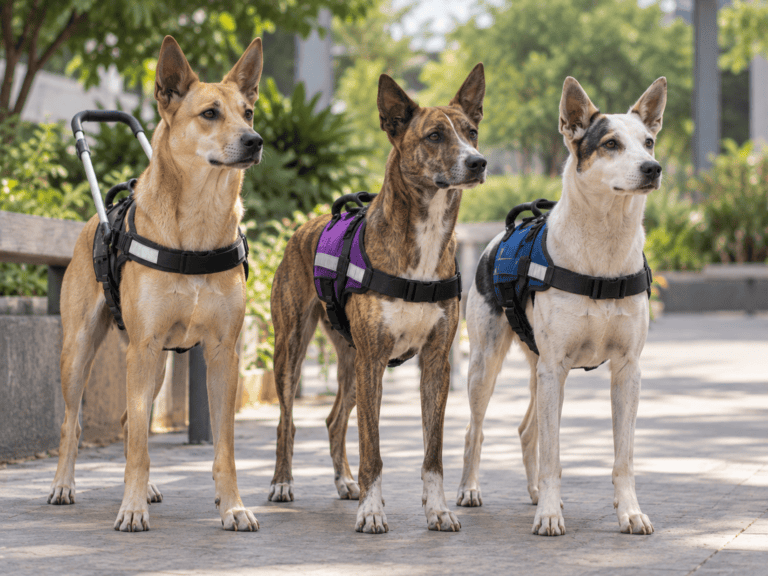
One clarification worth stating upfront: "alert dog" and "response dog" describe types of trained tasks rather than two formally recognised classes of service dog. The same dog may perform both alert and response tasks. The distinction is about what the task involves, not a fixed category the dog is placed into.
The training challenge is not the same for both
Response tasks are trainable in the conventional sense. You can teach a dog to stay close during a defined event, to retrieve a specific item, to activate a device, to seek another person - and you can verify that it has learned those tasks reliably before a placement is made. If the dog performs the task consistently in training scenarios, you have reasonable grounds to expect it to perform in a real situation. Not guaranteed, but testable.
Alert tasks are a different matter. For a dog to alert before an event, it needs to detect a physiological or behavioural change that precedes that event - and that change needs to be detectable by the dog, consistent enough to train around, and distinct enough from normal variation that the dog can distinguish it reliably. For some conditions, that is plausible and supported by emerging evidence. For others, it remains genuinely uncertain.
In some assistance-dog programmes, alert behaviour is reported to emerge spontaneously and is then shaped and reinforced by a trainer. Other programmes use more structured training approaches based on hypothesised cues. What remains uncertain in both cases is how reliably alert behaviour can be deliberately created in a dog that has never demonstrated it. Creating reliable alert behaviour from scratch is a different claim from strengthening something already present - and one that responsible programmes are cautious about making.
The conditions where pre-event detection has the most support
Diabetic alert dogs have a plausible biological basis for alerting. Research suggests that dogs can detect odour changes associated with hypoglycaemia, including volatile organic compounds (VOCs - chemicals released in breath, sweat or other body fluids). However, this does not mean that every diabetic alert dog can reliably detect blood glucose changes in everyday life. Real-world studies have found substantial variation in performance, with some dogs performing better than others and many showing limited accuracy. The evidence supports the possibility of scent-based detection, but not a blanket assumption that diabetic alert dogs are reliably accurate. A diabetic alert dog should be treated as a possible additional layer of support - not as a replacement for glucose monitoring, insulin, or a clinician-approved diabetes plan. We covered the evidence in detail in our piece on diabetic alert dogs.
Seizure alert dogs have a substantial body of owner-reported and survey-based evidence. Handler reports describe alerts ranging from seconds to hours before a seizure, but these timings vary widely and have not been validated in controlled real-world studies. The mechanism is not fully established - proposed explanations include scent detection, behavioural cues the person shows before a seizure, or physiological changes the dog picks up. The 2018 Catala et al. scoping review found only five studies with quantitative data out of 28 found, and concluded the empirical evidence was still insufficient for firm conclusions. Owner reports are fairly consistent, but controlled evidence remains limited. We covered this in our piece on seizure alert dogs.
PTSD anxiety-interrupt tasks are reported by handlers and included in service dog task definitions. The 2020 Purdue study found that tasks involving calming or interrupting anxiety were among the most used and most valued by veterans with service dogs. However, whether this constitutes true pre-event detection of an internal physiological state is not clearly established - it is better understood as a trained response to observable cues such as changes in the person's posture, movement or breathing, rather than proven physiological prediction. These are real and documented tasks; the evidence for them is primarily handler-reported rather than from controlled studies of physiological alert accuracy.
Diabetic Alert Dogs, HeartDogs FootNotes | Seizure Alert Dogs, HeartDogs FootNotes
The conditions where pre-event detection has little or no research support
Functional seizures (non-epileptic attacks, FND) are a clear example. Functional seizures do not involve the same abnormal electrical brain activity as epileptic seizures. Whether a dog could detect pre-event physiological or behavioural changes that precede a functional seizure is not established - the pre-event physiology may differ substantially from epileptic seizures, and we could not identify published research demonstrating that dogs can reliably alert to functional seizures specifically. Specific assistance tasks for FND - trained around observable events or the person's individual needs - are a different and more defensible proposition, since they can be trained without requiring the dog to predict an episode. A dog trained to respond during or after a functional seizure is a response dog, not an alert dog. We covered this in our piece on FND.
PMDD - premenstrual dysphoric disorder - is sometimes described with handlers reporting that their dog seems to detect the onset of the luteal phase before the person notices symptoms. This remains entirely anecdotal. There is no published research demonstrating that dogs can reliably detect hormonal cycle changes of this kind. A dog performing grounding or deep pressure tasks during a PMDD episode is a response task, not an alert task, and should be described as such.
POTS episodes - the dizziness and near-fainting associated with postural orthostatic tachycardia syndrome - have also been reported as a target of medical alert dogs. A 2021 survey of 61 medical alert dog owners recorded 11 participants who reported alerts associated with POTS. However, the study did not independently verify those alerts, establish their accuracy, or identify a biological mechanism. The evidence is preliminary. Some specific assistance tasks for POTS - such as helping a handler reach a safe position on cue, staying close during dizziness, or alerting another person - may be trainable, but their real-world usefulness depends on the individual dog, handler, and task. Pre-event alerting for POTS specifically is not yet established.
Specific, trainable, verifiable - across a wide range of conditions
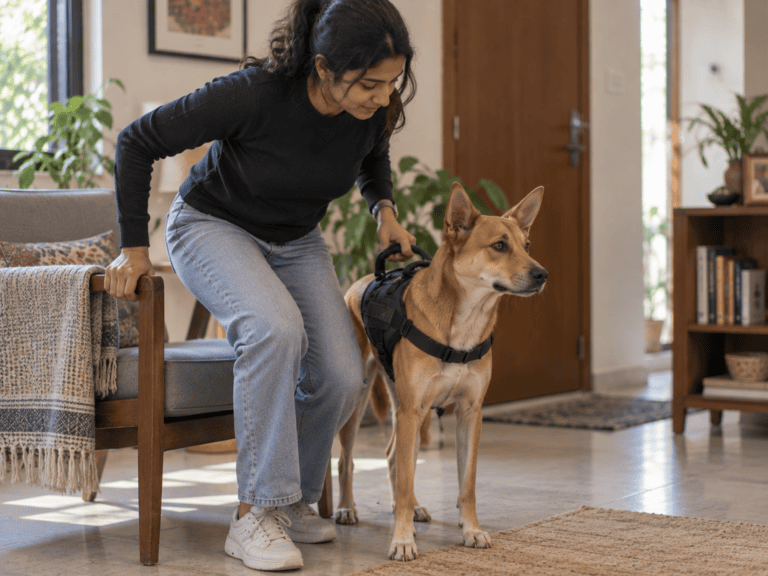
Response tasks are generally more trainable and testable than alert tasks. They can be built deliberately, assessed before placement, and practised in realistic scenarios. They cover a wide range of disability-related needs. Some common examples across conditions:
- Activating an accessible alert device connected to a caregiver or monitoring system - where the technology and backup plan have been tested in the home. Or retrieving a phone from a known location when the handler cannot safely reach it themselves.
- Seeking another person in the home - going to a family member or carer when the handler is in distress or has gone down.
- Staying close and remaining calm during an episode - providing a physical and sensory anchor while a seizure, flashback, or dissociative episode resolves.
- Deep pressure on cue - applying body weight during a panic episode, meltdown, or acute distress, where a clear cue is given by the handler or carer.
- Grounding through tactile contact - nudging, pawing, or leaning to bring a handler back to the present during dissociation or a flashback.
- Interrupting a known self-injurious behaviour - making physical contact when a handler begins a behaviour that has been individually trained for. This must be designed with a clinician or behaviour specialist and must never replace an individual safety plan, especially where there is risk of serious injury.
- Retrieving a phone, emergency information, or a pre-identified item - from a known, labelled location. A dog cannot decide whether medication should be taken, administer it, or replace a clinician-approved medication or crisis plan.
- Guiding to a safer location on cue - leading a handler who has given a trained cue to a chair, exit, or pre-identified safe space.
None of these tasks requires the dog to predict a future physiological event. The dog is being trained to perform a specific behaviour in response to an observable cue, a handler instruction, or an ongoing situation. That is generally a more trainable and more testable kind of work, though real-world reliability still depends on the individual dog, task, environment, and ongoing maintenance training.
The questions that separate honest programmes from overclaiming ones
If you are considering a service dog for a specific condition, the alert-versus-response distinction is one of the most useful filters for evaluating what a programme is actually offering.
Ask: is the dog being trained to alert before events, or to respond during and after them? If a programme claims alert capability, ask what the proposed detection mechanism is, what training method is used to develop the alert behaviour, and how alert reliability is verified before placement - independently of the handler's own expectations. Owner-reported accuracy and objectively measured accuracy can differ substantially, as the diabetes literature in particular shows. A programme that cannot clearly answer those questions may be overclaiming or relying on anecdote rather than a demonstrated, monitored method.
For conditions where alert is not yet established - FND, PMDD, or other conditions where the pre-event physiology is poorly understood - a programme that offers alert capability is making a claim the evidence does not yet support. Response capability for those same conditions may be reasonable to train, depending on the individual dog, task, and handler's needs. The distinction is not a minor technical point. It affects what a handler can safely rely on the dog to do.
A response-trained dog can be assessed in controlled training before placement, though real-world performance still requires ongoing monitoring. Alert reliability is much harder to establish - and any programme that treats the two as equivalent is not being straight with you.
Why we train for response and approach alert honestly
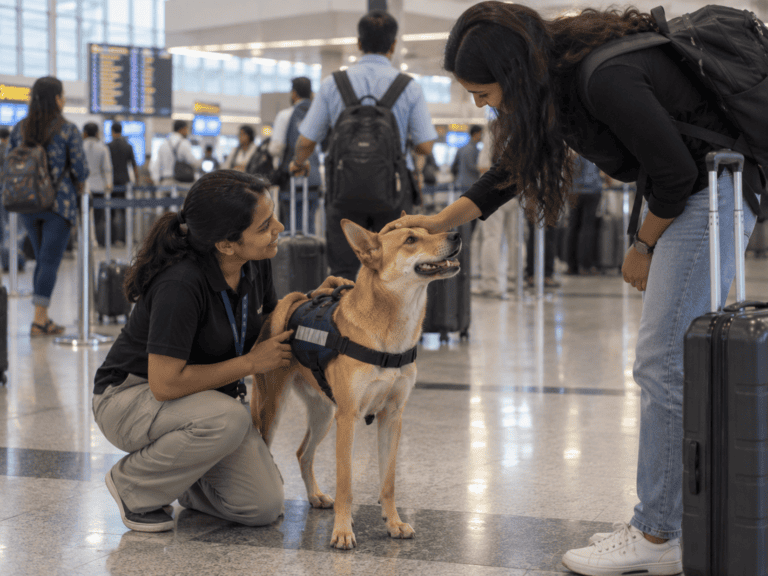
At HeartDogs, our training focuses on response tasks - specific, trainable, testable behaviours that a dog can perform during or after an event. These are the tasks we can assess and practise before a dog is matched with a handler, while continuing to monitor performance after placement.
We do not promise alert capability as a training outcome. If a dog placed with a handler begins showing consistent pre-event behaviour, that is worth noting and evaluating carefully. But it is not something we can promise or engineer as a standard training outcome, and we will not describe it as a feature of our programme until we have placed dogs and observed it in practice.
This is not a limitation. It is an honest account of where the evidence is. Response tasks address a huge range of real daily needs for people with disabilities in India - needs that are currently unmet by almost any organised programme here. That is the work we are building toward, and we would rather do it reliably than overpromise on capabilities that the science itself has not yet established.