Four different things people call "a dog visit"
The American Veterinary Medical Association, along with the International Association of Human-Animal Interaction Organizations, draws a clear line between categories that get blurred together in everyday conversation:
- A casual pet visit. Someone's own dog comes in and residents can say hello if they feel like it. Lovely and comforting, but informal, with no training, screening or goals attached to the visit itself.
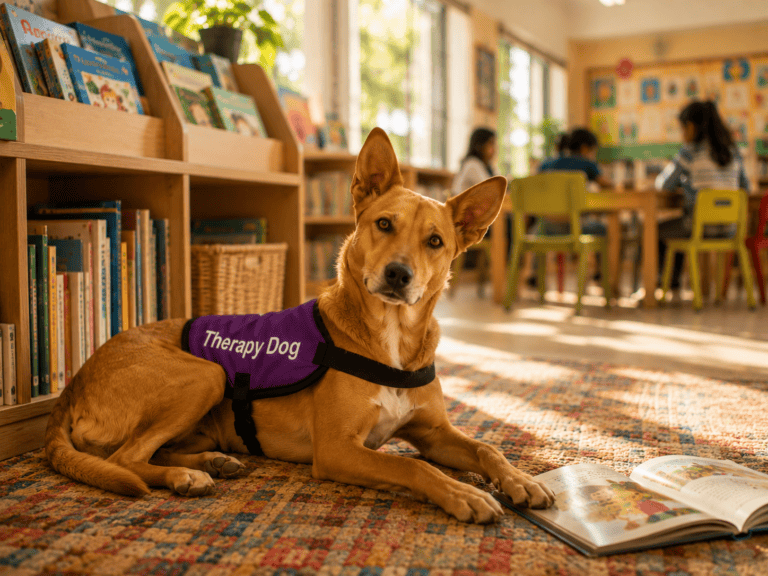
- An animal-assisted activity. A planned, but generally informal, visit intended to offer motivation, education, recreation or a general boost to quality of life. It is delivered by a dog-handler team that has received appropriate preparation and assessment for that kind of visit, but it usually does not involve an individualised clinical treatment plan or the formal outcome measurement expected in animal-assisted therapy, although programmes may still have broad goals and keep records of visits.
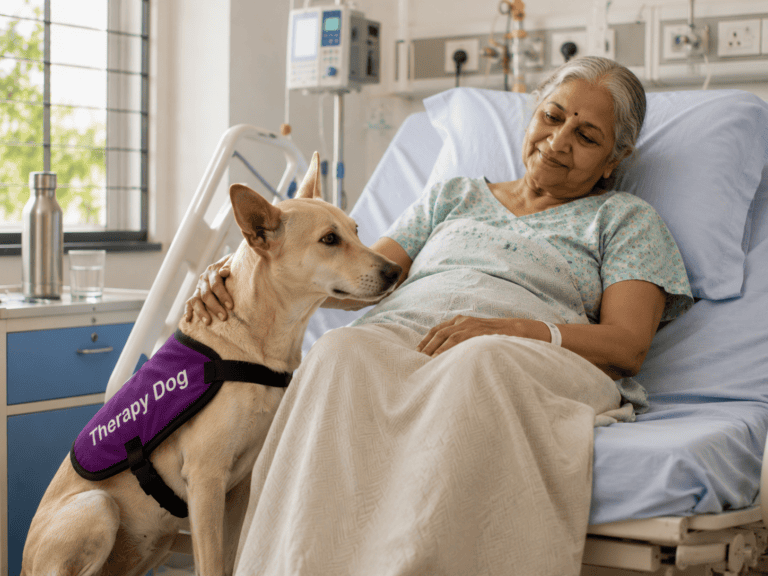
- Animal-assisted therapy. Narrower and more specific: a goal-directed intervention where the dog is a planned part of a person's treatment or therapeutic plan, delivered or directed by a qualified health or human service professional working toward that specific person's goal, with progress measured and documented over time.
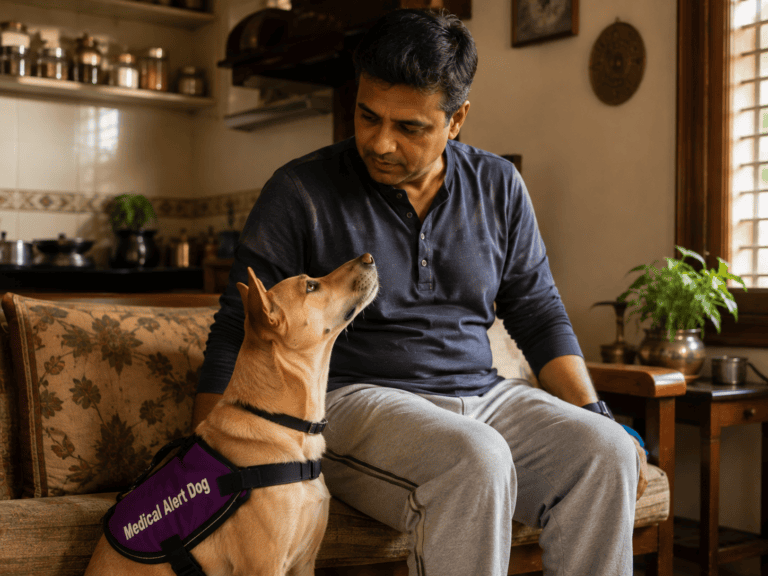
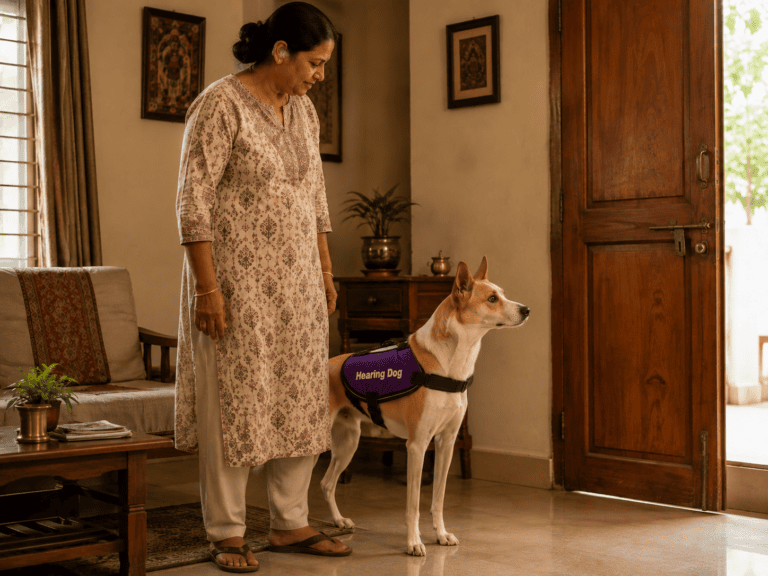
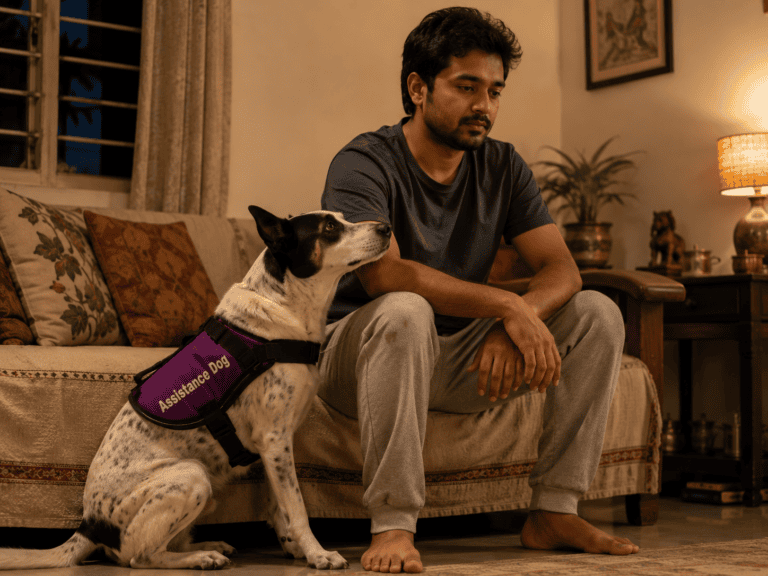
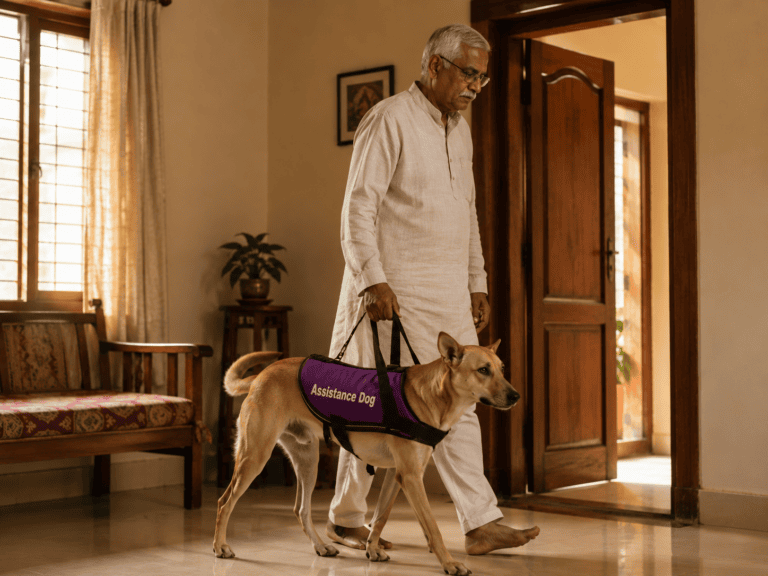
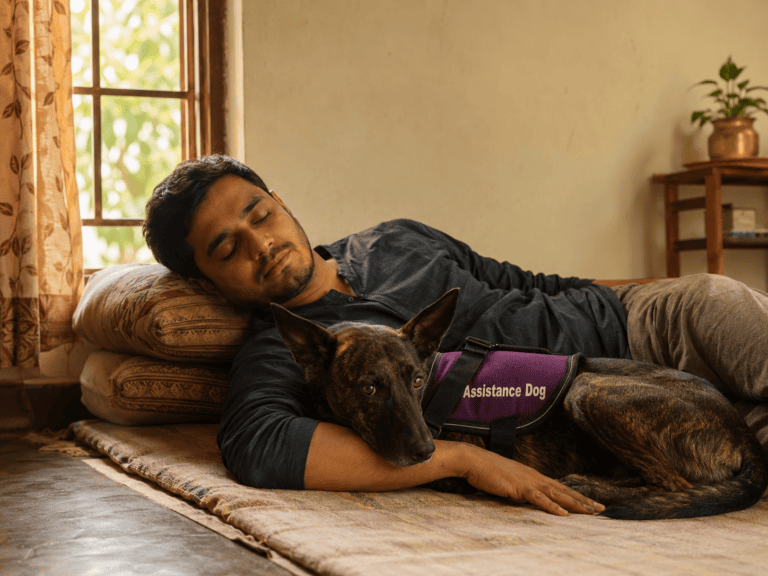
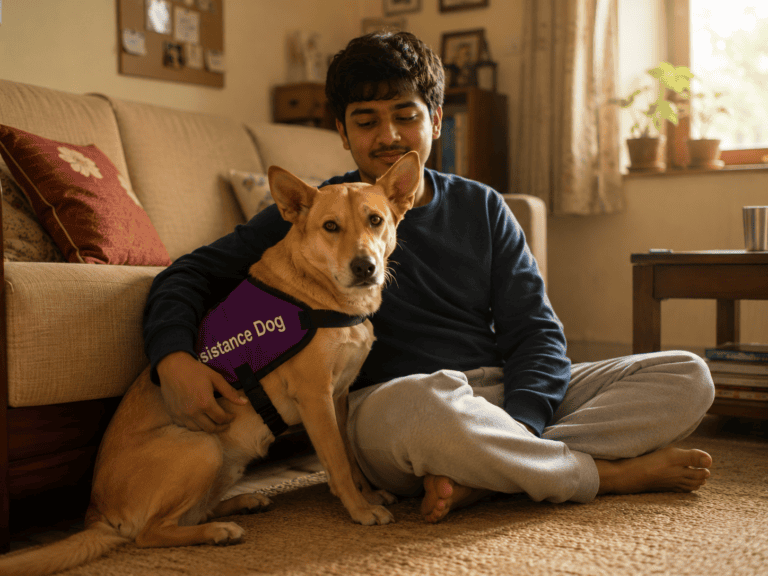
- An assistance dog. Trained to do individual tasks for a person with a disability, a separate category again, distinct from all three above.
None of this makes a casual pet visit a lesser thing. It can be a genuinely comforting experience for people. It is just not the same activity as a structured animal-assisted activity programme, let alone animal-assisted therapy, even when the dog involved is exactly as friendly and well behaved in every case.
IAHAIO Practical Guide · American Veterinary Medical Association
Friendliness is the easy part
A structured programme is not just a nicer version of a pet visit. It is built differently from the ground up. There is usually a defined purpose behind the programme, a dog and handler who have been specifically screened and trained for that setting, and clear protocols governing who interacts with the dog, how those interactions are managed, and when they should stop. In some programmes, a qualified professional goes a step further, incorporating the dog directly into an individual's treatment or rehabilitation plan. Consent matters throughout, and so does the ability to say no or stop partway through. The dog itself has been assessed for how it handles things that can be genuinely challenging in a care setting, such as wheelchairs, walking frames, sudden noises, unfamiliar handling and unpredictable movement in a crowded room. In professionally led therapy, the person's response and progress are monitored and documented. Across structured programmes more broadly, the dog's behaviour and welfare should also be watched closely for any sign it is finding the work stressful.
A useful way to think about it: a therapy dog does not create a therapeutic intervention simply by existing in the room. In animal-assisted therapy specifically, the intervention is created by the dog, the handler, the professional guiding the session, the person receiving it, and the specific goal they are working toward, all fitting together. If the professional goal, qualified professional direction, trained team, appropriate safeguards or documentation required by the intervention are missing, the interaction may remain valuable, but it may not meet the definition of animal-assisted therapy. It may instead be an animal-assisted activity, or simply an informal pet visit, depending on how it is organised.
What this actually looks like in practice
A pet visit might look like this: a volunteer's dog comes to a care home for half an hour. Residents who want to say hello can do so, the dog gets some fuss, everyone has a nice time, and the visit ends. Nothing wrong with that at all.
A professionally led therapy session looks different again. A physiotherapist plans a specific reaching and stretching exercise for a patient recovering from a stroke, as one example of animal-assisted therapy. The dog is positioned as a motivating target for the patient to reach toward, the therapist may select an appropriate measure for that session, such as repetitions, reach distance or balance, and records the patient's response, watching for fatigue and balance risk throughout, while the handler separately watches the dog for any sign it needs a break. The dog is not just present. It is one working part of a plan built around what that particular patient needs that day.
What a therapy dog is not
It is worth naming the boundaries plainly. A therapy dog does not diagnose or treat anything on its own. A handler should never step outside their own training to offer clinical advice. A therapy visit should never override what a person actually wants in the moment, including the right to simply not be interested that day. Not everyone likes dogs, and that is completely fine. A dog should never be pushed into an interaction it is uncomfortable with either. And a dog trained for general therapy work is not automatically suited to assistance dog work, or the other way around. These are related but genuinely different jobs, each requiring its own kind of training.
Why we are building this slowly, on purpose
This distinction is exactly why our programme takes as long as it does. Our goal was never to raise dogs that are simply friendly around people, which any well socialised dog can manage. It is to understand which of our dogs can work calmly and reliably in a specific environment, with a specific kind of person, under the direction of the right professional, and to be honest about which dogs and which settings are and are not a good match.
That is also why we do not describe every friendly, well-behaved dog in our care as a therapy dog. Some of our dogs are heading toward therapy work, some toward assistance work, and each path asks something different of them. Being clear about that distinction, rather than blurring it for a nicer story, is part of taking the work seriously.