What a therapy dog actually wears and carries
- Collar or harness, and lead. Therapy dog programmes typically keep the dog under close handler control throughout a visit, with many requiring a lead.
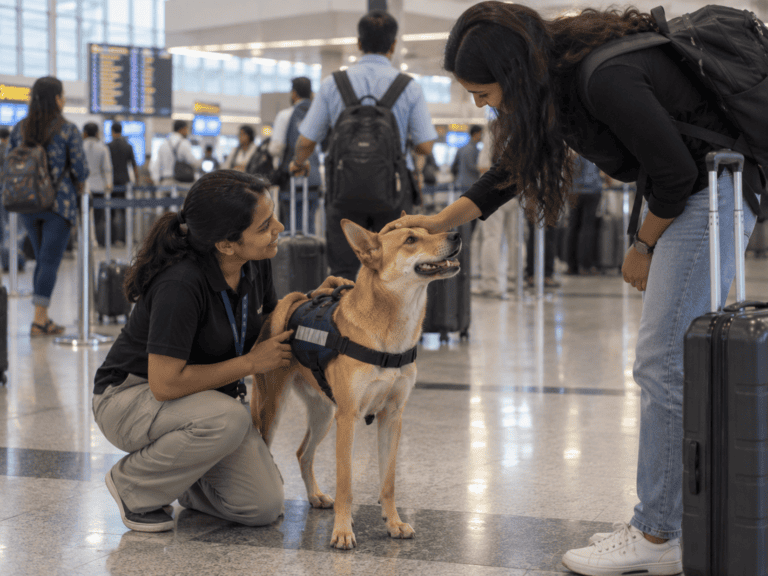
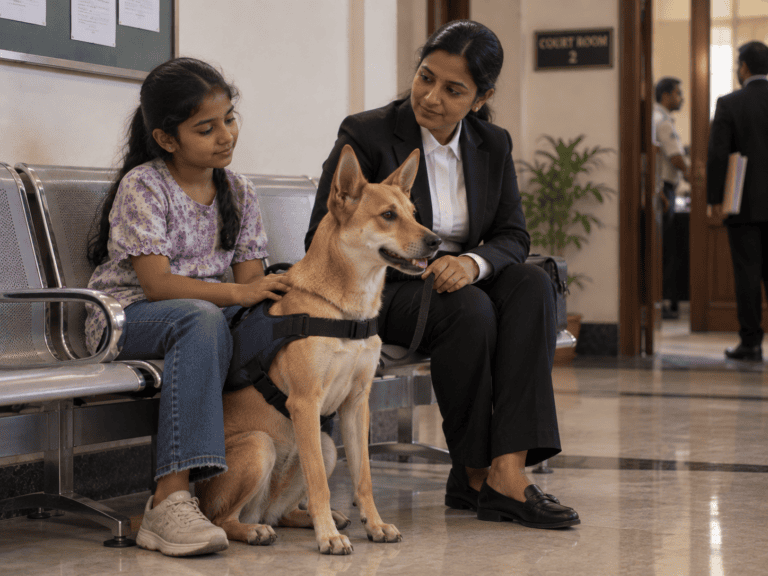
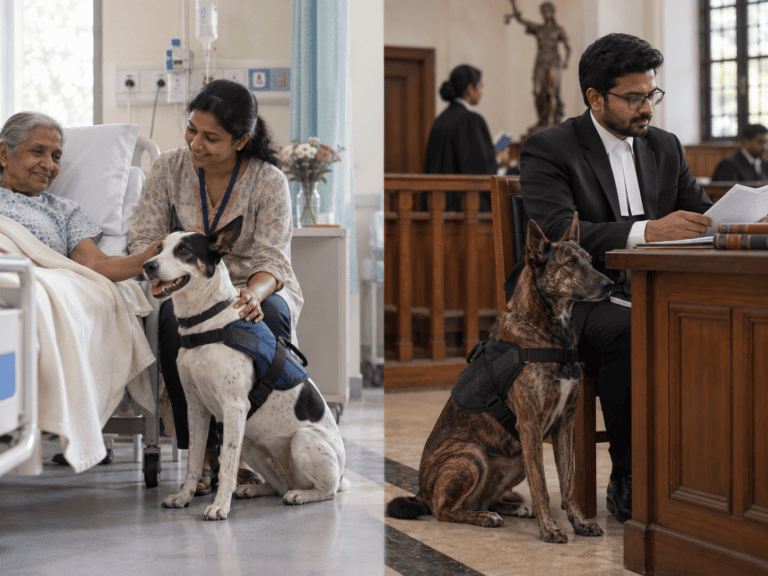
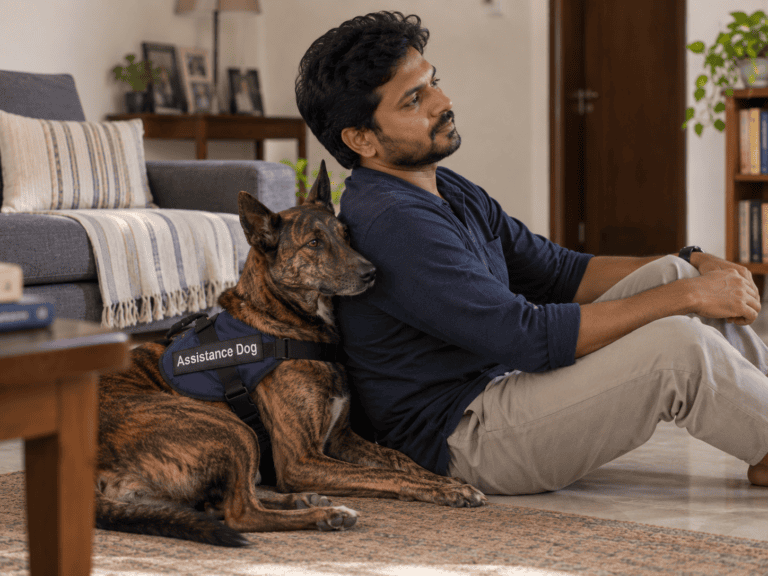
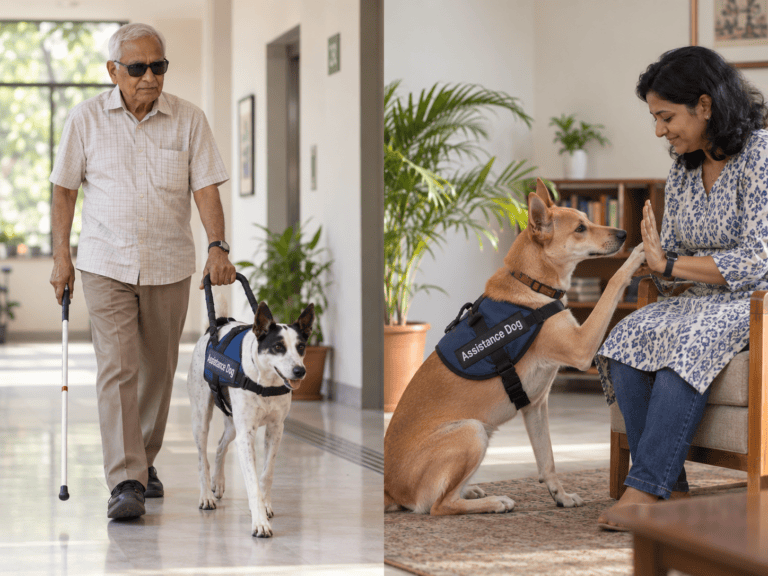
- A vest or bandana. Used for identification, so people in a busy hospital corridor or school hallway immediately recognise a working dog. Some organisations issue their own branded vest or tag; others simply require some form of visible identification, and not every facility requires one at all.
- A wash cloth or grooming wipe on hand. A small, practical detail some guidelines mention specifically, useful for a dog that drools or slobbers, so the handler can quickly wipe the dog's face before or during a visit rather than letting it go unaddressed.
- No costumes, and often no strong scents. Established organisations explicitly avoid costumes during visits, since they are hard to clean and disinfect properly, and established organisations may also restrict strong perfumes, colognes or scented oils around therapy visits.
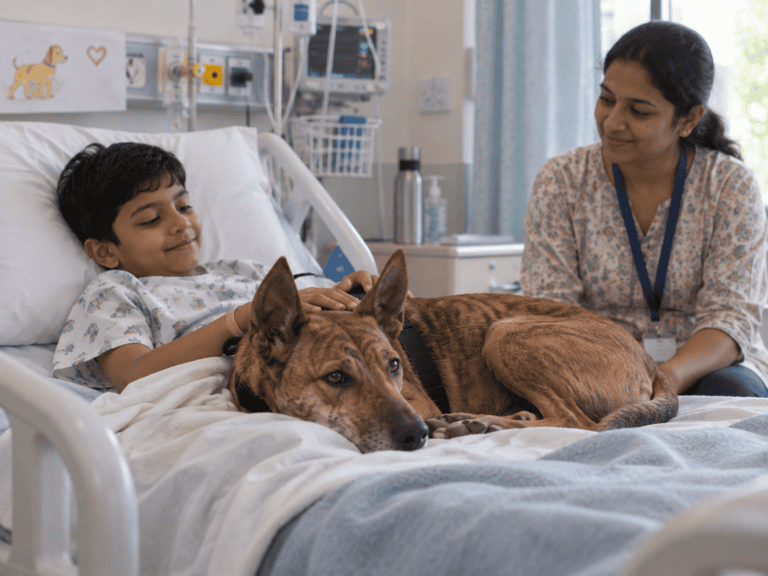
Notice how much of this list is about hygiene and identification rather than task-specific equipment. That is a real, deliberate difference from assistance dog equipment, and it reflects what a therapy dog's actual job usually asks of it: being clean, calm and recognisable in a shared public or clinical space, rather than performing a specific physical task for one individual.
Pet Partners, Therapy Animal Program Policies and Procedures · Bright and Beautiful Therapy Dogs, Visit Guidelines
The part that genuinely matters more here than for a pet
Anything that touches both the dog and the people it visits, collars, leashes, harnesses, bandanas, vests, blankets, even toys and brushes, is a potential route for germs to move between patients, which is why established programmes require that such equipment be cleaned or disinfected between visits rather than leaving it to individual preference. Studies have found that microorganisms can be transferred between people and therapy dogs during visits, with greater contact associated with greater microbial sharing. This is one reason established programmes place such emphasis on hand hygiene and equipment cleaning. Equipment should be cleaned or disinfected between visits, not just when it looks obviously dirty, and HeartDogs will follow whichever requirement is more conservative where our own policy and a facility's policy differ.
Hand hygiene for the people around the dog matters just as much as anything the dog wears. This is why therapy dog programmes build hand sanitising before and after contact into the visit itself, not as an afterthought, and why a therapy dog visit in a hospital setting, done properly, looks quite different from a casual pat on the street.
Pet Partners, Infection Control During Therapy Animal Visits · Microbial Sharing Study, Pediatric Patients and Therapy Dogs
The same force-free approach, applied to a different environment
The training principles here are the same ones we described for assistance dogs: reward-based, force-free methods, using clickers or a marker word, high value treats for harder moments, and a handler who reads the dog's body language and can redirect gently, without force or coercion, rather than correcting through discomfort. Established therapy dog organisations explicitly expect handlers to interact with their dog positively, anticipate the dog's response in different situations, and advocate for the dog's safety and wellbeing throughout a visit, including ending it early if needed.
That last point matters more for therapy work than people often assume. A therapy dog may encounter unpredictable movement, sudden noises, unfamiliar equipment and a lot of well meaning but occasionally overwhelming attention. A handler's job is not just to hold the lead. It is to watch for early signs the dog needs a break, to actually take that break rather than pushing through because the visit is scheduled or the person being visited seems to want more time, and to follow the facility's own rules on isolation, infection control and patient safety throughout.
Why we treat this as seriously as we do
For the dogs in our Cohort 1 heading toward therapy work, our approach to equipment follows the same logic described above: simple, clean, easy to disinfect, and never more elaborate than the job actually requires. A cape or bandana for identification, a well-fitted harness or collar for control, and equipment that gets cleaned properly and often, rather than treated as a costume.
The training side matters just as much to us. Our Heroes are taught to read a dog's body language closely and to end an interaction the moment a dog shows signs of stress, not after. In the hospital, school or care home environments we are preparing them for, that instinct, more than any single piece of gear, is what will actually keep a visit safe and genuinely comfortable for everyone in the room, including the dog.