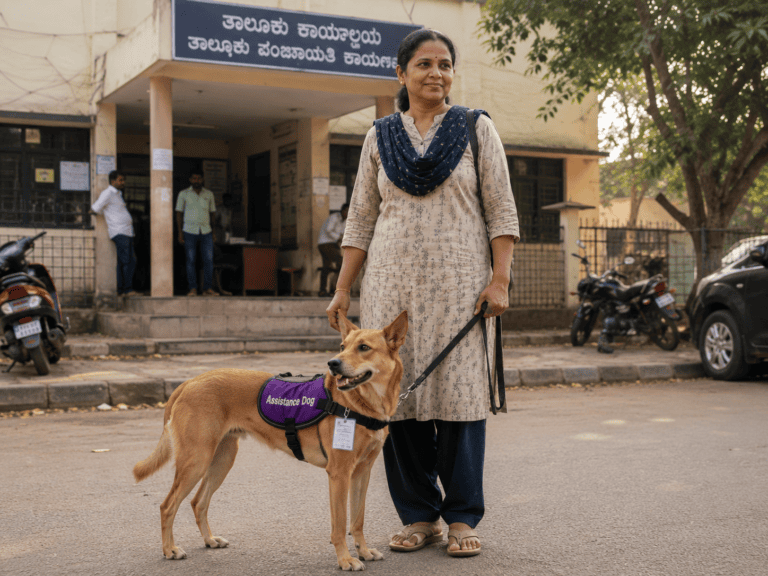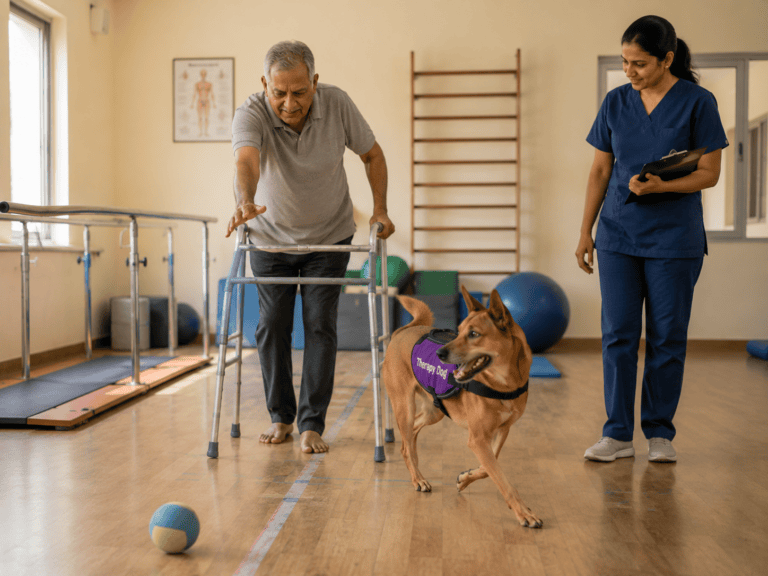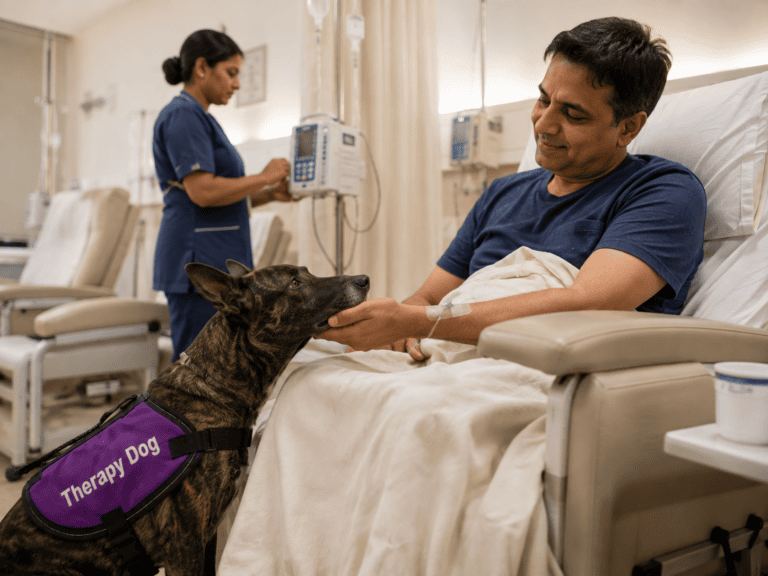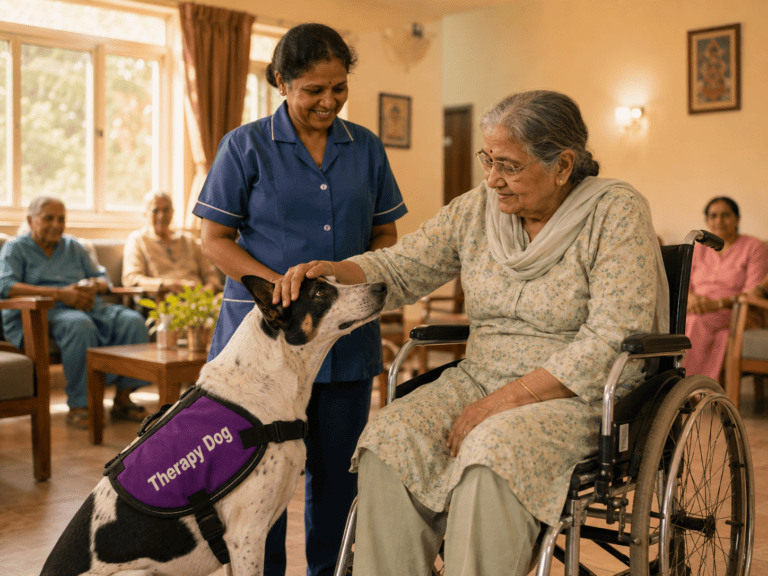
The RPWD Act protects against discrimination, but does not mention dogs
The Rights of Persons with Disabilities Act, 2016, India's principal disability rights law, prohibits discrimination in specified areas, requires reasonable accommodation in relevant contexts, and places duties on government and establishments covered by the Act. It defines discrimination to explicitly include denial of reasonable accommodation, which is the closest textual hook available for an argument about assistance dog access, even though the Act does not spell that argument out itself. Disability should not be the sole reason someone is denied an opportunity available to others. The Act also sets up enforcement machinery, including State and Chief Commissioners for Persons with Disabilities who can hear complaints and hold powers similar to a civil court, such as summoning witnesses and requiring documents, along with penalties for certain violations.
The Act does not contain a dedicated provision addressing assistance dog access. It was written around accessibility broadly, ramps, accessible formats, non-discrimination in employment and education, rather than around the specific, practical question of whether a business must allow a working dog inside. That leaves a real, honest gap: a blanket refusal to admit an assistance dog handler could arguably be challenged as disability discrimination under the Act's general provisions, but this is an interpretation, not something the law states directly, and we have not identified a clearly reported Indian court or Commissioner decision that definitively settles whether a private business must admit an assistance dog under these general provisions.
No guaranteed right, but not necessarily no recourse either
In practice, this means an assistance dog handler in India may not have the kind of clear, specific legal footing available in countries with dedicated service dog access laws, where a business can face direct legal consequences for refusing entry. At the same time, a business that turns away a person with a disability specifically because of their assistance dog is doing something that sits uneasily against the RPWD Act's broader non-discrimination principle, even without a dog-specific provision to point to. Whether a formal complaint through the Commissioner system would succeed in a particular case is genuinely uncertain, and would likely depend on the specifics of the refusal and how the accommodation question was argued.
In practical terms, the absence of a clear, dedicated access rule may leave businesses with more room to dispute or delay an access request than they would have under a specific service dog access law. It also means a business that refuses entry is not necessarily protected either, since the broader discrimination framework still exists and could, in principle, be invoked.
What handlers can reasonably do today
- Call ahead where possible. Without a settled legal right to point to, a calm conversation before you arrive tends to prevent conflict better than resolving it at the door.
- Carry documentation. Even without a national certification system, as we covered in an earlier piece on assistance dog certification in India, carrying evidence of the dog's training, vaccination and health records may help explain the dog's role and address reasonable concerns during an access discussion. It is a practical aid, not a legal requirement.
- Know that hygiene concerns are often addressable, not automatically disqualifying. A clean, well-trained and appropriately controlled assistance dog, together with sensible hygiene and handling practices, may help address many concerns businesses raise. That said, individual facilities may still have legitimate safety or infection-control requirements that genuinely need to be discussed rather than assumed away.
- Document a refusal if it happens. Where possible, record the date, location, people involved, the exact reason given, and whether any alternative accommodation was offered. Given how much of this rests on interpretation rather than a specific written rule, a clear, contemporaneous record matters more here than it might elsewhere.
Why we think this gap deserves attention
This is exactly the kind of gap we think India needs to close, not because assistance dog handlers are asking for anything unusual, but because the uncertainty itself creates real friction in daily life. A clear, explicit legal right of access, supported by consistent rules across transport and public-facing businesses, would remove the need for every interaction to depend on how well informed and how patient a particular business happens to be that day.
Until that clarity exists, we think the honest thing to do is tell people plainly where they stand: broader disability rights principles may provide an argument for accommodation, but India does not yet appear to have a specific, consistently enforced public-access framework for assistance dog teams across ordinary private businesses. That is not the answer anyone wants to hear, but it is more accurate than offering a simple, reassuring answer that does not reflect the uncertainty people may actually encounter in practice.