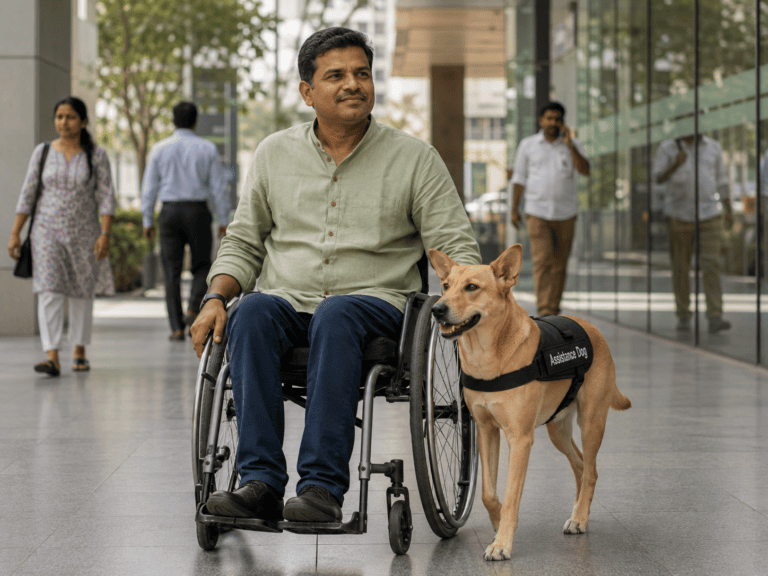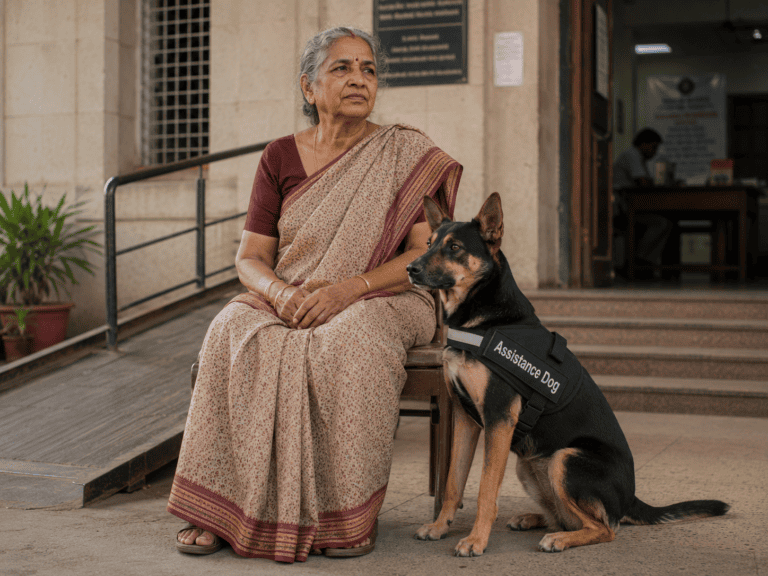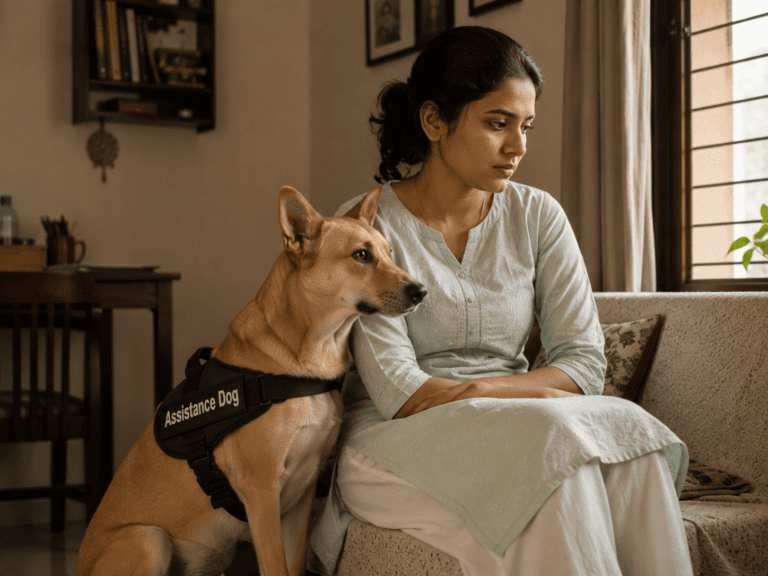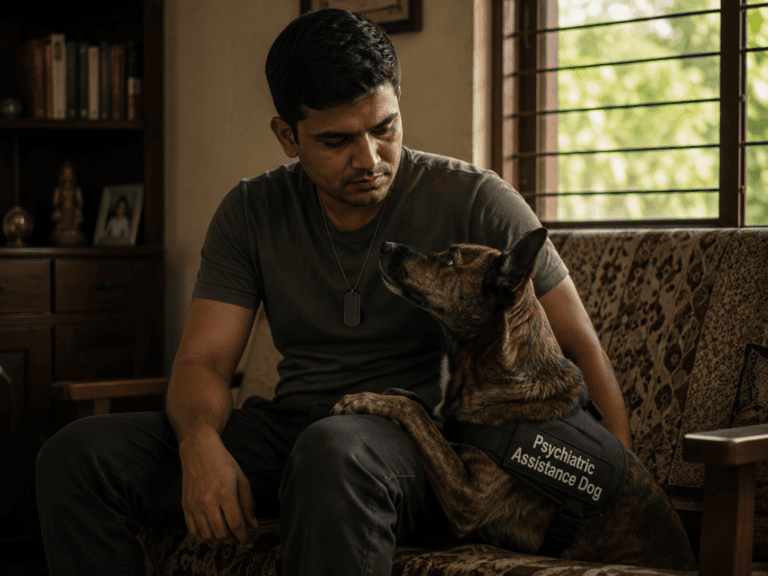
Four common types of working equipment, and what they are actually for
- Capes. A lightweight covering worn over the dog's body, generally used for identification or to indicate that the dog is working. Because they are lightweight and relatively unobtrusive, capes can be useful where the primary need is identification rather than physical support.
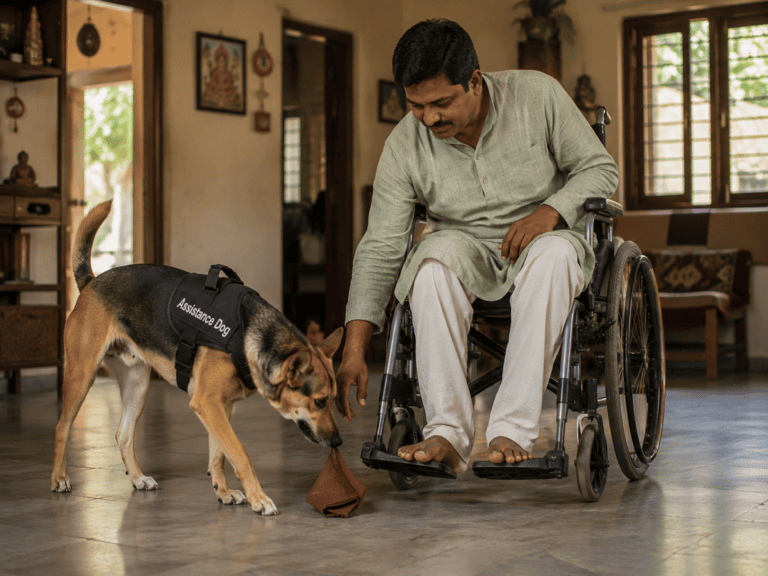
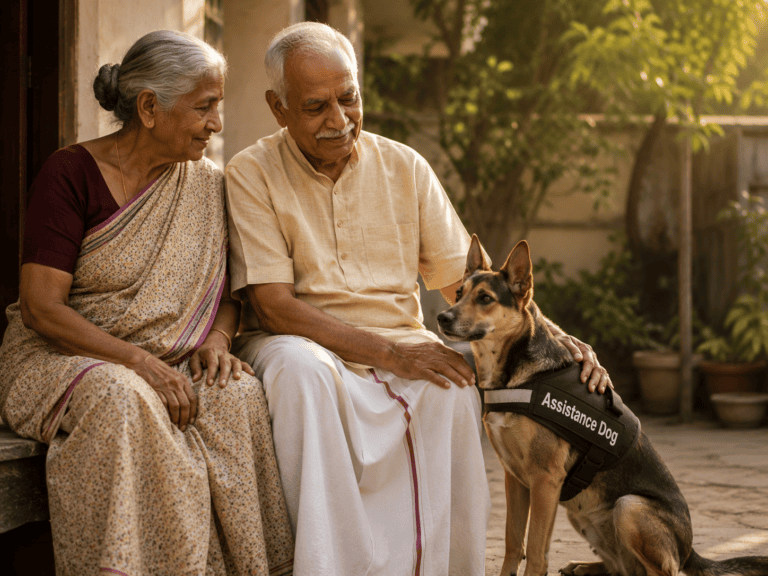
- Vests. More form fitting than a cape, usually with room for identification patches and sometimes small pouches. A vest signals that a dog is working and gives the public a visual cue, but on its own it offers no physical support to the handler, and it is worth remembering that a vest is an identification cue, not proof of training or certification.
- Guide and working harnesses. A structured harness that wraps the chest and shoulders, giving a secure point of contact for a lead. A structured harness can distribute forces differently from a collar, depending on its specific design and fit, and guide dog harnesses in particular are specialised working equipment built for that specific job.
- Mobility and bracing harnesses. A more specialised harness, often with a rigid handle or other attachment, used for particular mobility tasks such as counterbalance or bracing. These tasks require careful assessment of the dog's size, physical condition and training, and the forces genuinely involved, since not every mobility task asks the same thing of a dog's body.
Getting the category right matters more than getting the brand right. A cape on a dog doing bracing work would be unsuitable and could interfere with the task. A rigid mobility harness on a dog that only needs to alert or accompany someone is unnecessary weight and restriction the dog does not need to carry, and may limit its natural movement without good reason.
Lafuente et al., Veterinary Record, 2019 · IAADP, Tasks Performed by Guide, Hearing and Service Dogs
Mobility harnesses are not something to improvise
Bracing and mobility harnesses deserve special caution. A harness that restricts natural movement, concentrates pressure inappropriately, or is poorly fitted can create discomfort and alter the dog's movement, and with equipment used for demanding mobility work, those risks deserve particular attention. For demanding mobility work, equipment should be selected and fitted with appropriate professional input, and the dog's size, physical condition and training all need to genuinely match the forces the task involves.
This is precisely why HeartDogs does not use our Indies for weight bearing bracing tasks. Getting a rigid mobility harness right takes specialised expertise and a dog whose size, structure, physical health and training are appropriate for the demands involved, and we would rather be clear about that limit than stretch our dogs into a role that risks their long term wellbeing.
What we use, and what we will not touch
Equipment used during training is a separate matter from working gear, and it is where we feel most strongly. HeartDogs trains using reward-based, force-free methods, which in practice means clickers or a consistent marker word to mark the exact moment a dog gets something right, high value treats for harder or high stakes moments, and long lines for safely building reliability at a distance before removing the leash altogether.
We do not use, and will not use, choke collars, prong or pinch collars, shock or electronic collars, or any tool designed to startle, pinch or cause pain as a training method. This is not just our own house rule. Assistance Dogs International's current standards specifically prohibit programmes, staff, volunteers and clients from using shock collars, prong collars, or collars made fully of chain, on any dog, for any reason. The American Veterinary Society of Animal Behavior recommends reward-based methods for all dog training and specifically advises against aversive methods such as electronic collars, prong collars and choke chains, citing evidence linking aversive training methods to increased stress-related behaviour, elevated cortisol, and a higher likelihood of fear, anxiety or aggression. For an assistance or therapy dog specifically, the case is even stronger: a dog that has learned to associate its handler or its work with pain or fear is a poor foundation for the kind of calm, trusting partnership this work actually requires.
PADS, ADI Accredited Positive Reinforcement Policy · AVSAB, Humane Dog Training Position Statement
What this looks like day to day for us
In practice, our own kit is simple and deliberately unglamorous. Our high value training treat, reserved for genuinely difficult or high stakes moments, is a clean, single ingredient treat our Heroes use sparingly and specifically. Everyday training uses simpler, plain treats. Equipment is matched to each dog's actual current role, a cape or appropriately fitted working harness for most of our Cohort 1 dogs, with nothing more specialised introduced unless a dog's training path genuinely calls for it.
None of this is about buying the most impressive looking gear. It is about matching the right, comfortable, correctly fitted equipment to the actual job a dog is doing, and using training methods that build trust rather than compliance through discomfort. That combination is part of what helps a working partnership between a dog and the person it supports remain comfortable and reliable over time, rather than only working in a demonstration.