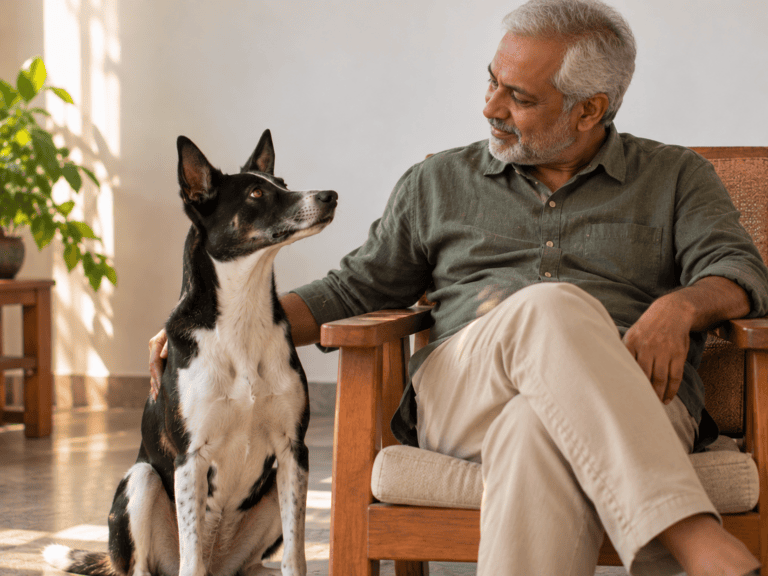
So what exactly is animal-assisted intervention?
Animal-assisted intervention, often shortened to AAI, is a broad term for any structured programme that uses an animal to support a person's physical, emotional, social or educational goals. It covers a wide range of formats, not just dogs working one-on-one with a handler.
AAI usually falls into a few broad categories:
- Animal-assisted therapy: goal-directed sessions run by a qualified professional, such as a therapist using a dog during a counselling session
- Animal-assisted activities: informal, comfort-focused visits, such as a dog visiting a hospital ward with no specific clinical goal attached
- Animal-assisted education: using an animal to support learning, such as a dog helping someone build confidence while reading
- Assistance work: a trained dog performing specific tasks for one person with a disability, as part of daily life
Both assistance dogs and therapy dogs sit inside this larger category. The difference lies in how structured the work is, and who it's designed for.
Why this term barely exists in India
A few reasons.
- The underlying roles barely exist, so the umbrella term has nothing to describe. Without active assistance dog or therapy dog programmes, there's little reason for the term to surface in everyday conversation.
- It's mostly confined to clinical and academic literature. Indian psychology and rehabilitation courses occasionally reference AAI, but it rarely reaches clinicians, schools or hospitals in a practical, applied form.
- There's no professional body coordinating this work in India. Countries with active AAI programmes typically have associations that train, certify and place animals across these categories. India has no equivalent structure yet.
- Animals are still seen mainly as pets or strays, not as trained support. The idea of an animal having a defined, trained role in healthcare or education is still new for most Indian institutions.
Why getting the terminology right matters
Knowing this umbrella term matters because it helps separate two things that often get confused: a friendly pet that happens to comfort people, and a structured intervention designed around specific outcomes. Hospitals, schools and therapy centres in India are far more likely to take this work seriously once they understand it as a recognised field with categories, goals and methods, rather than an informal, one-off idea.
It also opens the door to thinking beyond dogs. While HeartDogs focuses on dogs, AAI as a field includes horses, cats and other animals in various therapeutic contexts globally. Understanding the umbrella term helps position India's own programmes within a recognised, global field.
What we are doing about it
HeartDogs works within the assistance and therapy categories of animal-assisted intervention, training Indies - India's native landrace dogs - for both roles. The dogs are trained in real homes in rural Karnataka by women working as paid foster-trainers, building the skills needed for structured, reliable support work.
Our aim is to build a credible, India-specific model within this larger field - one that institutions, families and funders can recognise and trust.