Fear of the dentist is common - and its consequences go beyond missed appointments
Dental anxiety exists on a spectrum. At one end, many people feel some nervousness before an appointment - an anticipatory tension that mostly resolves once the visit is underway. At the other end, a smaller group experience dental phobia: intense, persistent fear that leads to complete avoidance regardless of pain or deteriorating oral health.
The most commonly cited triggers include fear of pain, loss of control, needles, the sounds of dental equipment, and the proximity of a stranger working inside the mouth - an intimate physical space where most people have no experience of being handled by someone they do not know well. Previous negative experiences, particularly in childhood, are a significant factor for many people.
Children are a particularly relevant group. Establishing positive early experiences of dental care matters for lifelong oral health habits. A frightening dental experience in childhood can contribute to dental anxiety and avoidance later in life, although outcomes vary from person to person. Paediatric dentistry has developed a range of techniques specifically aimed at reducing anxiety in young patients, and therapy dog programmes have been explored in that context alongside established approaches such as tell-show-do, distraction, and sedation.
For adults with moderate to severe dental anxiety, the options typically include conscious sedation, cognitive behavioural approaches, and various distraction and communication techniques. A therapy dog in the treatment environment is one additional tool in that toolkit - not a replacement for other approaches, but potentially a complement to them for patients who want it.
Dental therapy dog programmes vary considerably - from the waiting room to the chair
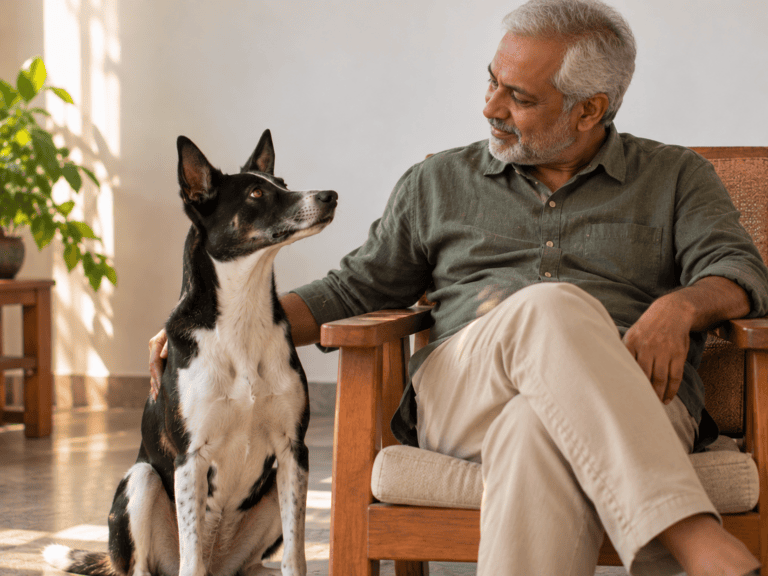
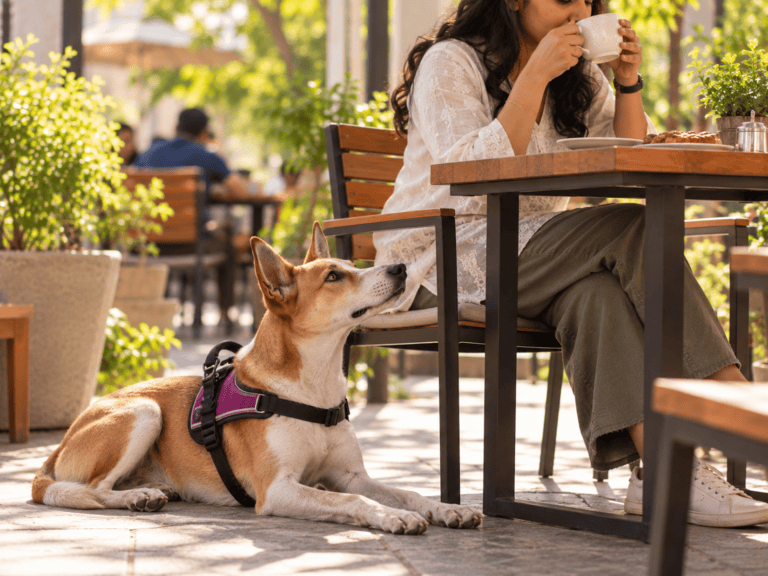
There is no single model for how a therapy dog programme works in a dental practice. The simplest and most common version is a dog present in the waiting room with its handler - providing a calming presence in the space where patients often feel most anxious. Patients who want to interact with the dog can do so; those who do not are not required to engage.
Some practices go further, with handler-dog teams entering treatment rooms at the patient's request. In this model, the dog may sit beside the chair, rest its head in the patient's lap, or simply be present in the room during the procedure. Some practices, particularly in paediatric settings, have documented this approach and describe it as welcomed by patients who engage with it. However, handler-dog teams should only enter treatment areas where the patient has specifically requested it, the clinical team has approved it, and infection-control and animal-welfare protocols specifically permit it. The default for most programmes is the waiting room or a designated non-clinical area.
In all cases, patient consent and patient choice are fundamental. The dog's presence is always offered, never assumed. Some patients actively seek out practices that offer the service; others decline it when offered; and others who might not have thought to ask are simply glad it is available when they arrive anxious.
The dog does not make the treatment less uncomfortable. What it changes is the quality of the waiting, and - for some people - their sense of support while going through care.
Handler-dog teams in dental settings are typically assessed and registered through animal-assisted intervention organisations, with requirements varying by organisation and country. The dental practice integrates the programme into its clinical protocols, and the team works within those protocols throughout.
Evidence in dental settings is limited and mixed
Research on therapy dogs in dental settings is still small and mixed. The available dental-specific studies have focused mainly on children and young people. Some individual studies and clinical programmes report lower anxiety or more positive experiences among children who chose to take part, but a 2023 systematic review and meta-analysis found no significant evidence to support or refute that animal-assisted therapy reduces children's dental anxiety. Small samples, high risk of bias, and methodological variation across studies make firm conclusions difficult.
Some children and families report that the visit feels easier or more positive when a dog is present, but this should not be treated as evidence that therapy dogs reliably improve cooperation or treatment outcomes across all patients.
A few small studies have measured physiological responses. Some have reported changes in heart rate during the procedure in children with access to a therapy dog, but findings on salivary cortisol are inconsistent - one controlled trial found no differences in salivary cortisol or alpha-amylase - and the studies are too small to establish reliable effects.
A 2026 randomised trial involving 49 autistic children with difficulties cooperating during dental care reported lower anxiety during a subsequent session without the dog, following dog-assisted support in earlier sessions. This is an encouraging finding - particularly for children who find dental procedures especially difficult - but further research is needed to establish how broadly the results apply.
Possible explanations for any effects include distraction, reduced perceived threat in the environment, and positive social interaction. The underlying biological mechanisms are uncertain and require further research.
The honest position is that therapy dogs may be a welcome, optional comfort measure for some dental patients - especially children - but the current evidence does not establish that they reliably reduce dental anxiety or improve treatment outcomes.
2023 systematic review and meta-analysis, International Journal of Paediatric Dentistry · 2023 pilot cross-over RCT (Norway), PubMed · 2025 controlled trial (cortisol/heart rate), PubMed · 2026 randomised trial in autistic children, PubMed · 2021 randomised clinical study, India (102 children), PubMed
A dental practice is a demanding environment for a therapy dog programme
Running a therapy dog programme in a dental practice is more complex than it might appear. The environment has specific features that make it demanding - both for the dogs and for the clinical team managing the programme.
Infection control is the most significant practical concern. Dental practices are clinical environments with stringent hygiene requirements, and introducing an animal into that environment requires careful protocol development. Relevant considerations include where in the practice the dog is permitted, what cleaning procedures apply before and after the dog is in a treatment area, how dental surfaces and equipment are protected, and which patients can safely interact with a dog given their health status. Any dental practice introducing a therapy dog programme needs to develop its infection control protocols in line with its clinical governance requirements and with input from relevant professional bodies.
The noise environment in a dental practice - drills, suction, the sounds of equipment - is also a real consideration for dog welfare. Not every dog will be comfortable in this environment, and assessment needs to reflect those specific conditions. A dog that performs well in a quiet waiting room may not be suited to being present during an active procedure.
The handler-dog team also needs to be able to manage patient interactions that can be unpredictable - anxious patients may grip the dog tightly, move suddenly, or become distressed during a procedure. The dog needs to be genuinely well suited to this, not merely friendly in calm settings.
Some patients have allergies to dogs or strong fears of them. A practice offering a therapy dog programme needs clear intake processes to identify these patients in advance and ensure they are not unexpectedly confronted with an animal they did not want.
Pet Partners, Infection Control During Therapy Animal Visits · Pet Partners, Animal Welfare Position Statement · CDC, Animals in Healthcare Facilities
Paediatric settings are where most of the dental therapy dog work has been done
The available dental-specific studies and documented clinical programmes involving therapy dogs have focused mainly on children. This makes sense: dental anxiety in childhood is both common and consequential, and paediatric dental practices are generally more open to non-pharmacological approaches to managing anxiety alongside clinical treatment.
For many children, a dog in the waiting room or treatment room changes the emotional register of the visit. The dog becomes a point of focus that is familiar and unthreatening - something a child knows how to engage with - in an environment where most things are unfamiliar and potentially scary. Whether this translates reliably into lower clinical anxiety or better treatment outcomes is still not established by the evidence, but many children and families describe the experience positively when the option is available.
That said, not all children like or want dogs. Some children are afraid of dogs, and a therapy dog programme that does not carefully manage this - with clear opt-in processes and attentive staff - could make an already anxious child more stressed, not less. The same principle applies as in any other setting: patient choice, clearly communicated and genuinely respected, is non-negotiable.
Working towards structured therapy dog programmes for clinical settings in India
HeartDogs is working towards building a systematic programme for training and placing therapy dogs in India, including in clinical settings. Dental practices are one of the environments where a well-placed therapy dog could offer comfort and company to anxious patients - particularly children.
Getting that right requires working with dental teams on infection control protocols, ensuring our dogs are assessed specifically for the sounds and environment of a dental practice, and developing the handler training and clinical coordination that structured visits require. We are working towards that carefully.
If you work in a dental practice in India - particularly a paediatric practice - and are curious about what a therapy dog programme might look like in your setting, we would welcome the conversation.